Soil Stabilization Guide
What Are the Limitations of Soil Stabilization?
Soil stabilization is highly effective for road subgrade improvement, but it is not a universal solution. Understanding its limitations — and the conditions under which it fails — is essential for writing a specification that will achieve its design life rather than fail within its first monsoon season. This article covers the eight most important limitations of chemical soil stabilization in India, and how to manage each one.
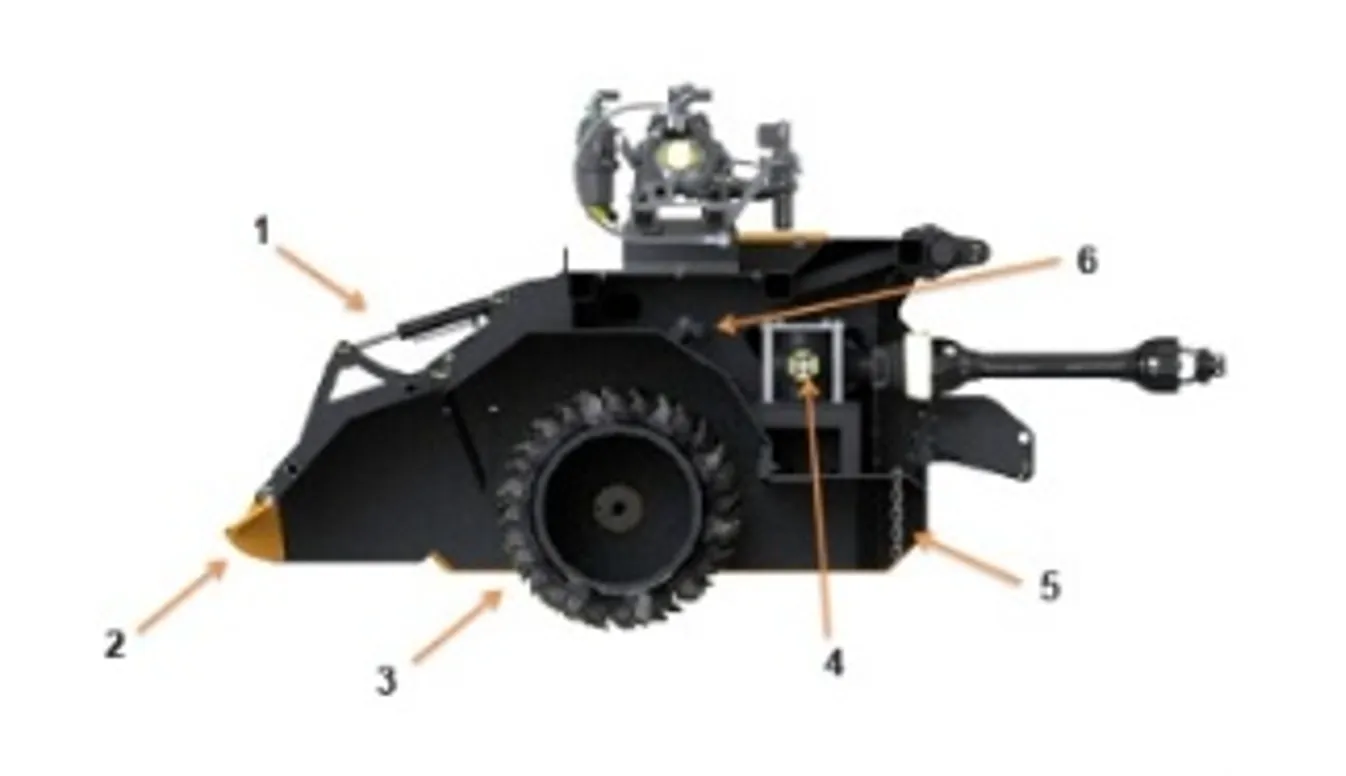
Understanding limitations ensures correct execution — THOR ST soil stabilizer on road project
1. Sulphate-Bearing Soils — The Most Serious Limitation
Sulphate-bearing soil is the single most dangerous condition for cement stabilization. When ordinary Portland cement (OPC) reacts with sulphate ions in the soil (SO₃), it produces ettringite — a mineral crystal that forms at significantly greater volume than the reactants that produced it. Ettringite growth within the stabilized layer exerts expansive pressure that progressively heaves, cracks, and ultimately destroys the stabilized matrix.
Ettringite heave is not a gradual, manageable process. It can cause 3–5% volume expansion, lifting a freshly stabilized road surface by 30–80 mm within weeks to months of construction. The stabilized material cannot be salvaged — it must be removed and the soil treated with sulphate-resistant cement (PSC or SRC) before re-stabilization.
Critical Rule — Test Before You Specify
Test for SO₃ content (IS:2720 Part 27) before specifying cement on any soil. If SO₃ > 0.5%, do not use OPC — specify PSC (for 0.5–1.5%) or SRC (for > 1.5%). Testing costs approximately ₹500–2,000 per sample. A failed stabilization project costs ₹300–600 per m² to remediate.
Identifying Problem Soils Before Stabilization — The Testing Programme
The most effective way to manage the limitations of soil stabilization is to identify problem soil conditions before construction begins. A systematic pre-construction testing programme covering the following parameters will identify all eight limitations described above and allow the specification to be adjusted accordingly.
| Test | Standard | Identifies | Action Threshold |
|---|---|---|---|
| Plasticity Index (PI) | IS:2720 Part 5 | Need for lime pre-treatment | PI > 25 → lime required |
| Sulphate content (SO₃) | IS:2720 Part 27 | Ettringite heave risk | SO₃ > 0.5% → change cement type |
| Organic content | IS:2720 Part 22 | Cement interference | > 2% → investigate further |
| Modified Proctor MDD | IS:2720 Part 8 | Compaction target | Sets field density acceptance |
| Mix design UCS | IS:4332 Part 4 | Correct binder content | 7-day soaked UCS ≥ 1.5 MPa |
| Swell | IS:2720 Part 40 | Expansive clay | > 1.5% → lime pre-treatment |
Case Study — What Happens When Limitations Are Ignored
The Sulphate Failure Pattern
A rural road project in central India (2021) specified OPC cement stabilization on black cotton soil without sulphate testing. Post-construction inspection at 4 months showed progressive surface heaving across 30% of the project length — heave of 40–90 mm in affected zones. Investigation confirmed SO₃ content of 0.8–1.2% in the subgrade soil. The OPC had reacted with soil sulphates to produce ettringite, causing the stabilized layer to expand and lift the surface.
Remediation required complete removal of the failed stabilized layer (depth 150 mm) across 2.1 km, disposal, re-treatment with PSC at 6% content, re-compaction, and re-laying of the wearing course. Total remediation cost: approximately ₹420 per m². Total preventable cost if SO₃ testing had been done (₹1,500 for 10 soil samples): ₹1,500 vs ₹420 × 14,000 m² = ₹5.9 million remediation cost.
Cost of Prevention vs Remediation
Pre-construction sulphate testing costs ₹1,000–2,000 for 10 samples covering a typical rural road project. Remediation of ettringite heave costs ₹350–600 per m². Testing cost is typically less than 0.1% of the cost of failure.
2. High Organic Content — Cement Hydration Interference
Organic matter in soil contains humic acids and other organic compounds that interfere with cement hydration. These organic acids react with the calcium hydroxide produced during cement hydration — consuming it before it can contribute to CSH crystal formation. The result is severely reduced strength gain: a soil with 3–5% organic content may achieve less than 50% of the UCS expected from its cement content.
The threshold for significant interference is approximately 2% organic content by mass (measured by loss on ignition, IS:2720 Part 22). Above this level, cement stabilization is unreliable without pre-treatment. Lime stabilization is more tolerant of organic matter — lime can achieve modification effects at organic contents up to 5% — but is still impaired above this threshold. For soils with organic content above 5%, alternative stabilization approaches or organic matter removal may be necessary.
3. Black Cotton Soil Without Lime Pre-Treatment
Cement cannot be successfully applied directly to Black Cotton Soil (Vertisols) with PI above 25–30. The high water-holding capacity of montmorillonite clay means cement paste cannot form a continuous matrix through the high-plasticity clay mass. The unmodified clay continues to swell seasonally, progressively breaking the cement matrix from within. And the wet, sticky clay makes it difficult to achieve uniform mixing even with a high-power soil stabilizer machine.
The mandatory solution is lime pre-treatment: apply quicklime at 4–6% using the DCW 2.2 binder spreader, mix to the full treatment depth with the THOR ST soil stabilizer, and allow 24–72 hours for the cation exchange reaction to reduce PI below 20. Only then can cement be applied as the second stage. Skipping lime pre-treatment on PI > 25 Black Cotton Soil is the single most common cause of soil stabilization failure on Indian roads — it produces a layer that looks complete but has inadequate strength and fails rapidly under traffic and moisture cycling.
4. Construction Weather Windows
Chemical soil stabilization has strict weather constraints that affect construction scheduling and binder selection. Violating these constraints reduces strength and service life even when all other aspects of the specification are correct.
- Rain — do not apply binder if rain is forecast within 4 hours. Rain on fresh cement dissolves the cement paste before it can react with the soil, and washes soluble calcium from the mixing zone. Rain on fresh lime reduces its temperature and dilutes its drying effect on wet clay. Even light rain on a freshly spread binder surface can remove 15–20% of the applied binder before mixing begins.
- Hot weather (> 35°C) — switch from OPC to PPC. OPC working window (mixing to completed compaction) reduces to 60–90 minutes above 35°C. PPC extends this to 2.5–3 hours. Early morning starts (before 7am) further extend effective working time by using cooler soil temperatures.
- Cold weather (< 5°C soil temperature) — stop work. Cement hydration effectively stops below 5°C — the hydration reactions slow to near zero and full strength will not be achieved even with extended curing. In Himalayan and high-altitude projects (J&K, Himachal Pradesh, Uttarakhand), stabilization work must be completed before October and not restarted until soil temperature exceeds 7°C in spring.
5. Shrinkage Cracking from Over-Dosing
Applying too much cement produces a stabilized layer that cracks as it cures. Cement paste shrinks as it loses moisture during hydration and drying — this is the same shrinkage mechanism seen in over-designed concrete slabs. When cement content is too high, the shrinkage strain in the curing stabilized layer exceeds its early tensile strength, and the layer cracks into blocks of 0.5–2.0 m diameter.
These shrinkage cracks are permanent. They provide pathways for water ingress, reducing the effective strength of the layer at crack faces and allowing progressive erosion. The result is a stabilized layer with lower average UCS than expected, shorter service life, and surface cracking visible through the asphalt wearing course.
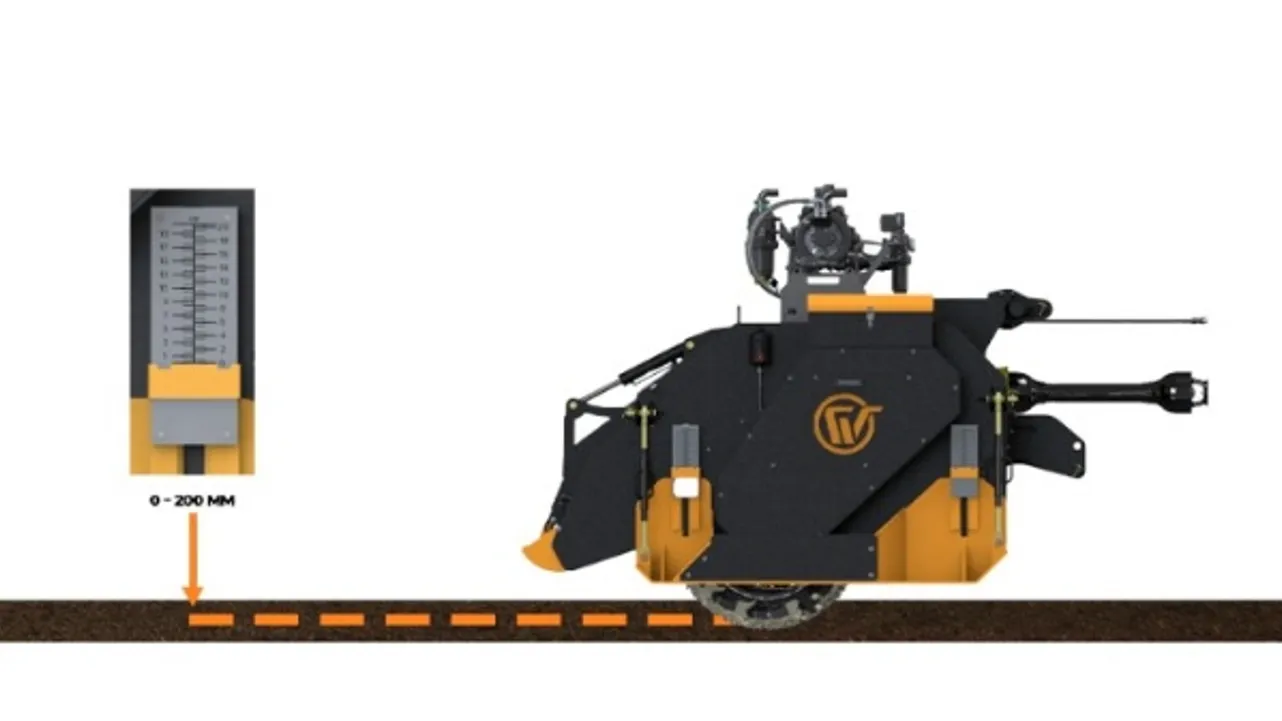
Adjustable treatment depth control — precision application prevents shrinkage cracking from over-dosing
6. Treatment Depth Limitation
In-situ surface mixing — the method used by the THOR ST soil stabilizer — is limited to a maximum treatment depth of 350 mm in a single pass. For road subgrades requiring treatment at greater depths, the options are: multiple passes at progressive depths (expensive and time-consuming), deep soil mixing using specialist auger equipment (very high cost), or acceptance that the untreated soil below the 350 mm treatment zone will contribute to total pavement deflection. Most rural road subgrades in India require 150–250 mm treatment depth — well within the surface stabilizer’s capability.
7. Quality Control Requirements
Soil stabilization requires more rigorous quality control than conventional earthworks — and this complexity is often underestimated by clients and contractors unfamiliar with the technique. Testing is required at three stages:
- Pre-construction: Plasticity index (PI), sulphate content (SO₃), organic content, compaction (Proctor), laboratory mix design UCS at 7 and 28 days. Cannot be skipped — generic binder percentages are not a substitute.
- During construction: Moisture content checks before and after mixing, nuclear density gauge compaction verification, binder application rate spot-checks using tray collection.
- Post-construction: Cored UCS samples at 7 days (minimum one core per 500 m²), swell testing, CBR if required by the pavement design. Acceptance criterion per IRC:SP:89: soaked UCS ≥ 1.5 MPa.
8. Deep Soft Deposits — Surface Treatment Is Not Enough
Surface stabilization improves the mechanical properties of the treated zone (typically the top 150–350 mm). It does not address the behaviour of the soil below the treatment zone. For subgrades with deep soft compressible deposits — saturated silts, peats, or marine clays at depths greater than 1–2 m — surface stabilization will produce a strong surface layer but will not prevent settlement of the soft deposit below it. The road may appear well-constructed immediately after completion but will exhibit progressive settlement, longitudinal cracking, and ultimately failure as the underlying soft deposit consolidates under traffic loading.
Most soil stabilization failures in India trace back to one of three causes: OPC on sulphate soil, cement without lime pre-treatment on Black Cotton Soil, or inadequate compaction due to exceeding the working window. Get these three things right and the technique works reliably for 20–50 years.
How to Avoid Each Limitation in Practice
Each of the eight limitations described above has a practical management strategy. None of them make soil stabilization an unsuitable technique — they simply define the conditions that must be addressed in project preparation and execution.
| Limitation | Management Strategy | Cost of Management |
|---|---|---|
| Sulphate attack | Test SO₃ first; specify PSC/SRC if > 0.5% | ₹500–2,000 per test; PSC premium ~10–15% |
| High organic content | Test organic content; consider lime + cement or soil replacement | ₹500–1,500 per test |
| High PI without lime | Always lime pre-treat BCS before cement; wait 24–72 hours | Additional lime cost + second pass |
| Weather windows | Early morning starts; PPC in hot weather; rain monitoring | PPC premium ~5–8% |
| Shrinkage cracking | Use calibrated spreader at ±2% accuracy; correct mix design | DCW 2.2 binder spreader |
| Depth limitation | Design treatment depth to match stabilizer capability (≤350mm) | No additional cost |
| QC complexity | Full 3-stage laboratory and field QC programme | ₹3–8/m² amortised |
| Deep soft deposits | Pre-construction borehole investigation to identify deep soft layers | ₹5,000–15,000 per borehole |
The Most Important Lesson
Reviewing the eight limitations, a clear pattern emerges: every one of them is avoidable through correct project preparation, specification, and quality control. None of them are fundamental weaknesses of chemical stabilization as a technique. Soil stabilization fails when shortcuts are taken — when soil testing is skipped, when lime pre-treatment is omitted, when binder is applied without calibrated equipment, or when compaction is rushed beyond the working window.
The technique itself, when correctly executed using IRC:SP:89 procedures and calibrated equipment such as the THOR ST soil stabilizer machine and DCW 2.2 binder spreader, consistently delivers 20–50 year service life across all Indian climate zones and soil types.
Featured Equipment
THOR ST + DCW 2.2 Stabilization System
Calibrated binder spreading · Uniform mixing · IRC:SP:89 compliant · India Watanabe
Key Takeaways
- Sulphate soils with SO₃ > 0.5% require PSC or SRC — OPC causes ettringite heave that destroys the stabilized layer within months
- Black Cotton Soil with PI > 25 requires lime pre-treatment before cement — the most common cause of stabilization failure in India
- Organic content above 2% significantly reduces cement stabilization effectiveness — test before specifying
- Weather windows are critical — no binder in rain, OPC not suitable above 35°C, stop work below 5°C soil temperature
- Over-dosing with cement causes shrinkage cracking — use calibrated spreader at ±2% accuracy
- Laboratory mix design at all three stages (pre, during, post construction) is mandatory — not optional