● Hydrology & Drainage
Does 토양 안정화 Improve Water Runoff?
The relationship between soil stabilization and water runoff is more nuanced than it first appears. The answer is both yes and no — and which answer applies depends entirely on the type of stabilization, the surface condition, and the hydrological objective. Chemical stabilization with cement or lime reduces soil permeability, which increases surface runoff but simultaneously reduces subsurface erosion and slope failure. Agricultural stabilization and subsoil treatment can dramatically improve infiltration and reduce runoff. This article explains the full hydrological picture and how to use stabilization strategically to manage water in both road and agricultural contexts.
The Core Question: What Does “Improve” Mean for Runoff?
“Improving” water runoff means different things in different contexts:
Road engineering context
“Improving runoff” means managing surface water so it leaves the road platform quickly without saturating the subgrade. Here, slightly increased runoff from a stabilized, low-permeability surface is desirable — it keeps water out of the structural layers. The problem is ensuring adequate drainage channels exist to receive and convey the increased runoff without causing erosion or flooding at the toe of the embankment.
Agricultural context
“Improving runoff” means reducing it — keeping more rainfall in the soil as infiltrated water available for crops, and reducing the surface runoff that causes topsoil loss and gully erosion. Soil stabilization that breaks compaction layers, improves aggregate stability, and restores soil structure dramatically improves infiltration and reduces runoff.
Flood management context
“Improving runoff” means managing peak flow — reducing the rapid surface runoff that concentrates in streams and causes flooding, by improving infiltration across the catchment. Broad-scale subsoil and agricultural stabilization contributes to flood attenuation by increasing the catchment’s soil water storage capacity.
How Road Subgrade Stabilization Affects Runoff
Chemical stabilization of road subgrade with cement or lime reduces soil permeability by 100–1,000 times compared to the untreated material, by filling pore spaces with cementitious reaction products (CSH, CAH). This has a direct effect on the movement of water through the road cross-section:
Effect 1: Reduced Subsurface Water Ingress
The primary hydrological benefit of road subgrade stabilization is the dramatic reduction in the amount of rainfall and surface water that can infiltrate into the structural layers of the pavement. In an unstabilized road, cracks, joints, and permeable surface seals allow water to percolate down into the subgrade, raising pore water pressure and reducing bearing capacity. On a monsoon-affected Indian road, this cycle of saturation and bearing capacity loss is the primary cause of rutting, potholing, and structural failure during the wet season.
A cement-stabilized subgrade with UCS of 1.5–3.0 MPa has a hydraulic conductivity of approximately 10⁻⁷ to 10⁻⁸ m/s — comparable to a low-permeability clay liner. Even when the pavement surface above has cracked, the stabilized layer below acts as a hydraulic barrier, preventing water from reaching the natural subgrade beneath. The natural subgrade below the stabilized layer therefore remains near its as-built moisture content throughout the monsoon, maintaining its bearing capacity.
Effect 2: Increased Surface Runoff Quantity
Because the stabilized surface is less permeable, rainfall that would previously have infiltrated into the subgrade now runs off the surface instead. The road pavement surface — asphalt or cement concrete above the stabilized subgrade — also contributes to runoff, so the total system (pavement + stabilized subbase) produces more surface runoff per unit of rainfall than an unpaved or poorly surfaced road. This is an expected and accepted consequence of road construction — the increase in runoff is managed by the roadside drainage system (cut drains, table drains, cross-culverts) rather than eliminated.
Drainage design implication: The drainage design for a stabilized road must account for the higher runoff coefficient of the stabilized surface compared to the original unimproved soil. Where the original soil had a runoff coefficient (C) of 0.3–0.5, the stabilized pavement surface typically has C = 0.7–0.9. Roadside drains must be sized accordingly to prevent overtopping and embankment erosion during design storm events.
Runoff Coefficient Change
A typical rural road on Black Cotton Soil transitions from a runoff coefficient of C = 0.35–0.50 (unpaved, partially permeable) to C = 0.75–0.90 (paved, stabilized subgrade) after stabilization and surfacing. For a 7 m wide road with 100 m catchment length receiving 50 mm/hour rainfall, peak runoff increases from approximately 3–5 litres/second to 7–10 litres/second. Roadside drains must be designed for this post-development flow.
Effect 3: Improved Runoff Quality (Reduced Sediment Load)
Although stabilization increases the quantity of surface runoff, it dramatically improves its quality by eliminating the sediment load carried by runoff from unstabilized surfaces. Runoff from unpaved, unprotected subgrade carries significant quantities of fine soil particles — up to 10–50 g per litre of turbid flow. This sediment silts up roadside drains, culverts, downstream water bodies, and irrigation channels. Stabilized and surfaced roads produce near-zero sediment runoff — the locked cementitious surface has no erodible particles to contribute. This improvement in runoff quality is an important environmental benefit of road stabilization that is rarely quantified but has significant downstream consequences for watercourse management.
How Agricultural Stabilization Reduces Runoff
In agricultural contexts, soil stabilization works in the opposite direction on runoff — the goal is to increase infiltration and reduce surface runoff. Several stabilization approaches achieve this:
Breaking Compaction Layers: Restoring Vertical Drainage
One of the most significant contributors to excess surface runoff in Indian agricultural land is the presence of compacted subsoil layers — called pans or hardpans — at 200–400 mm depth. These dense, low-permeability layers form from years of tillage at constant depth (plough pan) or from natural clay illuviation. When a hardpan is present, water infiltrating from rainfall cannot pass through it, so the soil above the pan quickly saturates, and further rainfall runs off the surface rather than infiltrating.
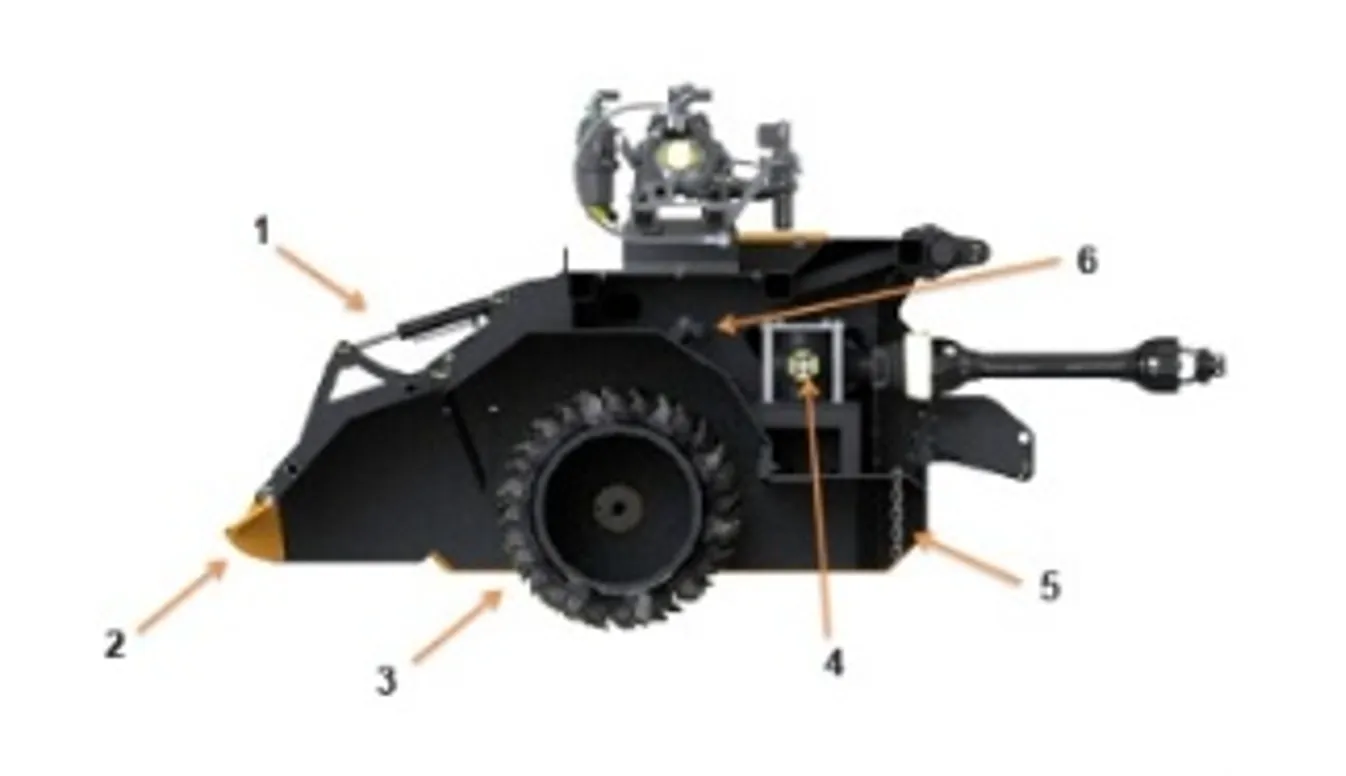
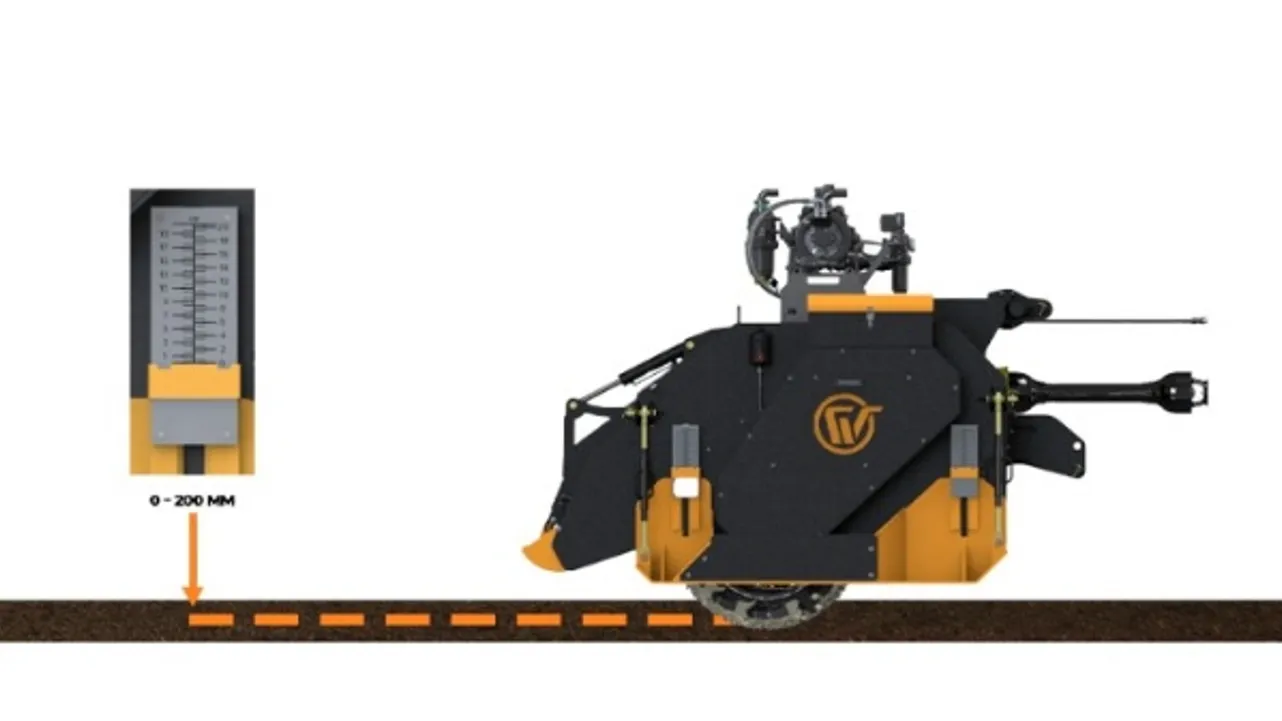
A tractor-mounted stabilizer machine with deep penetration capability can break up hardpan layers by milling through them, fracturing the dense soil structure and restoring vertical drainage pathways. Research from Indian agricultural universities has demonstrated that subsoil compaction relief by deep tillage or stabilizer machine passes increases soil infiltration rate by 2–5 times, reducing surface runoff by 40–70% during equivalent rainfall events. This is one of the most cost-effective runoff management interventions available for monsoon-affected agricultural land.
Lime Application: Aggregate Stability and Infiltration
Low-rate lime application (0.5–2% or equivalent agricultural field rates of 1–3 tonnes/hectare) to acidic or sodic clay soils improves soil aggregate stability — the ability of soil clumps to resist disaggregation by rainfall impact. More stable aggregates maintain larger inter-aggregate pores for longer during rainfall events, allowing more water to infiltrate before the surface seals. Research across Indian agricultural districts shows that lime-treated soils maintain 30–60% higher infiltration rates during monsoon rainfall than untreated soils with the same clay content.
Effect on Black Cotton Soil swelling and runoff: Untreated Black Cotton Soil presents a paradox: it is simultaneously highly expansive (absorbs water and swells) and generates high surface runoff during the first heavy rainfall events of the monsoon. This is because the surface of dry, cracked Black Cotton Soil seals rapidly when first wetted — fine clay particles wash into surface cracks and pores, forming an impermeable crust that prevents further infiltration. Lime treatment eliminates this surface sealing behaviour by permanently flocculating clay particles and preventing their mobilisation into pore spaces during wetting.
Polyacrylamide (PAM): Sealing Prevention
PAM at very low concentrations (10–40 ppm in irrigation water) dramatically improves infiltration by preventing soil surface sealing. The PAM molecules bridge between clay particles and stabilise aggregates at the surface, preventing them from dispersing under raindrop impact and blocking pores. Studies from irrigated agricultural areas in India have documented infiltration rate improvements of 40–200% and runoff reductions of 50–90% with PAM-treated irrigation water compared to untreated controls — one of the largest runoff management benefits achievable with a single chemical intervention at very low cost.
“
Road stabilization increases surface runoff quantity but eliminates sediment load. Agricultural stabilization reduces runoff by 40–90%. Both outcomes improve water management — but in opposite directions.
Embankment Hydrology: How Stabilization Prevents Waterlogging
Road embankments in flat, low-lying terrain — common in India’s river floodplains and coastal zones — can cause waterlogging of adjacent farmland by intercepting natural drainage pathways and concentrating runoff. Stabilization plays a specific role in managing this problem:
- Stabilized embankment fill reduces seepage: An unstabilized earthen embankment acts as a semi-permeable barrier — water from one side percolates through it slowly, but the seepage rate is high enough to raise the water table on the downstream side over time. A lime-stabilized embankment fill has dramatically lower permeability, reducing seepage to negligible levels and preventing waterlogging of adjacent land.
- Culvert adequacy becomes critical: Because stabilization reduces the road’s permeability and concentrates runoff, the culverts provided through the embankment must be adequately sized to pass the increased concentrated runoff without backing up and causing ponding on the upstream side. Inadequately designed culverts on stabilized roads are a frequent cause of adjacent field flooding that did not occur before road construction.
- Stabilized drain channels convey runoff efficiently: Cement-stabilized channel linings for roadside and cross-drains allow high flow velocities (2–4 m/s) without scour, enabling faster drainage of accumulated runoff from the road platform to natural watercourses. Unstabilized earthen drains in Black Cotton Soil scour at 0.3–0.5 m/s, limiting their gradient and capacity.
Stabilization and Monsoon Flood Management in India
India’s monsoon delivers 70–90% of annual rainfall in 3–4 months, with intense storm events capable of generating catastrophic runoff and flooding. Soil stabilization contributes to monsoon flood management at multiple scales:
At Road Scale: Protecting Infrastructure from Flood Damage
India loses thousands of kilometres of rural road to monsoon flooding and associated subgrade softening every year. A stabilized subgrade retains 70–90% of its bearing capacity even when fully saturated, compared to 20–50% for an unstabilized subgrade. Roads that would be impassable for 4–6 weeks after monsoon flooding remain operational throughout the monsoon season when properly stabilized. This economic and connectivity benefit — maintaining access to health facilities, markets, and schools during the monsoon — is arguably the most important practical outcome of rural road stabilization in India.
At Catchment Scale: Agricultural Stabilization Reduces Peak Flows
Across a catchment, improved soil infiltration through agricultural stabilization (breaking hardpans, improving aggregate stability, lime application for Black Cotton Soil) reduces the proportion of rainfall that becomes surface runoff. Since flood peak discharge is proportional to catchment runoff coefficient, a 20% reduction in average runoff coefficient across a 100 km² catchment could reduce the 1-in-10-year flood peak by 15–25%, significantly reducing flood damage risk to downstream settlements and infrastructure. Catchment-scale soil improvement for flood management is not yet standard practice in India but is an emerging area of policy interest.
Reservoir Siltation: The Hidden Benefit of Stabilization
India’s reservoirs and irrigation tanks lose storage capacity to siltation at an estimated rate of 0.5–1.0% per year — a long-term threat to water security that soil erosion drives directly. Every tonne of soil stabilized on a road embankment or agricultural slope is a tonne of sediment that does not reach rivers and reservoirs. Widespread soil stabilization across catchments therefore contributes — cumulatively and silently — to preserving the live storage capacity of reservoirs that India’s irrigation and drinking water systems depend on.
Stabilization Type and Runoff Effect: Summary
| Stabilization Type | Effect on Runoff Volume | Effect on Runoff Quality | Primary Benefit |
|---|---|---|---|
| Cement subgrade stabilization | Increases surface runoff (C rises 0.35→0.85) | Eliminates sediment load | Subgrade moisture protection; year-round trafficability |
| Lime embankment fill stabilization | Reduces seepage through embankment | Reduces turbid seepage to adjacent land | Prevents waterlogging of adjacent farmland |
| Hardpan breaking (deep rotor) | Reduces surface runoff 40–70% | Reduces sediment (less erosion) | More rainfall stored in soil; improved crop water availability |
| Lime (agricultural, low rate) | Reduces surface runoff 30–60% | Reduces turbidity significantly | Aggregate stability; sealing prevention; infiltration improvement |
| PAM in irrigation water | Reduces surface runoff 50–90% | Very high turbidity reduction | Prevents sealing; maximum infiltration during irrigation |
| Vegetation stabilization | Reduces runoff 40–80% | High turbidity reduction via interception | Root drainage + canopy interception + transpiration storage |
Designing Stabilization Projects for Good Water Management
The following principles apply to any Indian stabilization project where water management is a consideration:
- Design drainage for post-stabilization runoff coefficients. Never use pre-construction soil permeability to size roadside drainage on a stabilized road. Use C = 0.75–0.90 for the road platform and sum catchment contributions accordingly.
- Size culverts for the full post-development catchment flow. Inadequate culverts are the most common cause of upstream waterlogging complaints from farmers adjacent to new or rehabilitated rural roads in India.
- Use cement-stabilized drain linings where scour is a risk. In Black Cotton Soil areas, earthen drains scour and fail under monsoon flow; stabilized linings prevent this. The same machine used for subgrade stabilization can be adapted for narrow channel lining treatment.
- Combine road stabilization with adjacent agricultural subsoil treatment. Where rural roads are being stabilized under PMGSY or state schemes, include subsoil compaction relief on adjacent farmland in the project scope. The combined hydrological effect — concentrated road runoff directed to properly sized drainage, improved agricultural infiltration reducing runoff from fields — significantly reduces flood risk to the rural community the road serves.
- Plant Vetiver at drain outlets and embankment toes. Where stabilized road runoff discharges to unprotected slopes or watercourses, Vetiver hedgerows at the toe slow the flow and prevent scour. This biological-chemical combination addresses both the increased quantity and the management of concentrated post-stabilization runoff.
Frequently Asked Questions
QDoes stabilizing a road cause flooding of adjacent farmland?
It can, if drainage is inadequate. Stabilization and paving increase the road’s runoff coefficient significantly, concentrating more water in roadside drains. If culverts through the embankment are undersized, this water backs up on the upstream side and floods adjacent fields. This is a drainage design failure, not a stabilization failure — correctly sized culverts based on post-development runoff coefficients prevent it. The most effective mitigation is to compute peak flow using the post-stabilization C value and size culverts accordingly during project design.
QCan soil stabilization help manage groundwater recharge?
Agricultural stabilization that breaks hardpans and improves infiltration contributes to groundwater recharge by allowing more rainfall to percolate through the vadose zone to the water table. In areas where Black Cotton Soil hardpan intercepts infiltration, hardpan breaking can increase groundwater recharge by 30–60%. Road stabilization, by contrast, reduces recharge in the immediate road footprint (less infiltration through the stabilized subgrade). At catchment scale, the net effect depends on the relative area of roads and agricultural land — agricultural stabilization covering large areas has much greater recharge potential.
QHow does Black Cotton Soil behave differently from other soils during monsoon rainfall?
Dry Black Cotton Soil has deep shrinkage cracks — which actually allow rapid initial infiltration. However, as soon as the top layer wets, clay particles swell and seal both the surface and the cracks, creating an almost impermeable crust within the first 10–20 mm of rainfall. All subsequent rainfall then runs off this sealed surface, generating intense surface flow and erosion despite the soil’s theoretically high clay content. Lime stabilization prevents this sealing cycle by permanently flocculating clay particles, maintaining open pore structure through wetting and drying cycles and allowing consistent infiltration throughout the monsoon.
QIs PAM safe to use in agricultural irrigation water?
Anionic and non-ionic PAM at the concentrations used in agriculture (10–40 ppm) are considered environmentally safe — they biodegrade slowly in soil and are not toxic to plants, animals, or aquatic organisms at these concentrations. The primary safety concern is with cationic PAM (positively charged), which is toxic to fish and should not be used near water bodies. Confirm the PAM product specification (anionic recommended) before use in proximity to irrigation channels or wetlands. The Indian Institute of Technology and ICAR have both published guidelines for PAM use in Indian irrigated agriculture.
QWhat is the most cost-effective way to reduce monsoon runoff from agricultural land in India?
Breaking compaction layers (hardpan) with a deep rotary stabilizer or subsoiler, combined with lime application at 1–2 t/ha for Black Cotton Soil districts, is typically the most cost-effective single intervention for reducing monsoon surface runoff from agricultural land in India. The combined effect — restored vertical drainage through broken hardpan, improved aggregate stability from lime, and reduced surface sealing — can reduce runoff by 50–70% at a cost that is usually recovered within one or two cropping seasons through improved water use efficiency and reduced erosion damage.
Key Takeaways
- Road subgrade stabilization increases surface runoff quantity (C rises from 0.35 to 0.85) but eliminates sediment load — drainage must be designed for the higher post-development flow
- Agricultural stabilization (hardpan breaking, lime, PAM) reduces surface runoff by 40–90% by restoring infiltration — the opposite effect from road stabilization
- Black Cotton Soil seals its surface within 10–20 mm of rainfall — lime treatment prevents this sealing cycle and maintains consistent infiltration throughout the monsoon
- Undersized culverts through stabilized road embankments cause adjacent farmland flooding — size for post-stabilization C = 0.75–0.90, not original soil conditions
- Catchment-scale agricultural stabilization reduces peak flood flows 15–25% and contributes to groundwater recharge and reservoir siltation prevention
Soil stabilization is one of India’s most powerful tools for managing water — whether by protecting road subgrades from monsoon saturation, preventing adjacent land from waterlogging, improving agricultural infiltration, or contributing to catchment flood attenuation. The THOR ST Soil Stabilizer from 인도 와타나베 토양 안정제 주식회사 is the machine that makes it happen — from structural subgrade stabilization for all-season road access, to hardpan breaking for improved agricultural water management, in a single versatile machine. Contact our team to discuss water management objectives for your stabilization project.