● Chemical Science
What Are Some Common Chemicals Used for Soil Stabilization?
Every soil stabilization treatment is, at its core, a chemical reaction between the stabilizing agent and the soil. Understanding the chemistry — what compounds form, why they are stable, what conditions accelerate or inhibit them — is what separates engineers who specify stabilization reliably from those who guess at binder rates and hope for acceptable UCS. This article explains the chemical mechanisms of every major stabilizing compound: the reactions, the reaction products, the variables that affect them, and the chemical constraints that define when each compound works and when it does not.

The Chemistry of Soil Stabilization: An Overview
Chemical stabilization works through six distinct chemical mechanisms. Each mechanism corresponds to a category of stabilizing compound, and each produces different reaction products with different engineering properties:
| Chemical Mechanism | Primary Compound | Key Product | Reversible? |
|---|---|---|---|
| Cement hydration | Portland cement (C₃S, C₂S) | CSH, CAH crystals | 아니요 |
| Cation exchange | Lime (Ca²⁺ ions) | Altered clay surface charge | 아니요 |
| Pozzolanic reaction | Ca(OH)₂ + SiO₂ + Al₂O₃ | CSH, CAH (slow) | 아니요 |
| Silicate gelation | Sodium/potassium silicate | Silica gel (SiO₂·nH₂O) | 아니요 |
| Hygroscopic bonding | Calcium chloride (CaCl₂) | Moisture film (no bond) | Yes (leaches) |
| Polymer cross-linking | Polyacrylamide, acrylic polymers | Polymer film / aggregate coating | Partially |
1. Portland Cement: CSH and CAH Formation
Portland cement contains four principal chemical compounds that react with water in a specific sequence. Of these four, two dominate the stabilization chemistry:
Tricalcium Silicate (C₃S) and Dicalcium Silicate (C₂S)
These silicate phases react with water to form calcium silicate hydrate (CSH) — the compound responsible for the majority of cement’s binding strength:
C₃S hydration (fast — governs early strength):
2C₃S + 6H₂O → C₃S₂H₃ (CSH gel) + 3Ca(OH)₂
C₂S hydration (slow — governs long-term strength):
2C₂S + 4H₂O → C₃S₂H₃ (CSH gel) + Ca(OH)₂
The CSH gel that forms is a nanoscale crystalline material that grows as interlocking needles, filling pore spaces and binding soil particles in a rigid three-dimensional network. C₃S (comprising 45–65% of OPC clinker) reacts rapidly — most of its CSH forms within 7 days. C₂S (15–30% of clinker) reacts slowly over months and years, accounting for long-term strength gain beyond 28 days.
Tricalcium Aluminate (C₃A) and Tetracalcium Aluminoferrite (C₄AF)
C₃A (5–12% of clinker) reacts very rapidly with water to form calcium aluminate hydrate (CAH). This reaction is so fast that gypsum is added to cement clinker during grinding specifically to retard it — without gypsum, cement would flash-set within minutes. In soil stabilization, C₃A contributes to early strength but is also the compound responsible for sulphate attack: C₃A reacts with sulphate ions (from soil or groundwater) to form ettringite (C₃A·3CaSO₄·32H₂O), a needle-shaped crystal that expands significantly and causes heave, cracking, and progressive failure.
Sulphate attack threshold: When soil sulphate content (expressed as SO₃) exceeds 0.25%, the risk of ettringite expansion in OPC-stabilized soil becomes significant. Above 0.5%, OPC stabilization is contraindicated — Portland Slag Cement (PSC), Sulphate Resisting Cement (SRC with low C₃A content), or lime-only treatment should be specified instead. The low C₃A content of SRC (< 3.5% vs 5–12% in OPC) dramatically reduces ettringite formation potential.
The Calcium Hydroxide By-product
Both C₃S and C₂S hydration produce Ca(OH)₂ as a by-product alongside CSH. In cement-stabilized soil, this Ca(OH)₂ is available to react with reactive silica and alumina in clay minerals through the secondary pozzolanic reaction — adding additional CSH over months and years. This is why cement-stabilized soil often continues to gain strength beyond 28 days, unlike concrete, where the Ca(OH)₂ is partly consumed internally.
2. Lime: Three-Stage Chemistry
Lime stabilization of clay soils operates through three sequential chemical reactions, each occurring on a different timescale:
Stage 1: Slaking (Immediate — seconds to minutes)
CaO + H₂O → Ca(OH)₂ + heat (ΔH = −65 kJ/mol)
Quicklime (CaO) reacts exothermically with soil moisture to form calcium hydroxide (Ca(OH)₂). The heat released — 65 kJ per mole of CaO — raises soil temperature by 20–50°C, driving off moisture by evaporation. This is the drying mechanism that makes quicklime uniquely effective for reducing the moisture content of very wet, plastic clays before compaction.
Stage 2: Cation Exchange (Hours to days)
Ca(OH)₂ dissociates in the soil-water pore solution, releasing Ca²⁺ ions at high concentration (pH rises to 12.4–12.7). Ca²⁺ ions, being divalent, displace monovalent ions (Na⁺, K⁺, H⁺) from the negatively charged clay mineral surface through mass action. This cation exchange is immediate and essentially irreversible:
The replacement of Na⁺ and H⁺ by Ca²⁺ on clay particle surfaces compresses the diffuse double layer, flocculates clay particles, and reduces their tendency to absorb water. The Plasticity Index (PI) drops — often by 15–25 points — within hours of lime addition. This is the cation exchange contribution to lime modification. It is the basis for the Eades-Grim test (ASTM D6276), which identifies the minimum lime content needed to raise pH to 12.4 — the threshold at which cation exchange is complete and pozzolanic reaction can begin.
Stage 3: Pozzolanic Reaction (Days to months to years)
Siliceous pozzolanic reaction:
Ca(OH)₂ + SiO₂ + H₂O → CaO·SiO₂·H₂O (CSH)
Aluminous pozzolanic reaction:
Ca(OH)₂ + Al₂O₃ + H₂O → CaO·Al₂O₃·H₂O (CAH)
At the high pH environment created by Stage 2 (pH > 12.4), the silica (SiO₂) and alumina (Al₂O₃) in clay mineral edges and amorphous components begin to dissolve into the pore solution and react with Ca²⁺ to form CSH and CAH — the same cementitious compounds formed by cement hydration. This reaction is slow — significant CSH formation occurs over weeks to months — but continues for years in permanently alkaline conditions. The CSH forms at particle contact points, cementing clay flocs together progressively.
Minimum reactive clay content: The pozzolanic reaction requires reactive silica and alumina in the soil. Highly weathered tropical soils with low clay content, sandy soils, and organic soils may not contain sufficient reactive silica/alumina for effective lime stabilization. The Eades-Grim test pH check is a quick screening tool — if adding lime does not raise pH to 12.4 after 1 hour, the soil lacks adequate buffering capacity from clay minerals and lime stabilization will not produce structural strength.
3. Calcium Chloride: Hygroscopic Chemistry
Calcium chloride (CaCl₂) stabilizes soil through a fundamentally different mechanism from cement and lime — it does not form cementitious bonds. Its stabilizing effect is entirely moisture-based:
CaCl₂ is highly hygroscopic — it has a strong thermodynamic affinity for water, expressed as a low equilibrium relative humidity (ERH) of approximately 30% at 25°C. This means CaCl₂ dissolved in soil pore water will absorb moisture from the atmosphere until the local relative humidity drops to 30%. In practice, this keeps the soil surface damp across a much wider range of weather conditions than would occur naturally.
Three chemical effects on soil:
- Moisture retention — The hygroscopic CaCl₂ solution in pore spaces absorbs atmospheric humidity, keeping the soil surface near its OMC for compaction even during dry periods. On unpaved roads, this prevents ravelling and dust generation.
- Surface tension reduction — CaCl₂ solution reduces the surface tension of the soil water, improving wetting of aggregate surfaces and promoting better compaction by reducing inter-particle friction during rolling.
- Cation exchange (minor) — Ca²⁺ ions from CaCl₂ displace monovalent cations from clay surfaces in the same way as lime, but without the high pH environment needed for pozzolanic reaction. This reduces plasticity slightly but produces no cementitious strength.
Why CaCl₂ is not a structural stabilizer: Because it does not form chemical bonds between particles, CaCl₂ treatment is completely reversible. If the treated soil is leached by heavy rainfall, the CaCl₂ washes out, all hygroscopic and surface tension effects cease, and the soil returns to its original untreated state. Application must be renewed annually in high-rainfall areas. CaCl₂ is classified as a temporary, maintenance-type dust stabilizer — not as a structural stabilizing agent.
4. Sodium Silicate: Pore Gelation Chemistry
Sodium silicate (Na₂SiO₃, also called “water glass”) is a soluble silicate that reacts with calcium ions in soil pore water to precipitate silica gel — a porous, glassy material that fills soil pore spaces and binds particles. The reaction requires a reactant that provides Ca²⁺ ions, either from the soil itself or from a separately injected calcium chloride solution:
Silica gel precipitation:
Na₂SiO₃ + CaCl₂ → CaSiO₃ + 2NaCl (silica gel formed in pore spaces)
The gel occupies pore spaces, reducing permeability and providing inter-particle cementation. Silica gel is not as strong as CSH — sodium silicate grouting achieves UCS of 0.2–2.0 MPa in sandy soils depending on silicate concentration and injection pressure.
Application constraints: Permeation grouting with sodium silicate is only effective in soils with adequate permeability (k > 10⁻⁴ m/s — medium sand and coarser). In fine-grained soils (silt, clay), the pore throats are too small for silicate solution to permeate under practical injection pressures. pH sensitivity is also critical: the reaction rate is strongly pH-dependent, making it difficult to control set time in soils with variable pH. For these reasons, sodium silicate grouting is a specialist technique limited to specific granular soil applications — not a general-purpose surface stabilizer.
5. Synthetic Polymers: Surface Chemistry Modification
Synthetic polymers used in soil stabilization work through two distinct chemical mechanisms depending on the polymer type:
Polyacrylamide (PAM): Particle Bridging
PAM is a long-chain synthetic polymer with a molecular weight of 10–20 million g/mol. Its stabilization mechanism is physical rather than chemical: each PAM molecule has hundreds of active sites that can adsorb simultaneously to the surfaces of multiple clay particles, bridging between them and creating flocs. This “bridging flocculation” stabilises clay particle aggregates against the disruptive force of raindrop impact and irrigation water.
PAM is uniquely effective at very low concentrations because of its high molecular weight — a single molecule bridges many particles simultaneously. Agricultural PAM is used at 10–40 ppm (0.001–0.004%) in irrigation water; construction surface stabilization uses 0.05–0.5% solutions. PAM does not form permanent covalent bonds with soil — its bridges are physical adsorption bonds that can desorb under certain ionic strength and pH conditions.
Acrylic and Vinyl Polymers: Film Formation
Acrylic polymer emulsions and vinyl acetate-based polymers form a continuous film over soil particle surfaces and aggregate faces as the emulsion breaks and water evaporates. This film binds surface particles together and seals the surface against water and wind erosion. The film is flexible and can accommodate small particle movements without cracking — unlike cement, which forms a rigid matrix. Film strength depends on polymer molecular weight, crosslink density, and the uniformity of film formation across the treated surface.
Chemical limitations of polymers: Polymer films degrade under UV radiation, oxidation, and biological attack over time. Outdoors, film-forming polymers typically maintain effectiveness for 6–24 months before significant degradation — making them temporary stabilizers suitable for construction site erosion control and temporary road surfaces, not permanent structural stabilization.
6. Ionic Stabilizers and Enzyme-Based Products
A significant commercial segment of the stabilization market consists of proprietary products marketed as “ionic stabilizers” or “enzyme stabilizers”. Their claimed chemical mechanisms require critical examination:
Ionic Stabilizers
Ionic stabilizers typically contain strong acids (sulphuric, phosphoric) or ionic exchange compounds that modify the electrical charge of clay particle surfaces. The claimed mechanism is compression of the diffuse double layer — the water film around each clay particle — through exchange of monovalent surface cations with smaller, more tightly bound ions. In principle, this reduces the clay’s tendency to absorb water and swell.
The chemistry is real — lime stabilization works through the same ion exchange mechanism. However, the degree of ion exchange achievable at the low concentrations typically used in proprietary ionic stabilizers (0.1–1% solution) is much smaller than that achieved by lime at 3–6% by mass. Independent laboratory studies comparing proprietary ionic stabilizers to lime on equivalent soils consistently show that ionic stabilizers produce smaller PI reductions and lower UCS values at comparable cost. They are appropriate for low-PI silty soils where only minor improvement is needed, not for high-PI expansive clays.
Enzyme-Based Stabilizers
Enzyme stabilizers are marketed as organic catalysts derived from plant material (typically molasses, fermented vegetable matter, or microbial cultures) that “catalyse” soil cementation reactions. The claimed mechanism varies by product but typically involves catalysis of pozzolanic reactions between soil minerals.
The chemical difficulty is that enzymes are proteins — large, complex molecules that denature (lose activity) at temperatures above 60–70°C (well below Indian summer soil surface temperatures), at extreme pH (< 4 or > 9), and in the presence of heavy metal ions or strong oxidants. Most soil environments represent challenging conditions for enzyme stability. Peer-reviewed evidence for enzyme-catalysed mineral cementation producing structural UCS in field soils is limited. These products are best treated as compaction aids and workability improvers rather than structural stabilizers.
The Ettringite Problem: When Stabilization Chemistry Goes Wrong
Ettringite (Ca₆Al₂(SO₄)₃(OH)₁₂·26H₂O) is the most damaging reaction product that can form in chemically stabilized soil. It is a needle-shaped crystal that forms when calcium aluminate compounds (from cement hydration or lime-clay reactions) encounter sulphate ions (from soil sulphates, groundwater, or gypsum):
Ettringite formation reaction:
C₃A (from cement) + 3CaSO₄ (from soil) + 32H₂O → C₃A·3CaSO₄·32H₂O (ettringite) ↓
Ettringite occupies approximately 2.5 times the volume of the reactants from which it forms. When it forms within the pore space of a stabilized soil layer, this volume increase causes hydraulic pressure on pore walls, generating heave, cracking, and progressive structural disintegration. The damage can be severe — 30–100 mm of heave over a road surface, with secondary cracking of the pavement above — and may take months to years to become apparent after construction.
Prevention: Test soil sulphate content (as SO₃) before mix design. If > 0.25%, consider: (i) using PSC or SRC (low C₃A) instead of OPC; (ii) lime-only treatment (lime does not contain C₃A, though it can still produce ettringite via reaction with calcium aluminate from clay minerals at high lime rates — a phenomenon called “delayed ettringite formation” or DEF in expansive clay with sulphate); (iii) sulphate expansion testing (TxDOT Tex-121-E or equivalent) before finalising the design.
Chemical Comparison: Mechanism, Product, and Performance
| Chemical | Active Compound | Reaction Product | Structural UCS | Permanent? |
|---|---|---|---|---|
| OPC Cement | C₃S, C₂S, C₃A, C₄AF | CSH + CAH crystals | 1.5–5 MPa | 예 |
| Quicklime | CaO → Ca(OH)₂ + Ca²⁺ | Ion exchange + CSH/CAH (slow) | 0.3–1.5 MPa | 예 |
| Fly Ash (Class F + lime) | Amorphous SiO₂ + Al₂O₃ | CSH + CAH (pozzolanic) | 0.5–2.0 MPa | 예 |
| Calcium Chloride | CaCl₂ (hygroscopic) | Moisture film (no bond) | None | No (leaches) |
| Sodium Silicate | Na₂SiO₃ + Ca²⁺ | Silica gel in pores | 0.2–2.0 MPa (sand only) | 예 |
| Polyacrylamide (PAM) | Long-chain polymer | Bridging flocculation | None (erosion only) | Partial |
| Ionic / enzyme products | Proprietary | Ion exchange / film (claimed) | Site-specific; verify | Variable |
Frequently Asked Questions
QWhy does cement stabilization fail when sulphate is present in the soil?
The tricalcium aluminate (C₃A) in OPC reacts with sulphate ions to form ettringite — a highly expansive crystal that increases in volume by approximately 250% during formation. This expansion generates internal hydraulic pressure that exceeds the tensile strength of the stabilized matrix, causing heave, cracking, and progressive disintegration. The critical threshold is soil SO₃ content > 0.25–0.5%. Above this level, OPC must be replaced with low-C₃A alternatives (PSC, SRC) or lime-only treatment, and sulphate expansion testing must be conducted before finalising the design.
QWhat is the Eades-Grim test and why does it matter for lime stabilization?
The Eades-Grim test (ASTM D6276) determines the minimum lime content required to raise the pH of a lime-soil-water mixture to 12.4 after 1 hour. At pH 12.4, the concentration of Ca²⁺ ions is sufficient for complete cation exchange and the pozzolanic reaction can begin. Below this pH, neither reaction proceeds fully. The test identifies the minimum lime rate that must be applied before any pozzolanic strength gain is possible — applying lime below the Eades-Grim threshold produces modification effects only, not structural stabilization.
QIs the pozzolanic reaction in lime stabilization the same as in cement stabilization?
The end products are the same — CSH and CAH — but the source of calcium and the reaction pathway differ. In cement stabilization, C₃S and C₂S hydration produces Ca(OH)₂ internally, which then reacts with fly ash or slag in secondary pozzolanic reactions. In lime stabilization, the Ca(OH)₂ comes from the applied lime; the silica and alumina come from the clay mineral edges in the soil. Lime-clay pozzolanic reaction is therefore highly soil-dependent — soils without reactive clay minerals do not benefit from it — while cement hydration provides its own source of both calcium and silica.
QCan organic soil be chemically stabilized?
Organic matter interferes with cement hydration chemistry significantly. Humic acids and other organic compounds chelate calcium ions, consuming them before they can participate in CSH formation. Organic matter also reduces the pH needed for pozzolanic reactions. For soils with organic content > 1%, cement stabilization is unreliable and laboratory mix design must confirm that target UCS is achievable at the organic content present. For OC > 2–3%, conventional cement or lime stabilization is typically unsuccessful, and alternative approaches (removal and replacement, biochar amendment, or specialist binders) should be considered.
QWhy does lime stabilization sometimes continue to gain strength for years?
The pozzolanic reaction between Ca(OH)₂ and reactive silica/alumina in clay minerals is a dissolution-precipitation process controlled by ion concentration gradients in the pore water. As long as Ca(OH)₂ remains at pH > 12.4, reactive silica continues to dissolve from clay mineral edges and precipitate as CSH at supersaturation points. In a sealed, moist system, this reaction continues for as long as both Ca(OH)₂ and reactive clay minerals are available — potentially decades. This is why lime-stabilised roads from the 1950s in Texas continue to show increasing core strength in long-term monitoring studies.
Key Takeaways
- Cement hydration forms CSH and CAH crystals via C₃S and C₂S reactions — permanent, moisture-independent cementitious bonds formed within 7–28 days
- Lime stabilization works through three sequential stages: slaking (immediate drying), cation exchange (hours — PI reduction), pozzolanic reaction (months — strength gain)
- Ettringite formation when C₃A meets sulphate is the most dangerous chemical failure mode — test SO₃ content before every cement stabilization design
- Calcium chloride is hygroscopic moisture retention only — no cementitious bonds, reversible on leaching, not a structural stabilizer
- Proprietary ionic and enzyme stabilizers use real chemistry but at concentrations too low for structural performance on expansive clays — independent test data is required before specification
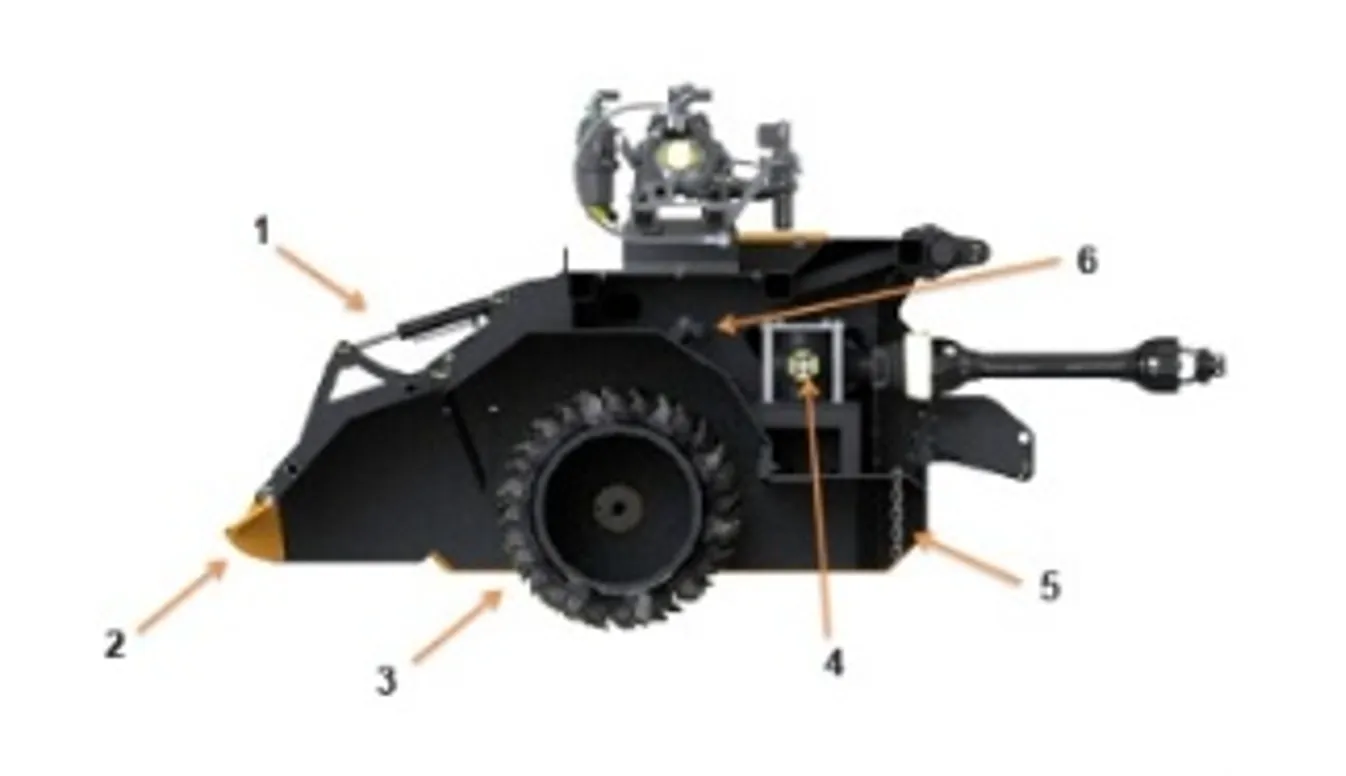
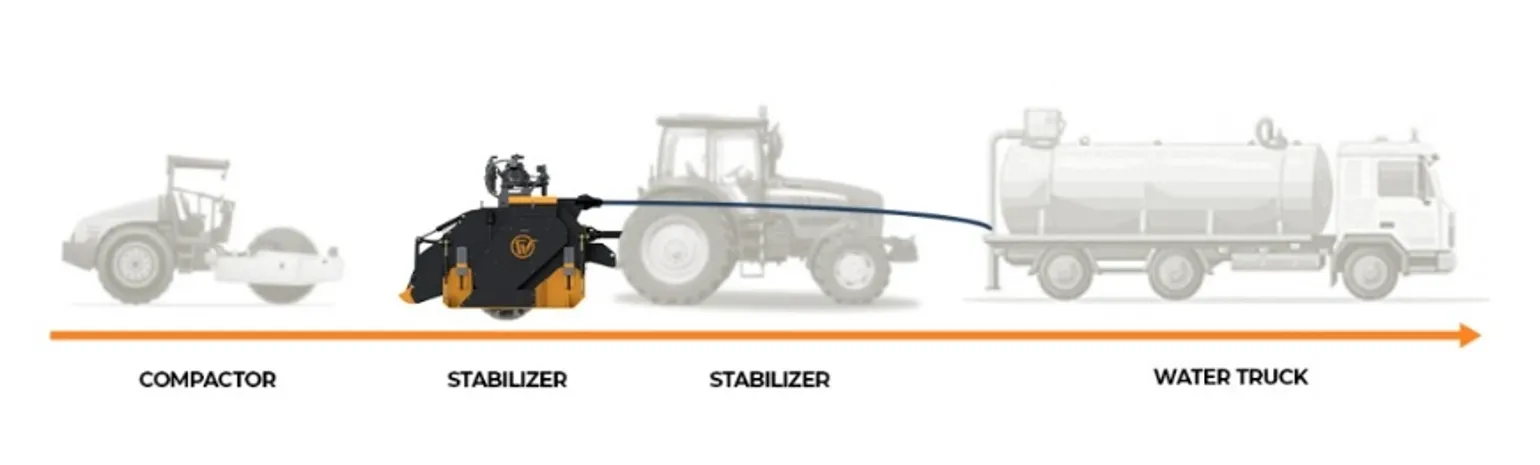
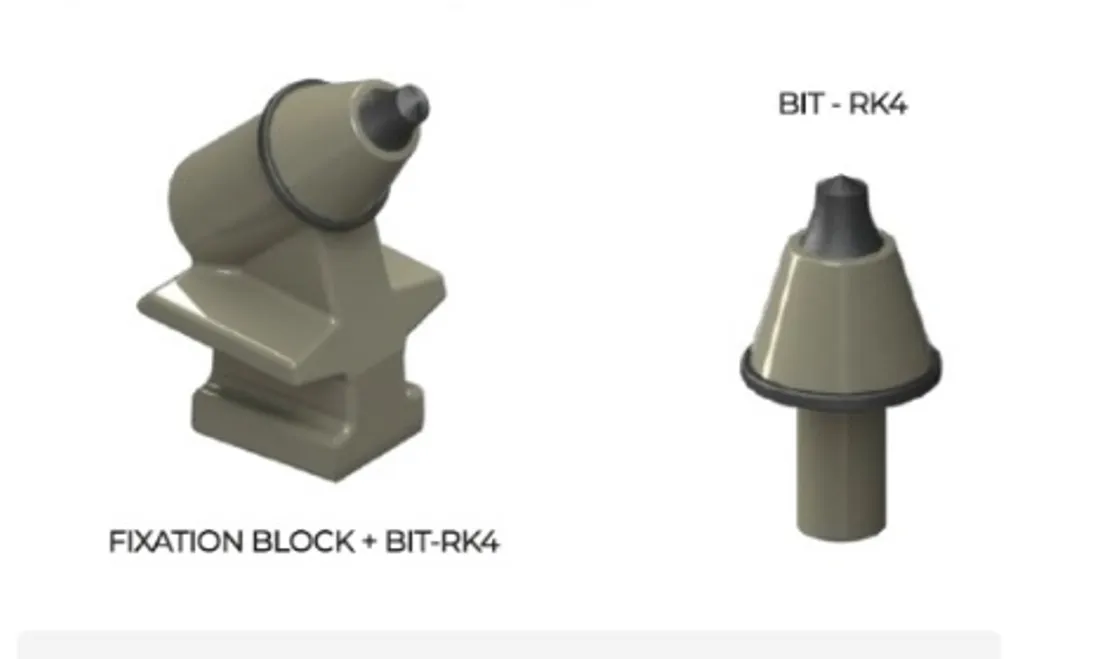
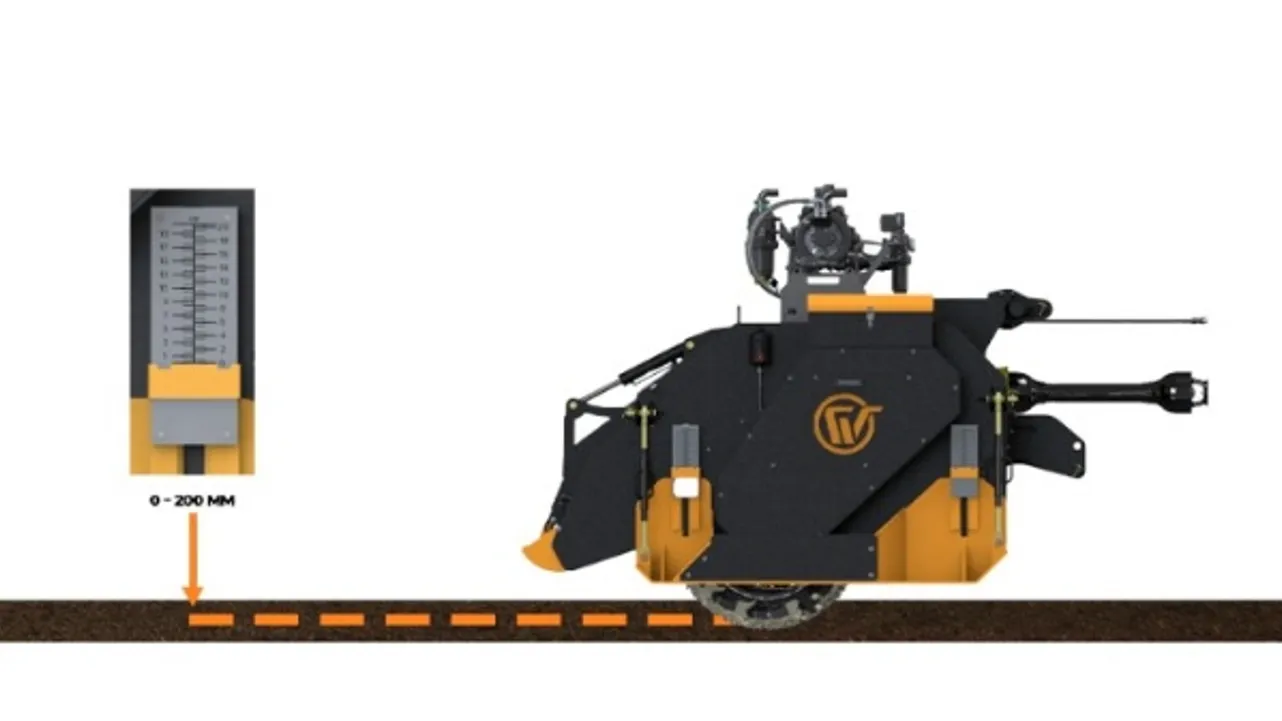
Chemical stabilization is only as reliable as the chemical contact between binder and soil. The most carefully designed mix will fail if binder is not uniformly distributed through the treatment depth. The THOR ST Soil Stabilizer from India Watanabe Soil Stabilizer Co.,Ltd ensures that every stabilizing chemical — cement, lime, fly ash, or any other agent — achieves intimate contact with every soil particle in the treatment zone, giving the chemistry the conditions it needs to proceed to target UCS. Contact our team to discuss mix design chemistry and equipment selection for your project soil conditions.