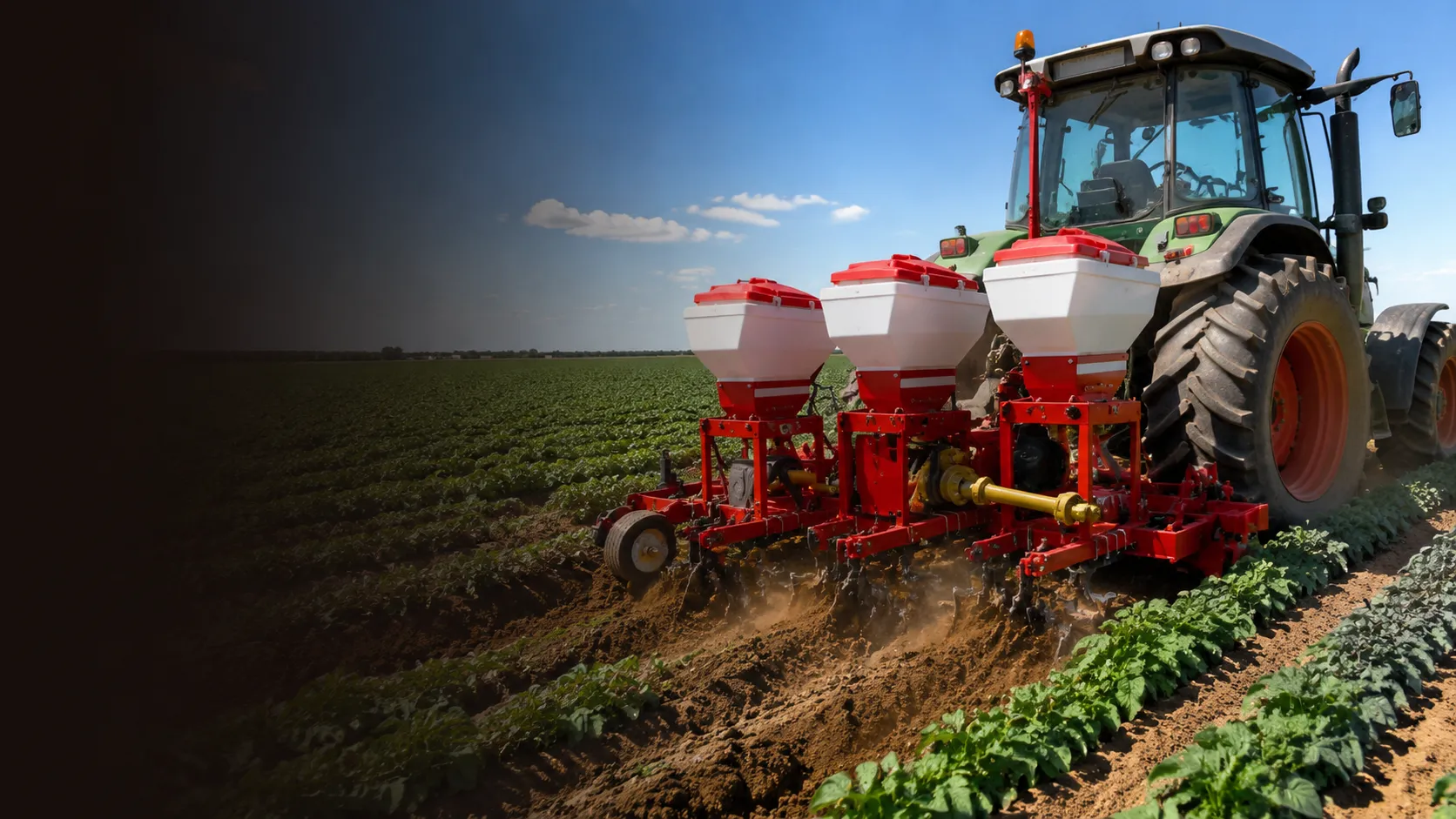
Cultivador rotatorio
ERA Series.
Three Models · 2, 3 & 5 Rows · 75–100 cv · 125 kg/row · Watanabe
The Watanabe ERA series rotary cultivator combines inter-row soil cultivation with simultaneous fertilizer application — loosening soil, controlling weeds, and feeding the crop in a single tractor pass.
Three Rotary Cultivator Models.
Two Rows, Three Rows, or Five Rows.
The ERA series covers all row configurations — ERA-2100 for small operations, ERA-3100 for medium, ERA-5100 for large commercial farms. All three share the same 125 kg/row fertilizer bunker and 540 RPM PTO drive.
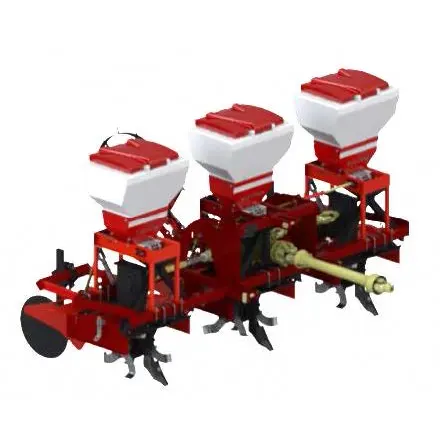
The ERA-2100 is the compact entry model for small-scale potato and vegetable operations. At 720 kg and 75 cv minimum, it pairs with mid-range tractors already used in smaller potato farms. Two spring furrowers cultivate the inter-row zone while two individual bunkers simultaneously apply fertilizer at 125 kg/row capacity.
- 2 spring furrowers — simultaneous cultivation and fertilization
- 125 kg fertilizer bunker per row — 250 kg total capacity
- 720 kg empty weight — suited for smaller tractors
- 75 cv minimum — pairs with standard 2-row farm tractors
- 540 RPM PTO — standard tractor shaft connection
- 3–5 km/h working speed — thorough inter-row soil preparation
The ERA-3100 is the most popular model in the ERA range, suited for medium-scale potato operations running on 3-row machinery systems. At 1,020 kg and 75 cv minimum, it delivers 50% more coverage per pass than the ERA-2100 while maintaining the same tractor power requirement — making it the best value model for operations already running 3-row planters and diggers.
- 3 spring furrowers — matched to 3-row planting and harvesting systems
- 125 kg bunker per row — 375 kg total capacity
- 1,020 kg — heavier build for improved stability on undulating terrain
- 75 cv minimum — same tractor as ERA-2100, more coverage per pass
- Simultaneous inter-row cultivation and fertilizer application
- Spring-loaded furrowers follow ground contour for consistent working depth
The ERA-5100 is the high-output model for large commercial potato farms running 5-row machinery configurations. At 1,300 kg and 100 cv minimum, it requires a full-size high-horsepower tractor and delivers the highest daily area coverage in the ERA range — 67% more per pass than the ERA-3100. The 625 kg total fertilizer capacity reduces fill stop frequency on large fields.
- 5 spring furrowers — maximum coverage per pass
- 125 kg bunker per row — 625 kg total capacity
- 1,300 kg — heavy-duty build for sustained high-output work
- 100 cv minimum — requires full-size high-horsepower tractor
- 67% more coverage per pass vs ERA-3100
- Matched to 5-row R-580 furrower and 5-row planting systems
Cultivation and Fertilization in One Pass
The ERA series combines two operations that are normally done separately — inter-row cultivation and fertilizer application — into a single tractor pass. The PTO-driven rotor tines loosen the inter-row soil while the gravity-fed bunkers simultaneously apply granular fertilizer into each row.
The PTO shaft at 540 RPM drives the rotor tines through the inter-row soil at 3–5 km/h forward speed. The tines penetrate to the set cultivation depth, fragmenting surface crust, incorporating crop residue, aerating the root zone, and cutting weed root systems below the soil surface. Spring-loaded furrowers follow ground contour for consistent depth on uneven terrain.
While the rotor tines cultivate, the individual row bunkers meter granular fertilizer through delivery tubes directly into the cultivated zone. Fertilizer is placed at root zone depth in the freshly loosened soil — immediately available to the developing crop. The cultivation action incorporates the fertilizer into the soil rather than leaving it on the surface.
Following the rotor and fertilizer delivery zone, ridging elements reform the potato ridge profile — maintaining the raised bed geometry that promotes tuber development and drainage. The freshly cultivated and fertilized soil is returned to the ridge profile in a single pass, leaving the field ready for the next growth stage without additional passes.
Where the ERA Cultivator Fits in the Potato Workflow
The ERA series operates at Stage 4 of the Watanabe potato machinery system — applied after crop emergence to manage inter-row weeds, loosen soil compaction from field operations, and apply in-season top-dress fertilizer.
R-380 / R-580 open furrows for planting.
PAI / PANTHER series plant seed potato.
ADB-380 / ADB-480 apply basal fertilizer.
ERA series cultivates and top-dresses. You are here.
AWB series digger harvests tubers.
Cultivador rotatorio Applications
The ERA series is designed for potato inter-row management but is equally effective for any row crop requiring combined cultivation and fertilization — sugarcane, maize, onion, and other vegetable crops.
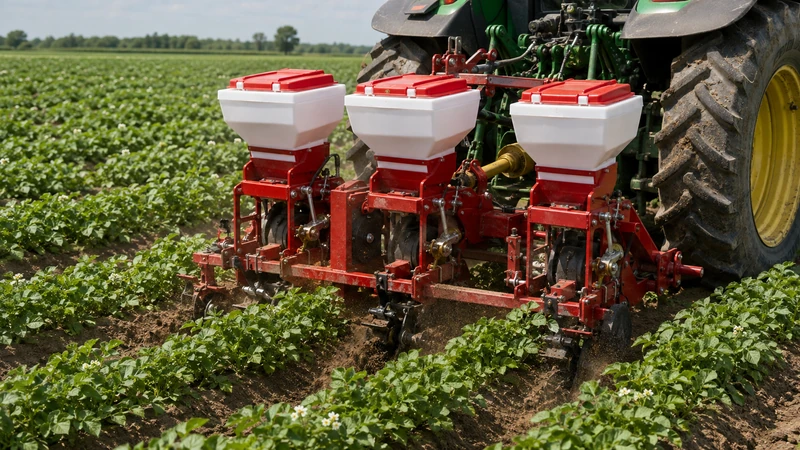
Loosens compacted inter-row soil formed by planting and irrigation operations, controls surface weeds before they compete with the crop, and simultaneously applies top-dress fertilizer — all in a single pass 3–4 weeks after planting.
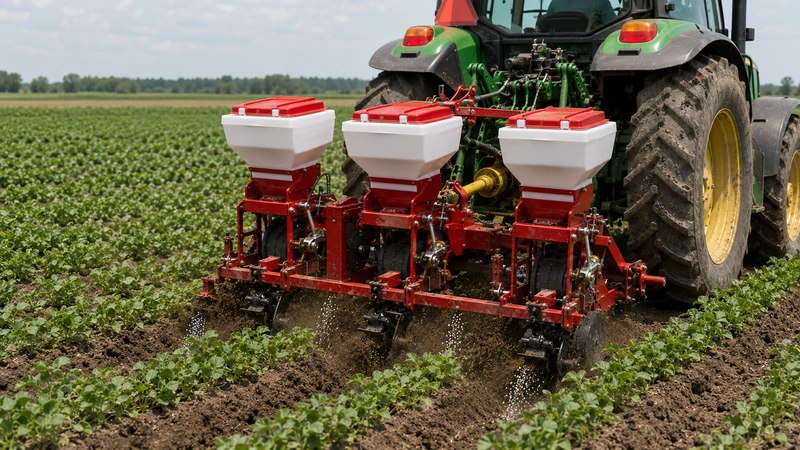
The ERA's key advantage: two operations in one pass eliminates a separate fertilizer spreader pass. The cultivation action incorporates fertilizer into loosened soil rather than leaving it on the surface — improving nutrient uptake efficiency and reducing surface volatilisation loss.
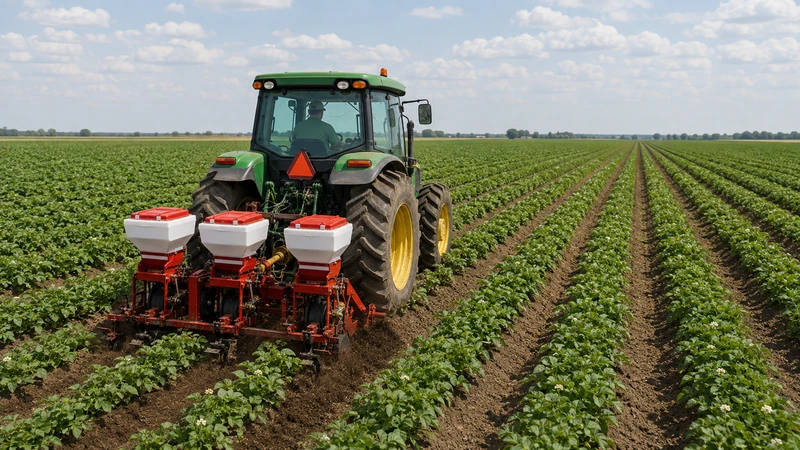
The ERA-5100's 5-row configuration maximises daily coverage on large commercial potato farms — covering the same area as two ERA-2100 passes in a single pass. At 625 kg total bunker capacity, it reduces fill stop frequency and keeps pace with intensive cultivation schedules.
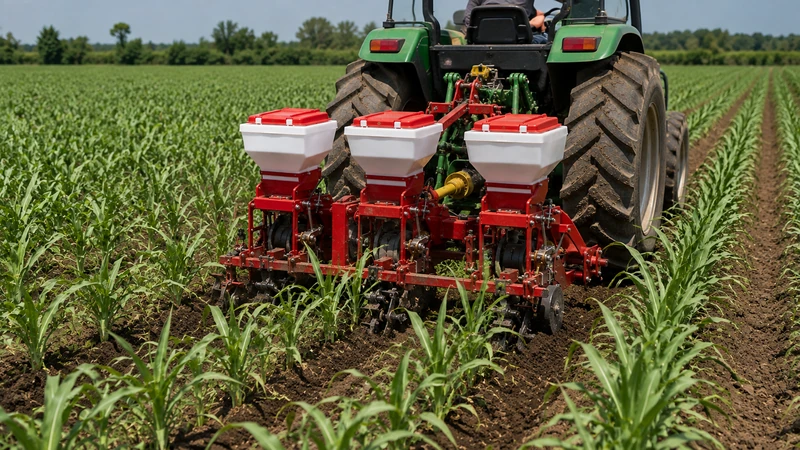
Configured for any row spacing, the ERA series is effective for sugarcane inter-row cultivation, maize side-dressing, and vegetable crop soil management. The individual row metering system allows different fertilizer rates per row to accommodate variable crop requirements across a single field.
ERA-2100 / ERA-3100 / ERA-5100 — Full Comparison
All three models share the same 125 kg/row bunker capacity, 540 RPM PTO speed, and Category 2 linkage. The ERA-5100 is the only model requiring 100 cv — the ERA-2100 and ERA-3100 both run on 75 cv.
Rotary Cultivator — Common Questions
Questions we receive most often before purchasing an ERA series rotary cultivator.
Need a Cultivador rotatorio for Your Farm?
Tell us your crop type, row count, tractor power, and field size — we will recommend the right ERA model within 24 hours.