Potato Fertilizer
Spreader Machine.
Two Models · 3 & 4 Rows · 75–85 cv · 350 kg/row · Watanabe
The Watanabe ADB-380 and ADB-480 apply granular fertilizer directly into each potato row in a single tractor pass — precise placement at the root zone, zero broadcast waste, maximum uptake efficiency.
Two Fertilizer Spreader Models.
Three Rows or Four Rows.
The ADB-380 and ADB-480 share the same per-row bunker capacity (350 kg) and working speed. The choice is determined by your row configuration and tractor power — 3-row for smaller operations, 4-row for higher output.
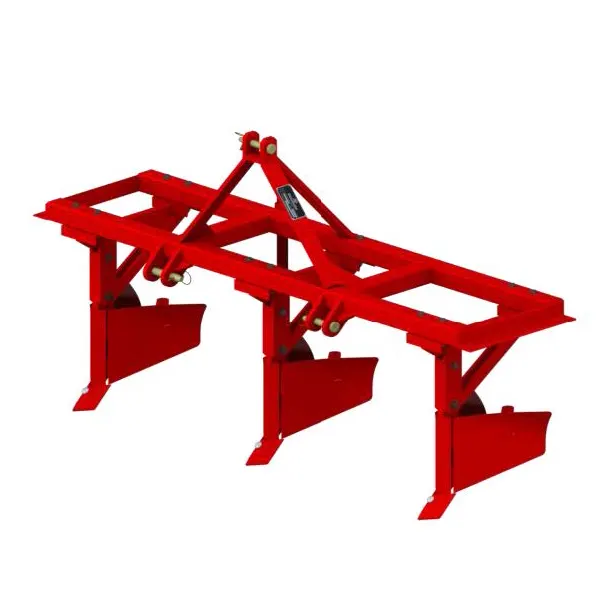
The ADB-380 is the compact 3-row model suited for small to medium-scale potato operations. With 350 kg bunker capacity per row — 1,050 kg total — it handles full-field applications on smaller plots without refilling. At 600 kg and 75 cv minimum, it pairs with standard mid-range tractors already used for other potato machinery in the Watanabe system.
- 3 individual row bunkers — 350 kg capacity each, 1,050 kg total
- 600 kg empty weight — minimal soil compaction between rows
- 75 cv minimum — pairs with standard potato farm tractors
- Category 2 bottom linkage — fast attachment and detachment
- 8–10 km/h working speed — higher output than broadcast spreading
- Applies OPC, NPK, single superphosphate, potash, and urea granules

The ADB-480 adds a fourth row unit for 33% more coverage per pass on medium to large-scale potato operations. At 700 kg and 85 cv minimum, it is matched to full-size farm tractors. With 1,400 kg total bunker capacity, it covers significantly more area per fill stop — reducing downtime and operator fatigue on large commercial potato farms.
- 4 individual row bunkers — 350 kg each, 1,400 kg total capacity
- 33% more coverage per pass vs ADB-380 — fewer headland turns
- 700 kg — matched to 85 cv+ full-size farm tractors
- 1,400 kg total load capacity — fewer refill stops on large fields
- Same 8–10 km/h working speed — consistent with other ADB series machines
- Matches 4-row planting and digging configuration for zero alignment adjustment
In-Row Fertilizer Placement in Three Steps
The ADB series applies granular fertilizer directly into the root zone of each potato row in a single pass — no broadcast spreading, no incorporation step, no surface loss. Precision placement delivers fertilizer exactly where the developing tubers can absorb it.
Granular fertilizer in each individual row bunker feeds by gravity through an adjustable metering gate. The gate opening is set before the field operation to control the application rate in kg/ha. Each row bunker meters independently — if one row runs empty, the other rows continue applying at the correct rate.
Fertilizer drops through delivery tubes directly into each furrow at the root zone depth — typically 80–120 mm below the soil surface. Placement at root zone depth rather than surface broadcasting eliminates surface runoff loss, reduces volatilisation, and delivers fertilizer at the point of maximum uptake efficiency for developing tubers.
Following discs or ridge-forming elements cover the fertilizer deposit with soil after placement — protecting it from rainfall wash-off, surface evaporation, and UV degradation. Coverage also prevents seed potato placed in the same furrow from direct contact with concentrated fertilizer granules, which can cause fertilizer burn on germinating seed.
Where the Fertilizer Spreader Fits in the Potato Workflow
The ADB-380 and ADB-480 operate at Stage 3 of the Watanabe potato machinery system — applied after planting as in-season top-dress fertilizer, or combined with furrowing as basal fertilizer at planting time.
PAI / PANTHER series plant seed potato.
ADB-380 / ADB-480 apply in-row fertilizer. You are here.
ERA series rotary cultivator manages weeds and inter-row soil.
Potato Fertilizer Spreader Applications
The ADB series is designed for potato but is equally effective for any row crop requiring precise in-furrow fertilizer placement — from sugarcane and maize to onion, garlic, and vegetable crops.

Applies NPK, potash, and single superphosphate directly to the potato root zone. In-row placement delivers 20–35% better nutrient uptake efficiency compared to surface broadcasting — reducing total fertilizer requirement while achieving the same or better yield response.

Fertilizer is placed 80–120 mm below the soil surface at the developing tuber zone. This placement depth eliminates surface volatilisation losses (particularly of urea nitrogen) and protects the fertilizer deposit from surface runoff — critical in regions with intense monsoon rainfall.

The ADB-480's 1,400 kg total capacity covers significantly more area per fill stop than broadcast spreaders. At 8–10 km/h working speed with 4-row simultaneous application, daily coverage rates are high enough to keep pace with large commercial planting schedules.

Configured for any row-crop spacing, the ADB series is equally effective for sugarcane basal fertilizer, onion and garlic in-row application, and maize side-dressing. The individual row metering system allows different application rates per row to match varying crop requirements across a single field.
ADB-380 vs ADB-480 — Full Comparison
Both models share the same per-row bunker capacity, working speed, and Category 2 linkage system. The choice is row count matched to your planting configuration and tractor power.
Potato Fertilizer Spreader — Common Questions
Questions we receive most often before purchasing an ADB-380 or ADB-480.
Need a Potato Fertilizer Spreader for Your Farm?
Tell us your crop type, row count, tractor power, and fertilizer type — we will recommend the right ADB model within 24 hours.