Soil Stabilizer Machine — THOR ST & DCW 2.2 | India Watanabe
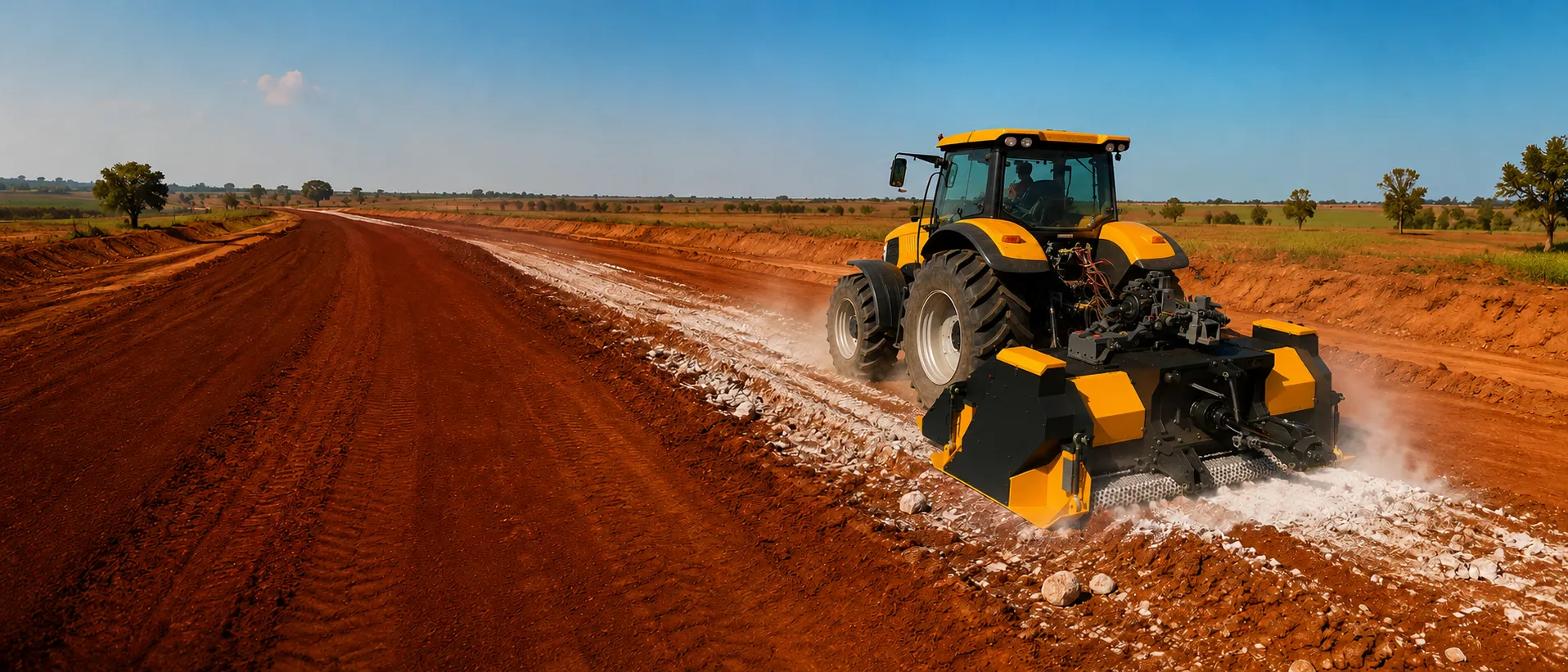
THOR ST Soil Stabilizer in field operation
Soil Stabilization Equipment

Mix. Stabilize.
Build to Last.

Two tractor-mounted machines — one complete in-situ stabilization system. Precise binder application followed by uniform mixing to 350 mm depth. IRC:SP:89 compliant. Proven on Black Cotton Soil.

350ミリメートル
Max treatment depth
480 m²/h
Field output rate
1.5–3.0 MPa
Soaked UCS — IRC:SP:89
20–50 yr
Design service life
Equipment

Two Machines. One Complete System.

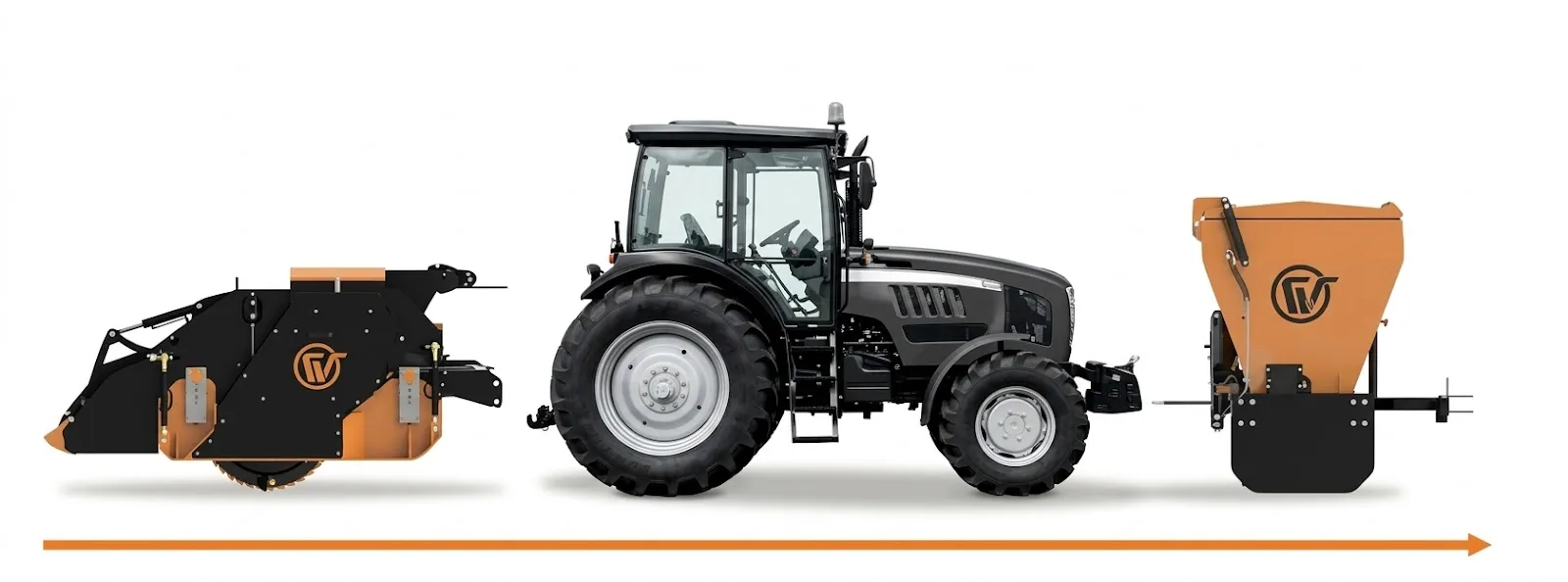
The THOR ST and DCW 2.2 are engineered to work in tandem — the spreader applies binder at calibrated rate, the stabilizer mixes uniformly to the full design depth in one pass.
THOR ST Soil Stabilizer machine in operation on road subgrade
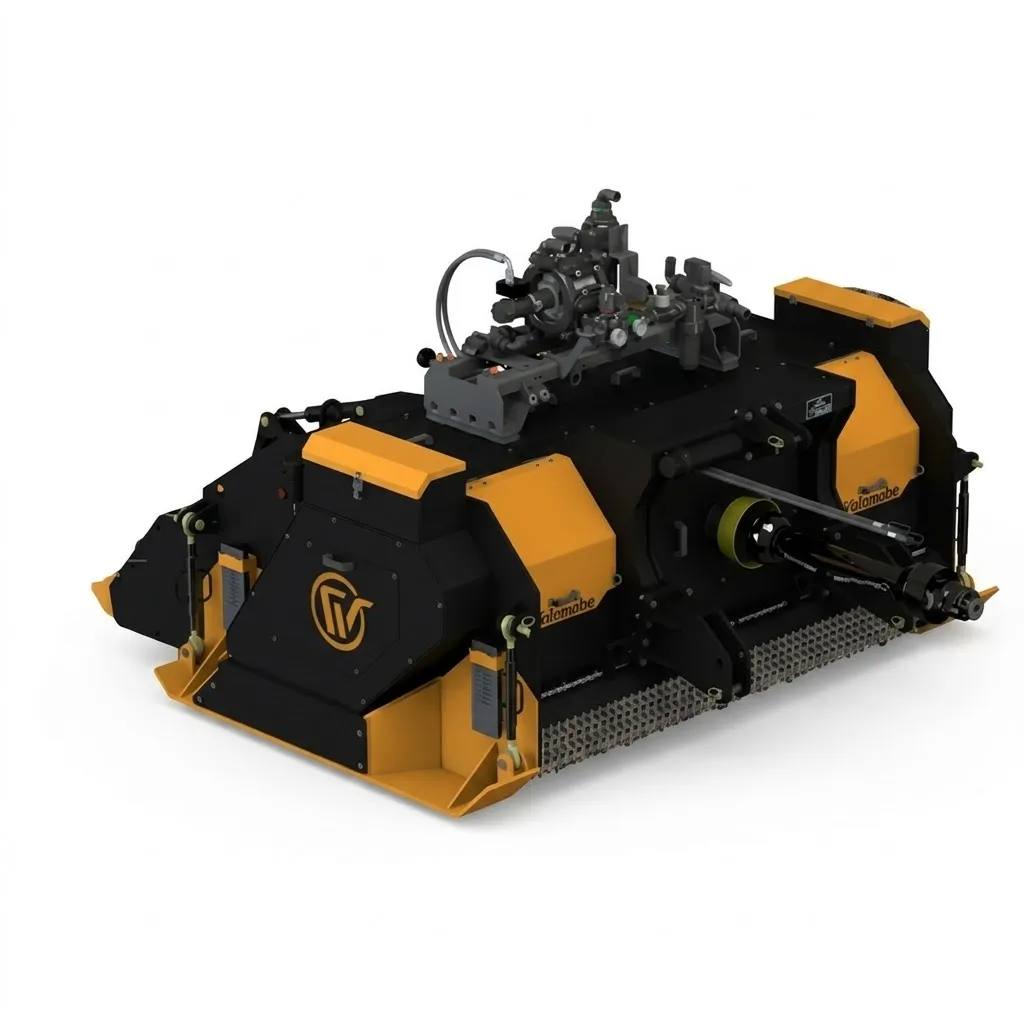
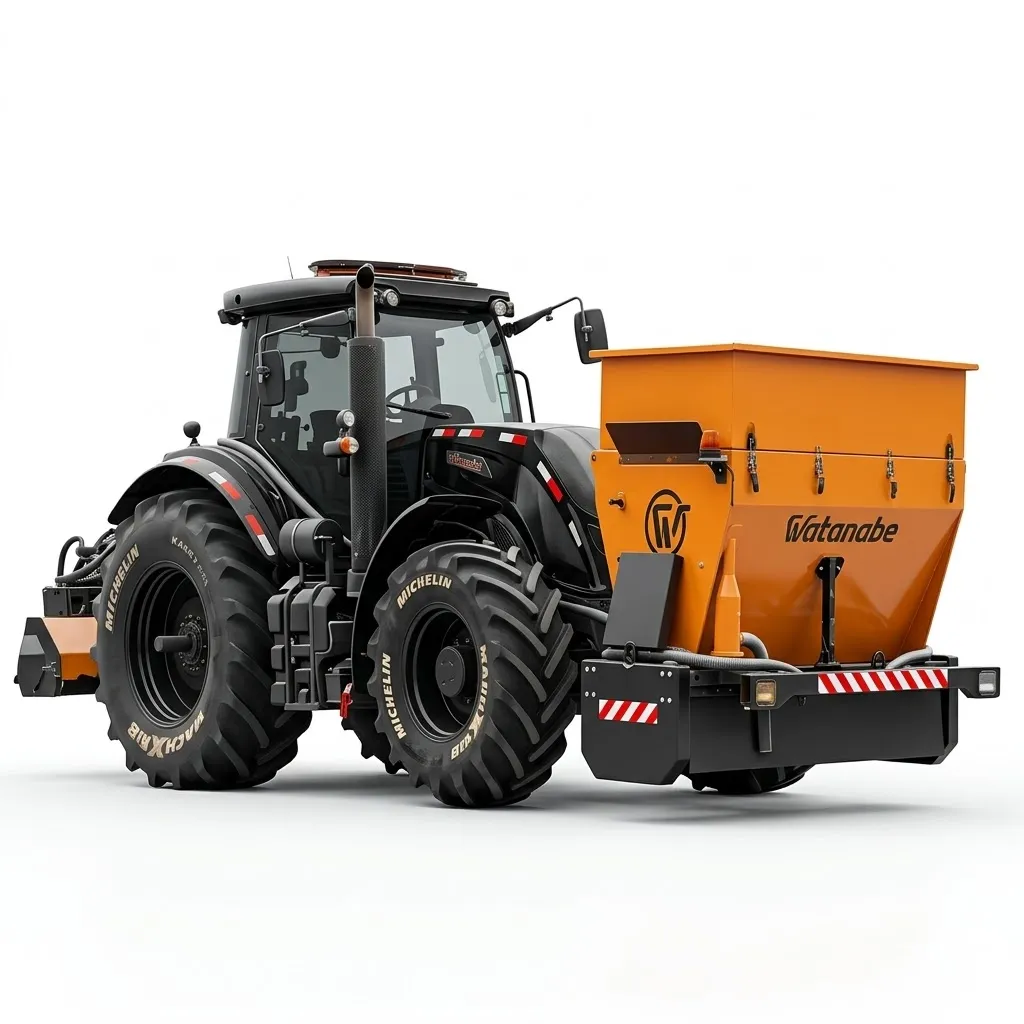
THOR ST Soil Stabilizer machine product view
Primary Machine
THOR ST
Tractor-Mounted Rotary Soil Stabilizer

The RK4 rotor with carbide-tipped teeth mills soil to the set depth while blending binder uniformly — cement, lime, fly ash, GGBS, or foamed bitumen — in a single coordinated pass. Integrated water injection maintains OMC throughout.

  • RK4 rotor — adjustable working depth up to 350 mm
  • Rear PTO drive, Cat. 2 three-point hitch
  • Works with all dry and liquid chemical binders
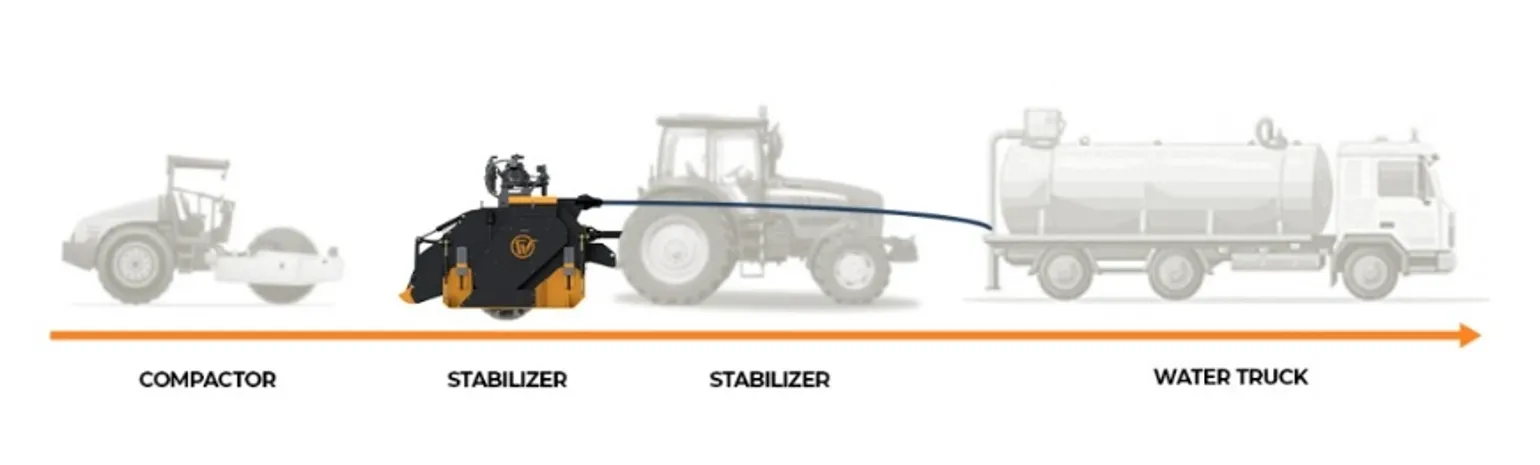
  • Integrated water injection system — maintains OMC during mix
  • Typical output: ≈ 480 m²/hour at 3 km/h working speed
Key Specifications
作業幅
2.4メートル
Max Depth
350ミリメートル
Rotor
RK4 Carbide
Engine (min.)
90–150 HP
Linkage
Cat. 2
Output
≈ 480 m²/h
DCW 2.2 Binder Spreader product view
DCW 2.2 applying lime to road subgrade
Companion Machine
DCW 2.2
Calibrated Dry Powder Binder Spreader

Accurate binder application is as critical as mixing — under-dosing fails to reach target UCS; over-dosing causes shrinkage cracking. The DCW 2.2 applies cement, lime, and fly ash at ±2% accuracy, controlled by tractor forward speed.

  • ±2% application accuracy — prevents under and over-dosing
  • Speed-proportional control — rate adjusts automatically with travel speed
  • Front-mount configuration — pairs with THOR ST on same tractor
  • Compatible with OPC, PPC, PSC, quicklime, fly ash, GGBS
  • 2.2 m spreading width — matched to THOR ST working width
Key Specifications
Spread Width
2.2 m
Accuracy
±2%
Binders
All dry powder
Drive
Speed-proportional
Linkage
Cat. 2 front
Mounting
Front 3-point hitch
How It Works

Five Steps to a Compliant Stabilized Layer

In-situ surface mixing per IRC:SP:89 — from binder spreading to curing membrane, achievable in a single working shift for most road subgrade projects.

1
Subgrade Preparation

Grade and scarify the subgrade. Check moisture — target within 2% of OMC. For PI > 20, apply quicklime first and allow 24–72 hours for cation exchange before cement treatment.

2
DCW 2.2 Binder Spreading

DCW 2.2 applies cement or lime at the calibrated design rate. Speed-proportional control maintains ±2% accuracy — preventing the two most common failure modes: under and over-dosing.

3
THOR ST In-Situ Mixing

RK4 rotor mills to design depth up to 350 mm, blending binder uniformly through the full treatment zone. Integrated water injection maintains OMC throughout the pass.

4
Compact to 97% MDD

Complete compaction within 2 hours of cement mixing. Pneumatic + smooth drum roller achieves 97% Modified Proctor MDD. Verify by nuclear density gauge or sand replacement.

5
Cure and Test

Apply bituminous curing membrane within 30 minutes of final rolling. Core at 7 days — soaked UCS ≥ 1.5 MPa per IRC:SP:89 required before surfacing proceeds.

20–50 Year Design Life

CSH and CAH crystals formed during cement hydration are permanent. A correctly stabilized subgrade retains 70–90% of its bearing capacity when fully saturated — surviving every monsoon.

Soil Matching Guide

Which Material for Your Soil?

Material selection follows plasticity index. Specifying cement on PI > 35 clay without lime pre-treatment is the most common cause of stabilization failure in India.

Soil Type
Condition & Region
Recommended Treatment
Standard
ブラックコットンソイル
PI > 35
Maharashtra, Karnataka, MP, Telangana, AP — expansive, unworkable when saturated
Quicklime 4–6% then OPC 4–6% two-stage
IRC:SP:89
Moderate Clay
PI 20–35
Mixed alluvial and residual soils — transition zones between BCS and granular terrain
Lime 3–5% + Cement 4–6% or lime-fly ash
IRC:SP:89
Low-PI Clay / Silt
PI 10–20
North India alluvial plains — UP, Bihar, West Bengal — soft subgrade needing strength
OPC/PPC 5–9% + fly ash 10–15% optional
IRC:SP:89
Granular / Sandy
PI < 10
Coastal zones, river beds, Rajasthan and Gujarat desert fringe
OPC 3–7% or foamed bitumen 2–4%
IRC:SP:89
Sulphate-Bearing
SO₃ > 0.5%
Industrial areas, evaporite deposits — OPC causes ettringite heave, do not use
PSC / SRC only — test sulphate expansion first
ASTM D559
Applications

Where the THOR ST Works

From national highway subgrade to rural PMGSY roads and agricultural hardpan breaking — one machine, multiple use cases across India's diverse soil and climate conditions.

Road subgrade stabilization National Highway Black Cotton Soil
Road Construction
National Highway & Rural Road Subgrade

Lime + cement two-stage treatment on Black Cotton Soil for NHAI and PMGSY projects. Achieves IRC:SP:89 structural stabilization that counts toward IRC:37 pavement thickness design.

Full depth reclamation of failed asphalt road
Road Rehabilitation
Full Depth Reclamation

Mills failed pavement and subgrade in-place, blends cement or foamed bitumen, recompacts as new stabilized base. Costs 30–50% less than conventional rebuild — no excavation, no aggregate import.

Embankment fill stabilization slope protection
Embankment & Slope
Embankment Fill Stabilization

Lime stabilization reduces seepage, increases shear strength against mass movement, and provides an erosion-resistant surface — protecting adjacent farmland from monsoon waterlogging.

RK4 rotor detail for agricultural hardpan breaking
Agriculture
Hardpan Breaking & Soil Amendment

Deep rotor penetration fractures compaction layers blocking monsoon infiltration. Combined with lime for pH correction — reduces surface runoff by 40–70% and increases crop water availability.

Industrial platform cement stabilization
Industrial
Platforms, Yards & Warehouse Floors

High UCS (2.0–5.0 MPa) cement stabilization for container yards, warehouse slabs, and airport aprons. 7-day strength gain meets fast construction programmes without aggregate import.

Mine road dust control and stabilization
Dust & Erosion Control
Mine Haul Roads & Access Tracks

Lime or calcium chloride surface stabilization for unpaved mine roads. Eliminates fine particle detachment, reduces PM10 dust emissions, and extends haul road service life without structural treatment.

Design Standards

Built Around
IRC:SP:89

Every THOR ST specification — working width, treatment depth, water injection rate, rotor geometry — is calibrated to the acceptance criteria of India's soil stabilization standard. When the machine completes its pass, the layer is ready to test.

Discuss Your Project →
IRC:SP:89-2010
Guidelines for Soil and Granular Material Stabilization
Soaked UCS: 1.5–3.0 MPa at 7 days (cured at 40°C). Compaction: 97% MDD. Swell: ≤ 1.5%. Modification minimum: 0.175 MPa.
IRC:37-2012
Guidelines for Design of Flexible Pavements
Stabilized layers achieving ≥ 1.5 MPa soaked UCS count as structural pavement layers — reducing granular and asphalt thickness requirements above.
ASTM D559 / D560
Wet-Dry & Freeze-Thaw Durability Tests
Recommended alongside IRC for Deccan Plateau (wet-dry cycling) and Himalayan (freeze-thaw) projects. Weight loss acceptance: < 14% after 12 cycles.
IS:4332 (Parts 1–6)
BIS Methods of Test for Stabilized Soils
Indian standard test suite for UCS, swell, CBR of stabilized soils — the quality control framework for THOR ST field verification.
Technical Specifications

Full 仕様 Comparison

Both machines ship as the India Watanabe stabilization package. Front + rear configuration allows a single tractor and one operator to complete spreading and mixing in one pass.

仕様
THOR ST — Soil Stabilizer
DCW 2.2 — Binder Spreader
Machine Type
Function
In-situ rotary soil mixing
Dry powder binder spreading
Mounting
Rear 3-point hitch (Cat. 2)
Front 3-point hitch (Cat. 2)
Drive
Rear PTO — 540 RPM
Speed-proportional mechanical
Working Dimensions
作業幅
2.4メートル
2.2 m
Treatment Depth (max.)
350 mm adjustable
N/A — surface application
Rotor / Mechanism
RK4 — carbide-tipped teeth
Calibrated spreading disc
トラクターの要件
Engine Power (min.)
90–150 HP
Combined with THOR ST tractor
リンクカテゴリー
カテゴリー2
カテゴリー2
パフォーマンス
Output Rate
≈ 480 m²/hour
Matched to THOR ST speed
Accuracy
Uniform full-depth mixing
±2% of design rate
作業速度
≈ 3 km/h
≈ 3 km/h (synchronized)
Binder Compatibility
Dry Powder Binders
OPC · PPC · PSC · Lime · Fly Ash · GGBS
OPC · PPC · PSC · Lime · Fly Ash
Liquid / Foam Binders
Foamed bitumen · Emulsion
N/A — dry powder only
FAQ

Common Questions

Questions we receive most often from Indian road construction contractors and government project engineers before specifying the THOR ST system.

Can the THOR ST and DCW 2.2 be operated by a single tractor?
Yes — this is the standard operating configuration. The DCW 2.2 mounts on the front three-point hitch of the same tractor, while the THOR ST attaches to the rear. One tractor, one operator, one pass: the binder is spread immediately ahead of the rotor, which then mixes it into the soil at the design depth. This eliminates the delay between spreading and mixing that allows binder to be blown away by wind or hydrated by surface moisture before incorporation.
How long does it take to reach the required IRC:SP:89 UCS of 1.5 MPa?
For cement stabilization, soaked UCS ≥ 1.5 MPa is typically achieved at 7 days when cured at 40°C per IRC:SP:89. Field core samples should be taken at 7 days to confirm acceptance before surfacing proceeds. For lime-only stabilization on Black Cotton Soil, strength development is slower — allow 28 days minimum and test before loading. For lime + cement two-stage treatment, the cement layer is tested at 7 days after the second pass.
What tractor horsepower is needed to run the THOR ST in Black Cotton Soil?
The THOR ST requires a minimum of 90 HP for shallow treatment depths (100–150 mm) in medium soils, and 130–150 HP for full-depth 350 mm treatment in stiff Black Cotton Soil. For the combined front + rear configuration with the DCW 2.2, a tractor of at least 130 HP is recommended to ensure consistent working speed and rotor performance without stalling. Common tractors used in India for this application include the Mahindra Arjun 605 DI (60 HP — suitable for light work only), TAFE Dynatrack 7502 (75 HP), and John Deere 6120B (120 HP).
Is the THOR ST suitable for treating Black Cotton Soil directly with cement?
No — direct cement treatment of Black Cotton Soil with PI > 25 is not recommended and will not achieve IRC:SP:89 acceptance criteria. Cement cannot overcome the expansive clay minerals in BCS without prior lime pre-treatment. The correct procedure is: (1) apply quicklime at 4–6% using the DCW 2.2, (2) mix with THOR ST to full treatment depth, (3) allow 24–72 hours for cation exchange, (4) then apply OPC at 4–6% with DCW 2.2 and mix again with THOR ST. This two-stage treatment permanently reduces PI below 20 and delivers 1.5–3.0 MPa soaked UCS.
Can fly ash be used as the sole binder with the THOR ST?
Class F fly ash alone has very low cementitious activity and cannot achieve IRC:SP:89 stabilization criteria without an activator. Fly ash is always used in combination — typically 10–25% fly ash + 3–5% lime (lime activates the pozzolanic reaction), or 10–20% fly ash + 4–6% OPC (cement provides the alkaline environment). This combination reduces total binder cost by 25–40% while meeting UCS requirements. The THOR ST mixes blended binders uniformly at the same efficiency as single-binder mixes — the blend is spread by DCW 2.2 and incorporated by the rotor in one pass.
What is the working window after cement is spread before mixing must start?
The maximum delay between cement spreading and mixing is 2 hours for OPC in normal conditions (temperature < 30°C). In hot weather above 35°C — common across Rajasthan, Gujarat, and Maharashtra — this window shrinks to 60–90 minutes. Use PPC (Portland Pozzolana Cement) in hot weather: its lower heat of hydration extends the working window and reduces early hydration before mixing. In all cases, the THOR ST follows directly behind the DCW 2.2 in a tandem configuration, minimising the spreading-to-mixing delay to near zero.
Get in Touch

Ready to Stabilize Your Project?

Tell us your soil type, PI value, project state, and treatment depth — we will recommend the right binder specification within 24 hours.