● Erosion Control
How Does Stabilisasi Tanah Prevent Erosion?
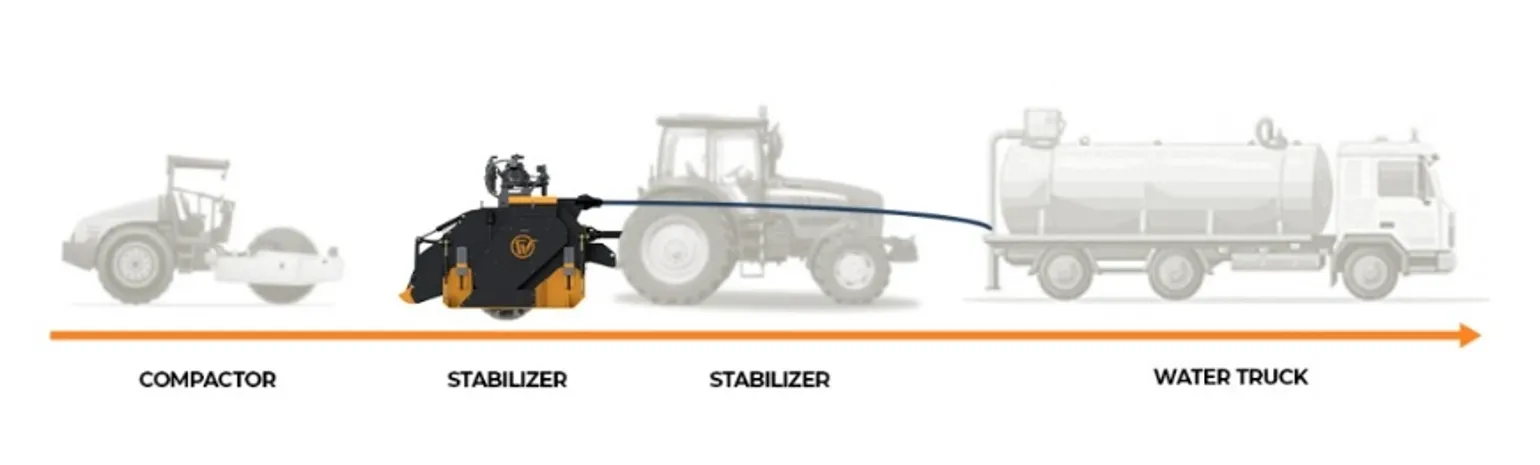
Erosion is the detachment and transport of soil particles by water, wind, or gravity. It strips productive topsoil from agricultural land, undermines road embankments, silts up reservoirs and waterways, and destabilises slopes. Soil stabilization prevents erosion through several distinct mechanisms — and the right mechanism depends on whether you are dealing with rain impact, surface runoff, channel scour, wind, or slope instability. This article explains each mechanism in detail and matches it to the appropriate stabilization method.
Understanding Erosion: The Four Mechanisms That Stabilization Addresses
Erosion does not happen in a single way. Understanding the specific mechanism at work on a site determines which stabilization approach is most effective. The four primary erosion mechanisms are:
Raindrop Impact (Splash Erosion)
A single raindrop hits bare soil at up to 9 m/s and delivers a kinetic energy impulse that detaches soil particles from the surface and splashes them into the air. These airborne particles can travel 60 cm horizontally and 30 cm vertically. On slopes, splashed particles are displaced preferentially downhill. Splash erosion breaks down soil aggregates, releases fine particles that seal the surface and reduce infiltration, and initiates the suspension of sediment that runoff then carries away. It is the first step in most water erosion sequences.
Sheet and Rill Erosion (Surface Runoff)
When rainfall intensity exceeds the soil’s infiltration capacity, water accumulates on the surface and flows downslope as a thin sheet (sheet erosion) or concentrates into small channels (rill erosion). Sheet flow has relatively low energy but covers large areas; rills concentrate flow and energy, cutting progressively deeper channels. In India’s monsoon regions, a single intense storm event can strip 10–50 mm of topsoil from an unprotected slope in an hour.
Wind Erosion (Aeolian Erosion)
Wind lifts fine soil particles from exposed surfaces and transports them over long distances. Wind erosion is most severe on dry, bare, fine-textured soils with low aggregate stability — sandy soils in Rajasthan, Gujarat, and arid zones are particularly vulnerable. Threshold wind speeds for particle movement on loose sand are as low as 4–6 m/s. Once soil particles are in motion, they abrade other particles and the ground surface, accelerating erosion. Wind erosion also degrades air quality with dust storms and PM10 particulate emissions.
Mass Movement (Slope Erosion)
Slope erosion involves the downslope movement of soil as a coherent or semi-coherent mass — shallow landslides, slumps, and debris flows. This occurs when the shear stress imposed by gravity and the weight of the saturated soil exceeds the soil’s shear strength. Saturation during monsoon rainfall reduces shear strength dramatically in fine-grained soils, triggering mass movement on slopes that were stable during the dry season. Road embankments, cut slopes, and stream banks are particularly vulnerable in India’s high-rainfall zones.
Scale of the Problem in India
India loses an estimated 5,334 million tonnes of soil to erosion every year according to the Indian Council of Agricultural Research (ICAR) — of which approximately 29% is permanently lost to the sea. Erosion-affected land covers over 146 million hectares, reducing agricultural productivity and accelerating siltation of dams and reservoirs whose capacity India depends on for irrigation and hydropower.
How Chemical Stabilization Prevents Erosion
Chemical stabilization with cement or lime prevents erosion through four specific mechanisms that address different parts of the erosion process:
Mechanism 1: Particle Binding — Eliminating the Erodible Fraction
The primary anti-erosion mechanism of chemical stabilization is the creation of cementitious bonds between soil particles. When cement or lime is mixed into soil and cures, individual particles — which could previously be detached and transported by water or wind — are locked into a rigid or semi-rigid matrix. The detachment phase of erosion is eliminated: there are no free particles to be moved.
The resistance of a stabilized surface to erosion is quantified by its critical shear stress — the minimum flow velocity at which the surface material begins to erode. For loose fine sand, this is approximately 0.15–0.25 m/s. For cement-stabilized soil at 1.5 MPa UCS, the critical shear stress increases by a factor of 50–100 — only extremely high-velocity flow (flash flood conditions) can erode a well-stabilized surface.
Mechanism 2: Permeability Reduction — Limiting Water Entry
Chemical stabilization fills soil pore spaces with cementitious reaction products (CSH, CAH), reducing the soil’s permeability by 100–1000 times compared to the untreated material. This reduction in permeability has two anti-erosion effects:
- Internal erosion prevention — Water moving through soil pores at high velocity (seepage erosion or piping) can detach and transport fine particles from within the soil mass, creating internal voids that lead to collapse. Low-permeability stabilized soil resists seepage-driven internal erosion because water cannot flow through it fast enough to mobilise particles.
- Pore pressure control — Rainfall penetrating a permeable soil slope builds up pore water pressure, reducing effective stress and shear strength. A stabilized slope resists water ingress, limiting pore pressure build-up during monsoon rainfall and maintaining slope stability throughout the wet season.
Mechanism 3: Shear Strength Increase — Resisting Mass Movement
Slope erosion and mass movement occur when the downslope gravitational force exceeds the soil’s shear strength along a potential failure plane. Chemical stabilization increases cohesion (c) and, in some cases, the angle of internal friction (φ), shifting the balance firmly in favour of stability. A factor of safety of 1.5 against slope failure — the standard minimum in most design codes — can often be achieved on slopes that were marginally stable before treatment by adding 3–6% lime to a clay soil.
This mechanism is the primary anti-erosion benefit on road embankments and cut slopes, where the failure mode is mass movement rather than particle-by-particle surface erosion.
Mechanism 4: Surface Hardening — Resisting Raindrop Impact and Wind
A cured cement or lime-stabilized surface is hard enough to resist the kinetic energy of raindrops without disaggregating. The splash erosion mechanism — which initiates most water erosion sequences — is eliminated because the surface particles are bound together and cannot be detached by raindrop impact. Similarly, wind cannot lift and transport particles that are cemented into a continuous surface. This is why stabilized road surfaces, airstrip shoulders, and canal banks resist erosion even in high-rainfall and high-wind environments where identical untreated soils would erode rapidly.
“
A single Indian monsoon storm can strip 10–50 mm of topsoil from an unprotected slope in one hour. A correctly stabilized surface resists this erosion force for 20–50 years with no further intervention.
How Biological Stabilization Prevents Erosion
Vegetation is the original soil stabilizer — plant root systems have been protecting soil from erosion since land plants first evolved. Biological stabilization prevents erosion through mechanisms that are complementary to chemical stabilization and most effective at the soil surface:
Root Reinforcement
Plant roots penetrate the soil to depths of 200–500 mm (shallow-rooted grasses) or several metres (deep-rooted shrubs and trees), binding soil particles and aggregates together and adding tensile strength to the soil mass. Root-reinforced soil has significantly higher shear strength than bare soil — research shows increases of 2–10 kN/m² in cohesion, depending on root density and diameter. On slopes, this increase in cohesion meaningfully improves the factor of safety against shallow slide failure.
Rainfall Interception and Energy Reduction
Vegetation canopy intercepts rainfall before it reaches the soil surface, breaking up raindrop kinetic energy and delivering water to the soil surface as slower-moving drops or stem flow. Dense grass cover can reduce the effective kinetic energy of rainfall reaching the soil by 70–90%. This dramatically reduces splash erosion, aggregate breakdown, and surface sealing. A fully vegetated surface is almost completely immune to splash erosion regardless of rainfall intensity.
Surface Roughness and Flow Retardation
Plant stems and surface litter increase the hydraulic roughness of the surface, slowing the velocity of overland flow. Since erosive force varies with the square of flow velocity, halving the velocity reduces erosive force by 75%. Slower flow transports less sediment and is more likely to infiltrate into the soil rather than running off. This is why grass-covered slopes erode at a fraction of the rate of bare slopes under identical rainfall.
Evapotranspiration and Moisture Control
Vegetation extracts moisture from the soil profile through transpiration, reducing soil moisture content between storm events. Lower antecedent moisture content means that more rainfall can be absorbed before the soil saturates and pore pressures build to failure levels — increasing the rainfall threshold for slope failure. Deep-rooted trees on slopes can extract moisture from depths of 2–5 m, significantly increasing the factor of safety against deep-seated landslides.
Soil Stabilization for Wind Erosion Control
Wind erosion prevention requires different stabilization strategies from water erosion control, because the governing factor is surface particle detachment by aerodynamic forces rather than hydraulic shear. The key approaches are:
- Surface stabilization with lime, cement, or polymer — Binding surface particles into aggregates or a continuous crust that exceeds the threshold shear stress for wind-driven particle movement. Even a low dose of lime (1–2%) can dramatically increase the threshold wind speed for particle detachment on sandy soils by creating inter-particle bonds that resist aerodynamic lifting.
- Polyacrylamide (PAM) spray application — PAM at 0.01–0.1% dissolved in water is sprayed on bare soil surfaces to improve aggregate stability and resist wind erosion. Highly effective for temporary stabilization of construction sites, disturbed soils, and mine tailings where vegetation establishment is delayed. PAM is also used to reduce dust emissions from unpaved haul roads and stockpiles.
- Calcium chloride moisture retention — CaCl₂ applied at 0.5–1% attracts atmospheric moisture, keeping the soil surface damp and increasing particle adhesion. Prevents wind erosion on unpaved roads and stabilizes desert sand. Requires periodic reapplication as it leaches with rainfall.
- Windbreaks and shelterbelts — Rows of trees planted perpendicular to the prevailing wind reduce wind speed at the surface over a distance of 10–15 times the tree height. Effective for agricultural wind erosion control over large areas. A complementary biological measure used alongside chemical surface stabilization in arid zone land management.
Stabilization for Road Embankment Erosion Control
Road embankments in India face intense erosion pressure during the monsoon season. Freshly constructed embankments with bare, compacted soil are particularly vulnerable: rain falls directly on the surface, runoff concentrates at the toe of the slope, and the compacted fill has poor aggregate stability. The standard erosion protection strategy for Indian road embankments uses a combination of methods:
| Erosion Type | Primary Stabilization Method | Secondary / Complementary |
|---|---|---|
| Splash and sheet erosion on slope face | Turfing / grass seeding (Vetiver, Bermuda grass) | Coir geotextile matting until vegetation establishes |
| Rill and gully erosion on steep slope | Lime or cement stabilization of slope surface | Check dams, toe drains, benching |
| Mass movement / shallow slip on embankment | Full lime stabilization of embankment fill | Deep-rooted vegetation (Vetiver hedge rows) |
| Scour at embankment toe by roadside drain | Cement stabilization of drain channel lining | Rip-rap protection at high-velocity points |
| Wind erosion on exposed fill during dry season | Lime or PAM spray surface treatment | Mulch cover, temporary windbreaks |
Soil Stabilization for Agricultural Erosion Control
In agricultural contexts, soil stabilization for erosion control focuses on improving aggregate stability — the ability of soil clumps to hold together under raindrop impact — rather than creating the rigid, load-bearing layer that construction stabilization produces. The key approaches are:
- Lime application — Low-rate lime application (0.5–1.5% or equivalent field rates) to acidic soils improves aggregate stability by flocculating clay particles, increasing their resistance to raindrop disaggregation. This is a well-established practice in Indian agricultural districts with Black Cotton Soil, where lime application for both pH correction and aggregate stabilization improves both erosion resistance and crop yield.
- PAM (polyacrylamide) in irrigation water — Adding PAM at 10–40 ppm to furrow or sprinkler irrigation water dramatically reduces soil dispersion and surface sealing. A widely adopted practice across Indian irrigated agriculture that reduces erosion losses by 50–95% during irrigation events while improving infiltration and reducing runoff.
- Organic matter addition — Compost, green manure, and crop residue incorporation build soil organic matter, which is the primary natural binder for soil aggregates. Each 1% increase in soil organic matter reduces erodibility by approximately 20%. This is the most effective long-term agricultural erosion control strategy, but also the slowest — requiring consistent management over years.
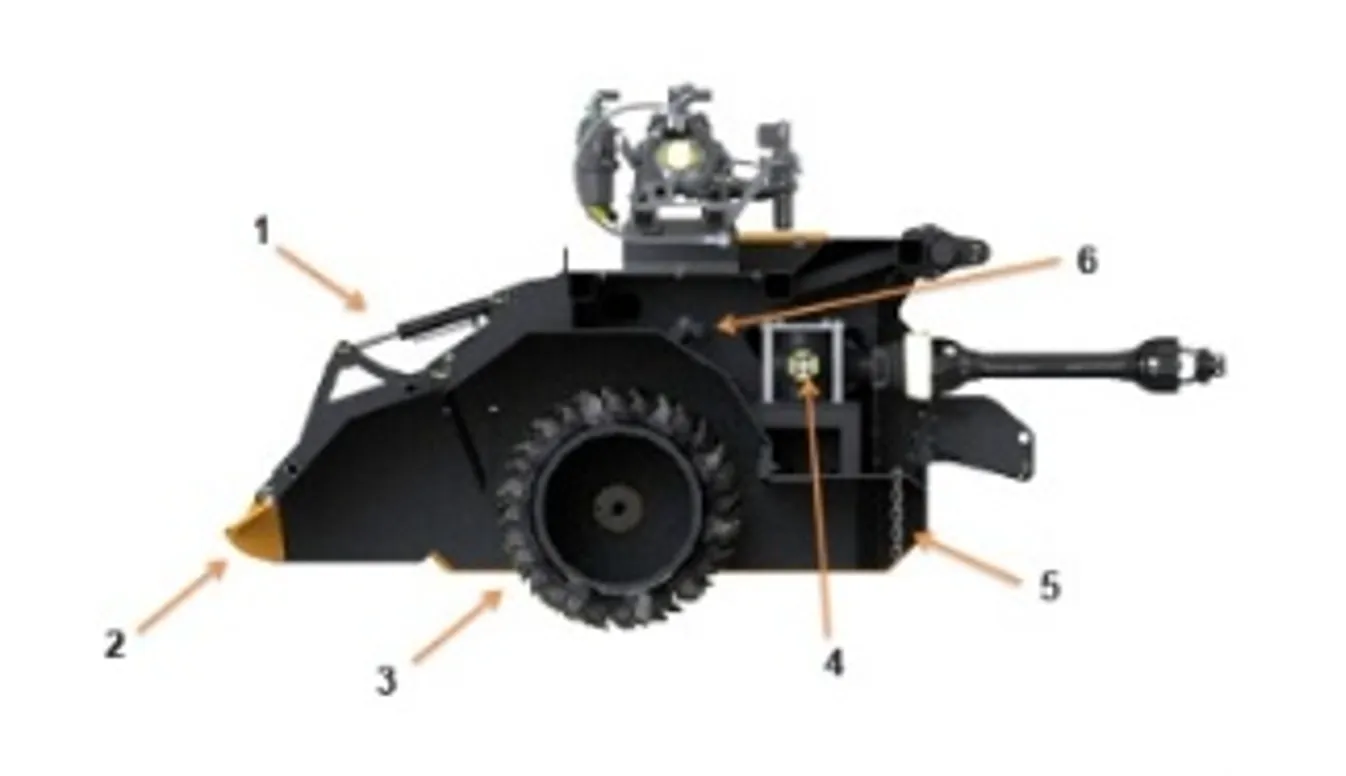
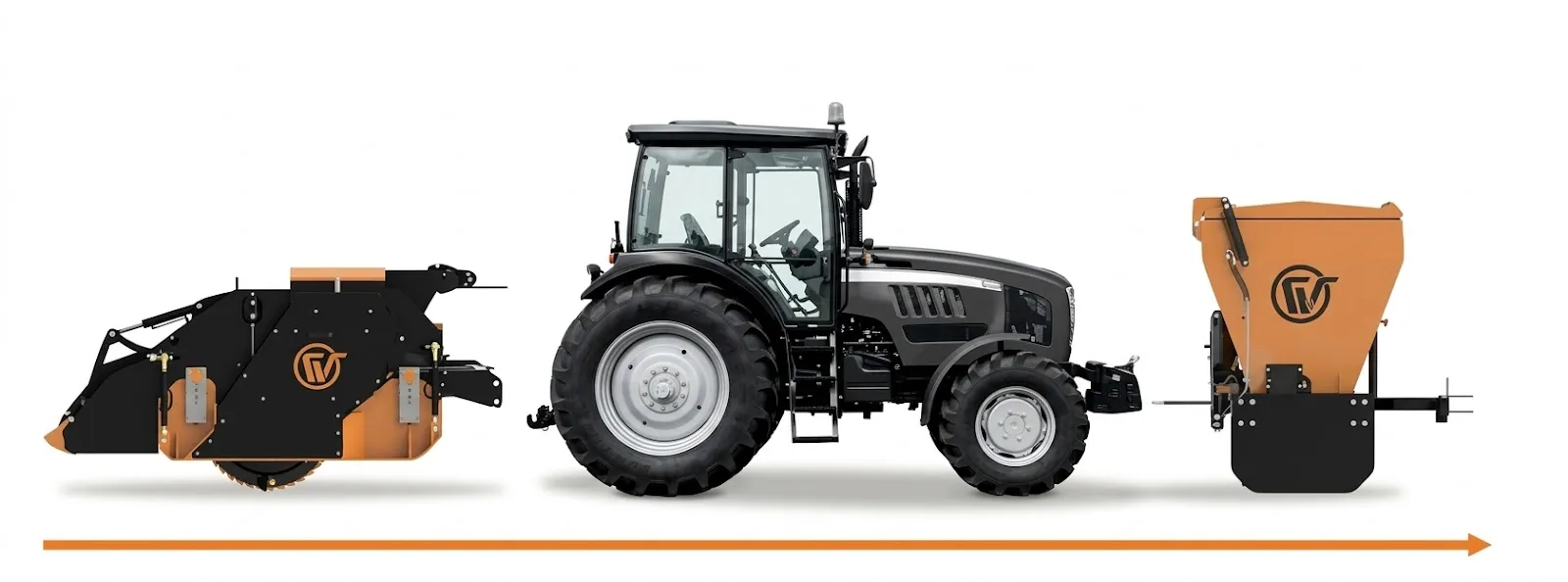
- Mechanically breaking compaction layers — Compacted subsoil layers (hardpan) divert lateral subsurface flow and promote surface runoff and erosion. Using a soil stabilizer machine to break up hardpan and restore vertical drainage reduces runoff and erosion by allowing monsoon rainfall to infiltrate rather than running off the surface.
Quantifying Erosion Prevention: How Much Does Stabilization Help?
The effectiveness of stabilization for erosion prevention can be quantified using the Universal Soil Loss Equation (USLE) and its revised version (RUSLE), which express annual soil loss as a function of six factors: rainfall erosivity (R), soil erodibility (K), slope length (L), slope steepness (S), cover-management (C), and support practice (P). Chemical stabilization directly reduces the soil erodibility factor (K) and can significantly reduce the cover-management factor (C) once the stabilized surface establishes. Vegetation stabilization primarily reduces R (by intercepting rainfall energy) and C.
Research studies comparing erosion rates on stabilized and unstabilized surfaces in Indian conditions have documented the following reductions:
| Treatment | Erosion Reduction vs Bare Soil | Best Application |
|---|---|---|
| Cement stabilization (1.5 MPa UCS) | 95–99% | Road surfaces, channel linings, industrial pads |
| Lime stabilization (PI reduced) | 85–95% | Embankment slopes, subgrade, Black Cotton Soil |
| Dense grass cover (Vetiver) | 80–95% | Slopes, embankments, stream banks |
| PAM spray on bare soil | 50–80% | Temporary stabilization, construction sites |
| Coir geotextile matting | 60–85% | Temporary slope protection during vegetation establishment |
| Calcium chloride (dust suppression) | 60–90% (wind erosion) | Unpaved roads, arid zone surfaces |
Frequently Asked Questions
QDoes soil stabilization completely eliminate erosion?
Chemical stabilization with cement or lime reduces erosion by 85–99% on treated surfaces — effectively eliminating particle-by-particle surface erosion for the design life of the treatment. However, no stabilization method prevents all forms of erosion under all conditions. Extreme flood events with very high flow velocity can erode even stabilized surfaces; seismic events can trigger mass movement regardless of surface treatment. Stabilization dramatically reduces erosion risk; it does not reduce it to zero.
QIs Vetiver grass effective for erosion control in India?
Yes — Vetiver (Chrysopogon zizanioides) is one of the most effective and widely used grass species for erosion control in India. Its roots grow to 2–3 m depth, providing deep reinforcement against shallow slope failure; its dense stem structure intercepts rainfall and reduces runoff velocity; and it is highly drought-tolerant once established. NHAI and state highway departments routinely specify Vetiver planting on embankment slopes as part of the erosion protection package for Indian national highway projects.
QHow soon after chemical stabilization does erosion protection begin?
Erosion resistance develops rapidly with cement stabilization — even at 24–48 hours of curing, the surface has sufficient cohesion to resist normal monsoon rainfall erosion. At 7 days it has achieved 80–90% of its design UCS and is effectively immune to surface erosion. Lime stabilization provides slower strength gain but the immediate reduction in plasticity and improvement in aggregate stability provides meaningful erosion resistance from day one.
QCan stabilization prevent erosion in steep drainage channels?
Yes — cement stabilization of channel beds and banks is an effective and economical alternative to concrete or rip-rap lining for drainage channels with moderate flow velocities. Cement-stabilized channel linings at 5–8% cement can withstand flow velocities of 2–4 m/s without significant erosion, compared to 0.15–0.3 m/s for unprotected fine-grained soil. For very high-velocity flows or large drainage structures, concrete or grouted rip-rap remains preferable.
QWhat is the most cost-effective erosion control method for Indian road embankments?
For most Indian road embankments, the most cost-effective combination is lime stabilization of the embankment fill (for slope stability and moisture resistance) combined with Vetiver grass turfing on the slope face (for surface erosion control). Coir geotextile matting is added during the first monsoon season before vegetation is established. This combination addresses all four erosion mechanisms — splash, surface flow, mass movement, and wind — at a cost that is typically 30–60% less than concrete or rip-rap slope protection.
Key Takeaways
- Four erosion mechanisms require different stabilization approaches: splash/sheet erosion, rill/gully erosion, wind erosion, and mass movement
- Chemical stabilization prevents erosion through four mechanisms: particle binding, permeability reduction, shear strength increase, and surface hardening
- Cement stabilization reduces surface erosion by 95–99%; lime stabilization by 85–95%; Vetiver grass by 80–95% — all measured against bare soil
- India loses 5,334 million tonnes of soil annually to erosion — stabilization of road embankments, slopes, and agricultural land is a critical national priority
- The most cost-effective Indian road embankment erosion package: lime stabilization of fill + Vetiver turfing + coir geotextile — 30–60% cheaper than concrete protection
Soil stabilization is India’s most powerful tool against the 5,334 million tonnes of soil lost to erosion every year. Chemical stabilization with cement or lime binds soil particles permanently, reduces permeability, increases shear strength, and hardens the surface against raindrop and wind impact — addressing all four erosion mechanisms simultaneously. For embankment construction, slope stabilization, and agricultural land improvement, the THOR ST Soil Stabilizer from India Watanabe Soil Stabilizer Co.,Ltd delivers the in-situ mixing quality that converts a weak, erosion-prone soil into a durable, erosion-resistant layer. Contact our team to discuss your erosion control project.