● Equipment Guide
What Do Stabilisator Tanah Do?
Soil stabilizers are specialized machines that mill existing soil to a precise depth, blend in a chemical binder in a single pass, and leave behind a uniform, treated layer ready for compaction. Understanding exactly what a soil stabilizer does — and how it does it — is essential for anyone specifying equipment for road rehabilitation, subgrade preparation, or agricultural land improvement.
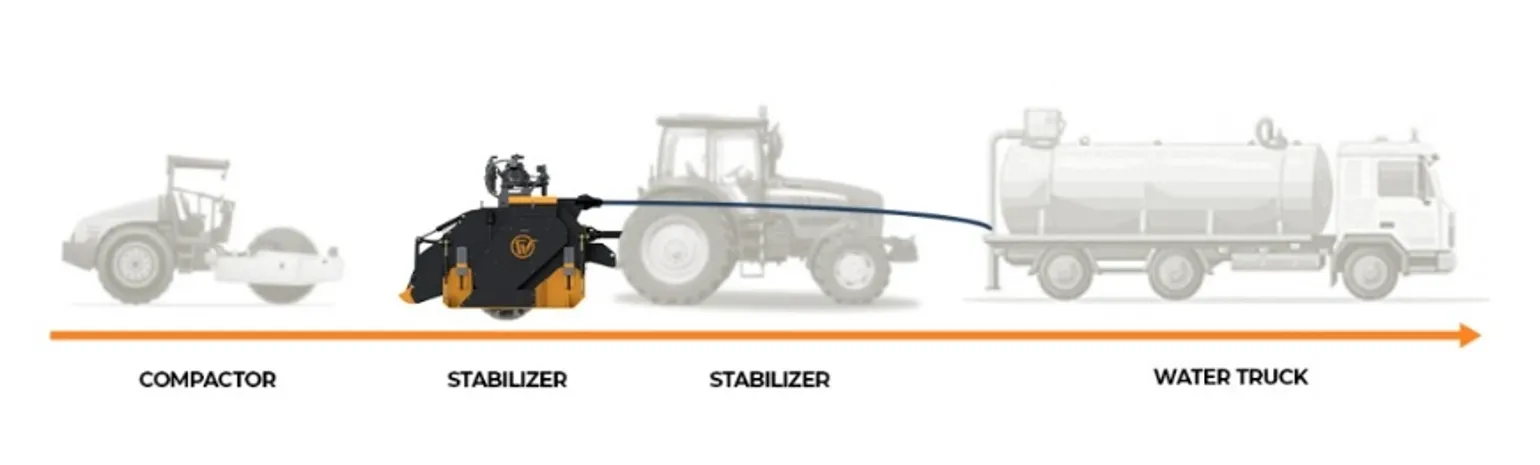
What Does a Soil Stabilizer Do? The Short Answer
A soil stabilizer machine does three things simultaneously in a single forward pass: it pulverizes the existing soil or pavement material, mixes a stabilizing agent — typically lime, cement, or fly ash — uniformly throughout the loosened material, and leaves a homogeneous, treated layer at a controlled depth ready for grading and compaction.
The result is a fundamental change in the engineering properties of the ground: weak, unstable, moisture-sensitive soil becomes a bound, load-bearing material that can support roads, structures, and heavy agricultural machinery with far less deformation and a far longer service life.
Key Machine Function
A soil stabilizer machine replaces what would otherwise require excavation, off-site disposal, aggregate import, and re-laying — achieving the same or better structural result in a single pass, in place, at a fraction of the cost and time.
How a Soil Stabilizer Machine Works: Step by Step
The operating sequence of a soil stabilizer machine follows a precise workflow. Each step depends on the previous one, and the quality of the final result is determined at every stage:
Binder Pre-Application
Before the stabilizer makes its pass, the stabilizing agent — cement, lime, or another binder — is spread across the surface at a calculated application rate measured in kg/m². The rate is determined by the soil type, the target unconfined compressive strength (UCS), and the treatment depth. Accurate pre-spreading is critical: if the binder is uneven on the surface, the mixed result will be uneven throughout the depth.
Rotor Engagement and Soil Milling
As the machine moves forward, a high-speed rotor fitted with carbide-tipped cutting teeth engages the surface and mills downward to the specified treatment depth — typically between 150 mm and 500 mm. The teeth rotate at high speed, breaking up compacted soil, clay lumps, aggregate, and existing pavement material into a loose, granular mix. The milling action is what makes in-situ stabilization possible: it eliminates the need to excavate and remove the existing material.
Binder Mixing in the Mixing Chamber
The milled soil and the pre-spread binder are drawn into the mixing chamber directly behind the rotor. Inside the chamber, the rotor’s continued rotation blends the binder thoroughly into the loosened material. Uniform mixing is the single most important factor in the quality of the stabilized layer: pockets of unmixed soil within the treated depth create weak spots that fail under load. Modern stabilizer machines use enclosed mixing chambers and precisely spaced cutting tools to maximise homogeneity.
Water Addition (If Required)
Some stabilizer machines are equipped with a water spray system that introduces water directly into the mixing chamber during the pass. This brings the soil-binder mix to the optimum moisture content (OMC) for compaction, which is essential for achieving maximum dry density and full binder hydration. Machines without an integrated water system require a separate water tanker to condition the mix before compaction.
Layer Deposition and Grading
As the machine exits the mixing zone, it deposits the treated material back onto the subgrade as a loose, homogeneous layer. This layer is then graded to the required profile using a motor grader, then compacted with a vibratory roller to the specified density. Compaction must be completed within the working time of the binder — typically two to four hours for cement-stabilized soils — before the setting reaction begins to stiffen the mix.
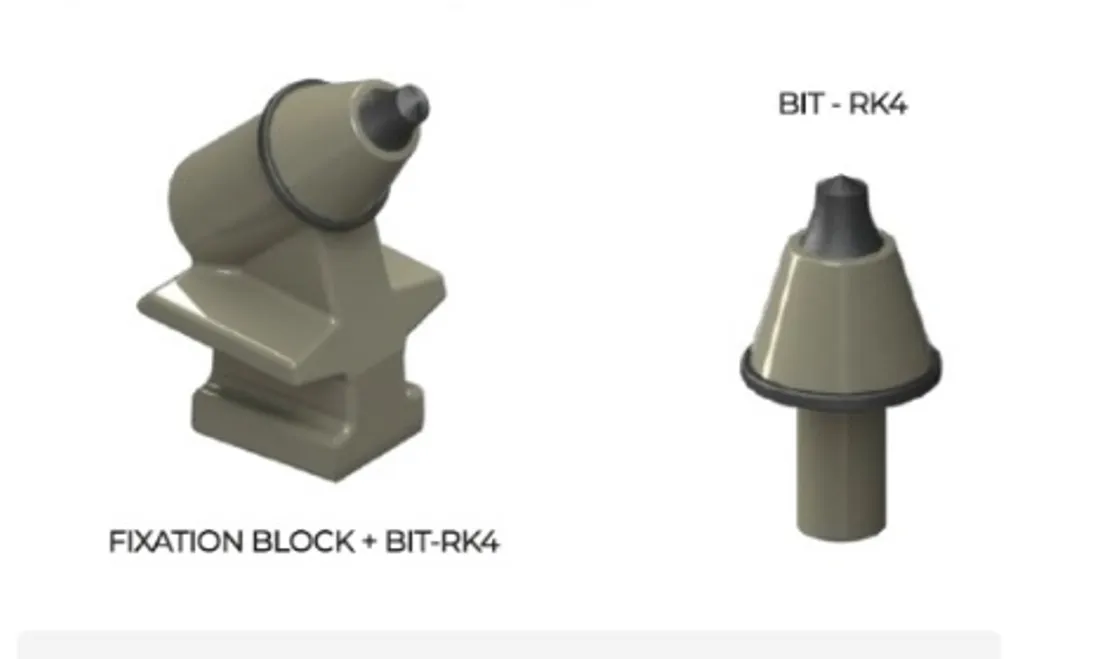
The Rotor: Heart of the Soil Stabilizer
The rotor is the component that defines a soil stabilizer machine’s performance. It is a steel drum that spans the full working width of the machine and rotates at high speed, driven by the tractor’s PTO shaft. Carbide-tipped cutting teeth are mounted on the drum in a helical pattern designed to maximise material flow through the mixing chamber and minimise power consumption per cubic metre of treated soil.
The cutting teeth are replaceable and are the primary wear item on any stabilizer machine. Their geometry, hardness, and spacing determine how finely the soil is pulverized and how thoroughly the binder is distributed. Teeth that are worn down produce larger soil clods, poorer binder distribution, and a weaker final product. For this reason, regular inspection and replacement of cutting teeth is one of the most important maintenance tasks on a stabilizer machine.
On tractor-mounted machines such as the THOR ST, the rotor is driven via the tractor’s PTO and gearbox. The available rotor torque is directly related to the tractor’s PTO horsepower — which is why correct tractor sizing is critical. An under-powered tractor will bog down in dense or wet soils, producing inconsistent mixing depth and poor binder distribution.
“
The quality of the stabilized layer is determined by rotor speed, tooth condition, forward travel speed, and treatment depth — and all four must be correctly set for every project.
What Does a Soil Stabilizer Change in the Soil?
The physical mixing action of the rotor is only the beginning. Once the binder and soil are uniformly mixed, chemical reactions begin that permanently alter the soil’s engineering properties. The specific changes depend on the binder used:
With Cement
Portland cement reacts with water in the soil pores to form calcium silicate hydrate (CSH) and calcium aluminate hydrate (CAH) — the same compounds that give concrete its strength. These compounds precipitate as interlocking crystals that bind soil particles together into a rigid, cementitious matrix. The reaction begins within minutes of mixing and continues for days and weeks, progressively increasing the unconfined compressive strength (UCS) of the treated layer. A well-designed cement-stabilized subgrade typically achieves a UCS of 1.5–3.0 MPa after 28 days of curing.
With Lime
Quicklime (calcium oxide) reacts immediately with soil moisture in an exothermic reaction that releases heat, driving off water and rapidly reducing the moisture content of wet, cohesive soils. This immediate drying effect is why lime is the first choice for treating wet clay that is too soft to work. Beyond the initial drying, lime reacts with the silica and alumina in clay minerals over weeks and months in a pozzolanic reaction that forms CSH and calcium aluminate hydrate, progressively increasing strength and permanently reducing the soil’s plasticity index.
With Fly Ash
Fly ash, a by-product of coal combustion, is a pozzolanic material that reacts with the calcium hydroxide present in lime-treated soils or with water in the presence of an activator to form cementitious compounds. It is often used in combination with lime or cement to reduce binder cost while maintaining target strength. It also reduces the permeability of the treated layer, limiting water ingress and improving long-term durability.
Key Performance Parameters of a Soil Stabilizer Machine
The output quality of a soil stabilizer machine is controlled by four interdependent variables. Understanding these parameters is essential when specifying or operating stabilization equipment:
| Parameter | What It Controls | Consequence of Getting It Wrong |
|---|---|---|
| Treatment Depth | Thickness of stabilized layer; must match structural design requirement | Insufficient depth leaves weak unstabilized soil below the treated zone |
| Rotor Speed | Degree of pulverization; finer milling = better binder contact with soil particles | Low speed leaves large clods; high speed on wrong soil wastes energy |
| Forward Travel Speed | Number of tooth strikes per unit volume; determines mixing thoroughness | Too fast = inadequate mixing; too slow = over-pulverization, dust generation |
| Binder Application Rate | Chemical dosage; determines target UCS and long-term durability | Under-dosing = insufficient strength; over-dosing = shrinkage cracking |
What Can a Soil Stabilizer Machine Be Used For?
A soil stabilizer machine is productive across a wide range of site conditions and project types. The same machine that rehabilitates a failed road subgrade one week can prepare a seedbed on expansive clay the next:
- Road subgrade stabilization — Treating weak subgrade soils in place before pavement construction, eliminating the need for imported subbase aggregate and reducing total pavement thickness.
- Full-depth reclamation (FDR) — Milling a failed asphalt or gravel road to its full structural depth, mixing in a binder, and rebuilding the road base in place. This is the most cost-effective road rehabilitation technique available for roads with structural failures.
- Expansive clay treatment — Mixing lime into Black Cotton Soil or other highly plastic clays to immediately reduce moisture content and plasticity, then allow pozzolanic reaction to build long-term strength. This is the standard solution for expansive clay soils across India.
- Agricultural hardpan breaking — Milling through compacted subsurface pans to restore drainage and root penetration in agricultural soils, without the deep tillage costs of a subsoiler on very dense or stony ground.
- Mining and industrial haul road construction — Building stable access roads across weak or variable terrain quickly, using in-situ material mixed with cement or lime rather than importing crushed aggregate over difficult ground.
- Embankment and slope preparation — Treating cut or fill slopes and embankment foundations to improve shear strength and reduce the risk of surface erosion and slip failure.
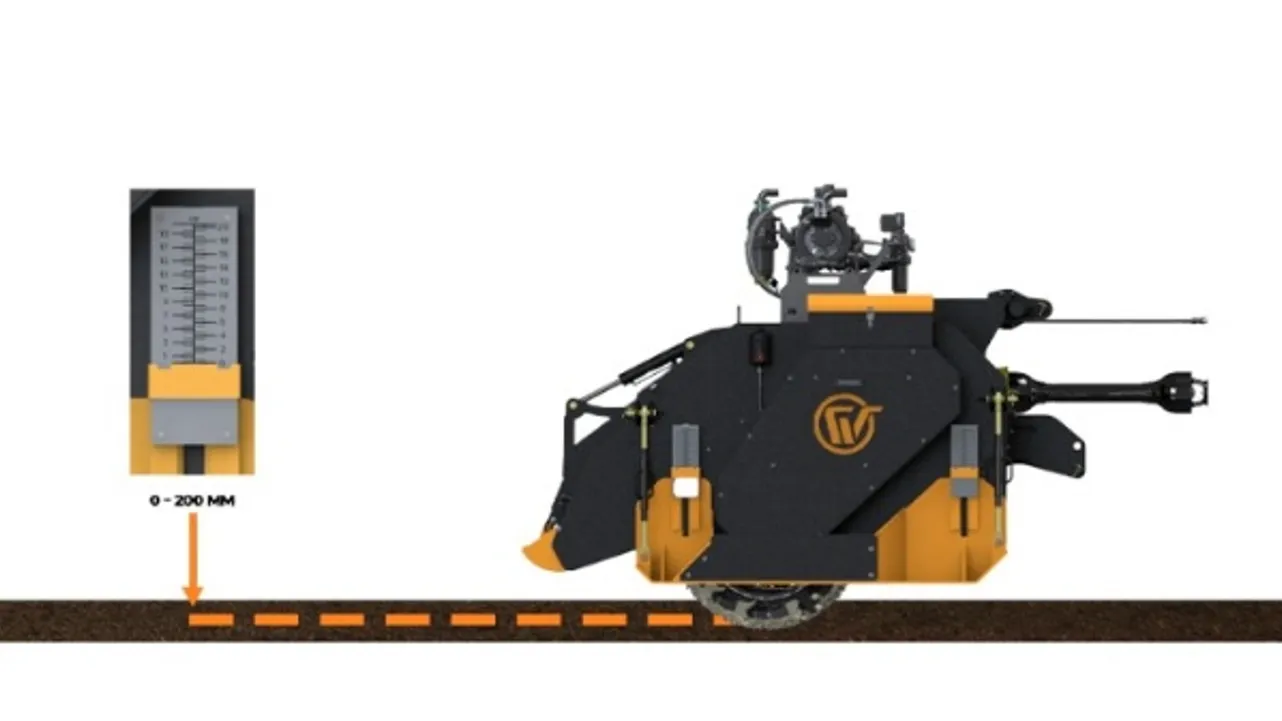
Tractor-Mounted vs Self-Propelled Soil Stabilizers
Soil stabilizer machines come in two primary configurations, each suited to a different project scale and budget:
| Tractor-Mounted | Self-Propelled | |
|---|---|---|
| Power source | Tractor PTO (80–200+ HP) | Dedicated engine (300–700+ HP) |
| Working width | 1.5–2.5 m typical | 2.0–3.5 m typical |
| Max treatment depth | Up to 350 mm | Up to 500+ mm |
| Best suited for | Medium projects, rural roads, agricultural sites, contractors with existing tractors | Large highway, airport, and port projects; high daily output required |
| Capital cost | Significantly lower | Significantly higher |
| Mobility | Transported on standard flatbed; high site-to-site flexibility | Requires low-loader transport; less economical for small scattered sites |
For contractors working on rural road rehabilitation, agricultural land preparation, and medium-scale construction in India, a tractor-mounted stabilizer offers the best balance of performance, flexibility, and cost of ownership. It leverages a tractor the contractor likely already owns, and can be transported to remote sites on a standard trailer. Read more about what soil stabilization is and how the process works.
Frequently Asked Questions
QWhat is the difference between a soil stabilizer and a road recycler?
A soil stabilizer mixes a virgin soil layer with a chemical binder to create a stabilized subgrade. A road recycler mills an existing deteriorated pavement — including the asphalt layer — and blends it back into the subbase with a binder. Modern machines often perform both functions, but the binder type, depth settings, and project objectives differ.
QHow deep can a soil stabilizer machine work?
Tractor-mounted stabilizers typically treat to depths of 150–350 mm in a single pass. Self-propelled machines can reach 500 mm or more. The required treatment depth is specified by the geotechnical engineer based on the structural design, soil type, and traffic loading.
QCan a soil stabilizer machine work on all soil types?
Soil stabilizer machines can work on virtually all soil types — clay, silt, sand, and granular soils. However, the appropriate binder type and application rate varies significantly by soil classification. Highly plastic clays require lime; granular soils are better suited to cement. Pre-project soil testing and laboratory mix design are always recommended.
QHow much HP does a tractor need to run a soil stabilizer?
The minimum tractor HP depends on the stabilizer model and the soil conditions. As a general guide, a 1.5 m working width stabilizer requires a minimum of 80–100 HP PTO; a 2.0–2.4 m machine typically requires 130–180 HP PTO. Operating below the minimum HP causes rotor stall, uneven mixing depth, and premature wear. Always check the manufacturer’s minimum PTO HP specification before purchasing.
QHow fast does a soil stabilizer machine travel when working?
Typical working speeds are 3–8 m/min (0.18–0.48 km/h), depending on soil type, treatment depth, and the required degree of pulverization. Harder or wetter soils require slower speeds for adequate mixing. Faster travel speeds reduce mixing time per unit volume and can lead to clods, inadequate binder distribution, and weaker final strength.
Key Takeaways
- A soil stabilizer machine mills, blends binder into, and deposits a treated soil layer in a single forward pass
- The rotor is the core component; carbide-tipped tooth condition directly determines mix quality
- Four variables control output quality: treatment depth, rotor speed, forward travel speed, and binder rate
- Cement stabilization achieves UCS of 1.5–3.0 MPa after 28 days; lime works best on high-plasticity clays
- Tractor-mounted stabilizers offer the best cost/performance balance for medium-scale projects and rural roads
For projects across India that require reliable tractor-mounted soil stabilization — whether road rehabilitation, Black Cotton Soil treatment, or agricultural land preparation — the THOR ST Soil Stabilizer from India Watanabe Soil Stabilizer Co.,Ltd is designed to deliver consistent mixing quality, precise depth control, and the durability that demanding field conditions require. Contact our team to discuss your project and machine specifications.