● Terminology Guide
What Is the Difference Between Soil Stabilization and Soil Improvement?
Soil stabilization and soil improvement are terms used interchangeably in many project specifications, textbooks, and sales materials — yet in precise geotechnical engineering usage, they are not the same thing. Understanding the distinction matters because it affects how a treatment is specified, designed, and verified: the wrong term leads to the wrong test, the wrong acceptance criterion, and potentially the wrong outcome. This article draws the boundary clearly, explains where it comes from, and shows how the distinction is applied in practice.
The Short Answer
Soil improvement is a broad umbrella term covering any intervention that makes soil more suitable for its intended purpose — including drainage, dewatering, preloading, compaction, and chemical treatment. Soil stabilization is a specific subset of soil improvement that involves adding binders or applying mechanical treatment to permanently alter the engineering properties of the soil — its strength, plasticity, compressibility, or permeability.
In other words: all soil stabilization is soil improvement, but not all soil improvement is soil stabilization. The distinction is in permanence and mechanism — stabilization permanently changes what the soil is; improvement may only change the conditions around it.
The Core Distinction
Soil improvement = any method that makes the soil perform better in context (includes drainage, preloading, reinforcement, and stabilization).
Soil stabilization = methods that permanently change the soil’s intrinsic engineering properties through binders or mechanical rearrangement.
Formal Definitions from Engineering Standards
Different standards bodies define these terms with varying degrees of precision. Understanding where each definition comes from helps clarify which applies on any given project:
Ground Improvement (European / International Usage)
The European standard EN ISO 22477 and the associated Eurocode 7 framework use the term ground improvement as the broadest category, covering all intentional modification of the ground to improve its engineering performance. This includes vibro-compaction, dynamic compaction, preloading, stone columns, deep mixing, chemical grouting, and in-situ soil stabilization. Ground improvement is explicitly distinguished from structural foundation systems (piles, raft foundations) in that it modifies the ground itself rather than transferring load past it.
Soil Improvement (North American / AASHTO Usage)
AASHTO and FHWA (US Federal Highway Administration) documents use soil improvement as an intermediate term between ground improvement and stabilization. In FHWA-NHI-06-019 (Ground Improvement Methods), soil improvement refers specifically to methods that improve the mechanical performance of soil in place — compaction, reinforcement, drainage — without necessarily changing the soil’s chemical or mineralogical properties. Stabilization is treated as the chemical subdivision.
Soil Stabilization (IRC / Indian Usage)
The Indian Roads Congress IRC:SP:89-2010 (Guidelines for Soil and Granular Material Stabilization Using Cement, Lime and Fly Ash) defines soil stabilization as the “alteration of soil properties by addition of stabilizing agents such as cement, lime, fly ash or a combination of these” to achieve durable improvement in soil strength, durability, and volume stability. This definition is specifically chemical — it does not include mechanical methods such as compaction or soil blending under the “stabilization” label.
What Counts as Soil Improvement But Not Stabilization?
The following methods are universally classified as soil improvement but are generally not classified as stabilization, because they do not permanently alter the soil’s intrinsic properties — they either change conditions around the soil, reinforce it with external elements, or improve it only temporarily:
- Preloading and surcharging — A temporary surcharge load is applied to consolidate soft clay before construction. The soil becomes stronger, but if the surcharge were removed and the soil re-wetted, it would weaken again. The improvement is real but condition-dependent, not a permanent change to the soil’s material properties.
- Drainage and dewatering — Installing French drains, vertical drains, or pumping systems to lower the water table beneath a site. Lowering pore water pressure increases effective stress and therefore shear strength — but the moment drainage is removed or fails, the soil returns to its original weak state. This is improvement, not stabilization.
- Geosynthetic reinforcement — Geogrids, geotextiles, and geocells placed within or beneath a soil layer distribute load more evenly and increase the effective bearing capacity of the system — but the soil itself is unchanged. Remove the geosynthetic and the soil reverts to its original bearing capacity.
- Stone columns and vibro-replacement — Granular columns installed through soft clay carry load and accelerate drainage, improving system performance — but the clay between the columns is largely unmodified. This is a reinforcement technique, not stabilization of the clay itself.
- Excavation and replacement — Removing weak soil and replacing it with compacted granular fill. The ground performance improves, but the original soil is gone — there is no stabilization of what was there.
“
Drainage improves soil performance by changing conditions around it. Stabilization improves soil performance by permanently changing what it is. That distinction determines how you design, specify, and verify the result.
What Counts as Both Soil Improvement and Stabilization?
The following methods are classified as both soil improvement and soil stabilization, because they permanently change the soil’s intrinsic engineering properties:
- Cement stabilization — Portland cement reacts with soil particles to form calcium silicate hydrate crystals that permanently bind the soil into a cementitious matrix. The soil cannot revert to its original state regardless of moisture changes. This is improvement and stabilization. Read our detailed guide on soil stabilization with cement.
- Lime stabilization — Lime permanently changes clay mineral surface chemistry through ion exchange and pozzolanic reaction. The reduction in plasticity index and the gain in strength persist after the lime treatment, regardless of subsequent wetting and drying. This is improvement and stabilization.
- Deep mixing — Binders (cement, lime, or combinations) are injected and mixed into soil at depth using auger-based equipment. The resulting soil-cement columns or improved soil mass have permanently enhanced properties — improvement and stabilization.
- Chemical grouting — Liquid binders (silicate grouts, acrylamide, polyurethane) are injected under pressure into soil pores, setting in place to permanently fill voids and increase strength. The soil’s properties are permanently altered — improvement and stabilization.
The Grey Area: Is Compaction Stabilization or Just Improvement?
Compaction occupies a contested position in this taxonomy. The argument for calling it stabilization: compaction permanently rearranges soil particles, reducing void space and permanently increasing dry density. The resulting improvement in bearing capacity and reduction in compressibility cannot be reversed without deliberately loosening the soil. In this sense, compaction changes the soil’s intrinsic state.
The argument against: compaction does not change the soil’s mineral composition, particle surface chemistry, or inherent plasticity. A compacted high-PI clay, if subsequently wetted, swells back to nearly its original volume and loses most of its compaction-derived strength. In this sense, compaction only improves performance within a specific moisture-density state — it does not fundamentally stabilize the soil.
The consensus in most international standards is that compaction alone is soil improvement, and that “mechanical stabilization” — when used as a term in the context of soil stabilization — specifically refers to the blending of multiple soil types to improve grading, not to compaction alone. However, in practice, the terms are used loosely, and context always matters.
Soil Stabilization vs Soil Improvement: Side-by-Side Comparison
| Criterion | Soil Improvement | Soil Stabilization |
|---|---|---|
| Scope | Broad umbrella — any method that improves ground performance | Specific subset — permanently alters soil engineering properties |
| Permanence | May be temporary or condition-dependent (e.g. drainage, preloading) | Always permanent — treated soil cannot revert to original state |
| Mechanism | Physical, chemical, or mechanical — may change conditions around soil | Chemical cementation or permanent mechanical rearrangement of soil itself |
| Typical QC test | Settlement monitoring, density testing, CBR, plate load | UCS on cores, Atterberg limits, soaked CBR after treatment |
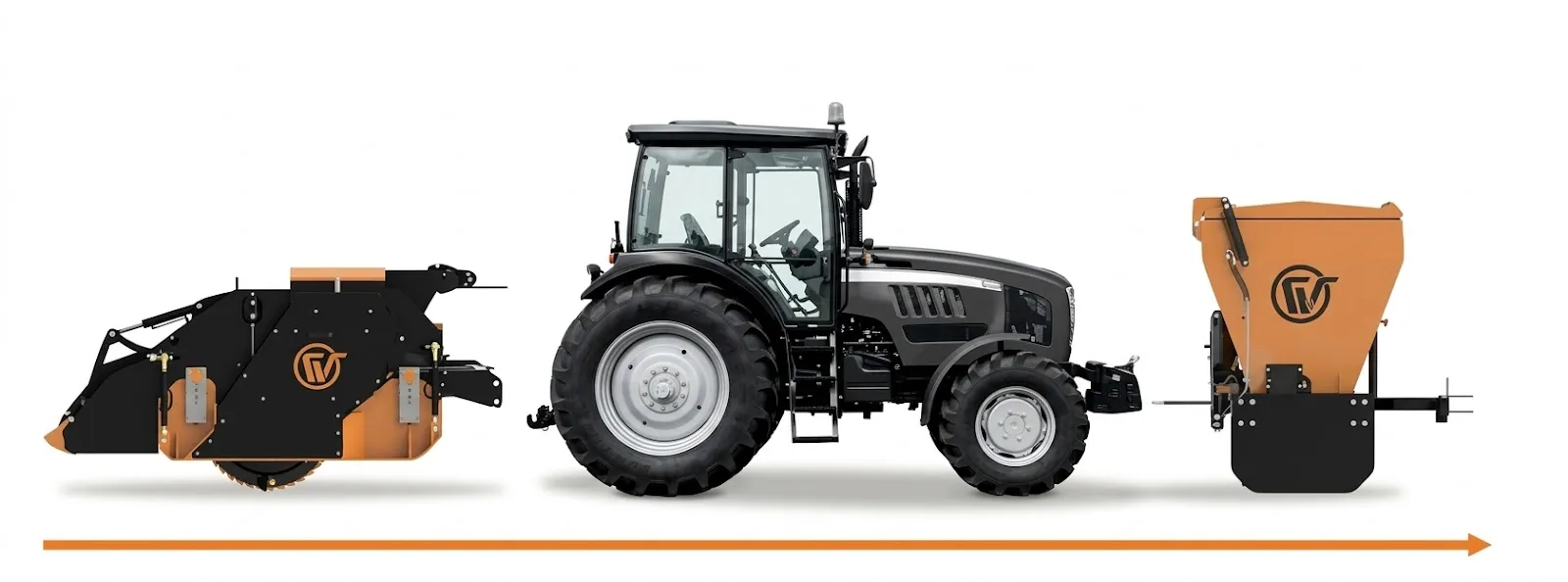
| Typical equipment | Rollers, vibratory probes, drainage pipes, geosynthetics | Soil stabilizer machine, binder spreader, mixing auger |
| Reversibility | Often reversible if conditions change (water table rises, surcharge removed) | Irreversible — cementitious bonds cannot be broken without excavation |
| Applicable standards (India) | IRC:36, IS:2720, IS:8826 (compaction and drainage) | IRC:SP:89 (lime, cement, fly ash stabilization) |
Why the Distinction Matters in Practice
The difference between soil stabilization and soil improvement is not merely academic. It has direct consequences for how a project is specified, designed, and verified:
Specification and Contract
A specification that calls for “soil improvement to achieve CBR > 10%” could be satisfied by compaction alone if the native soil is dense enough — no binder needed. A specification that calls for “soil stabilization with lime to achieve PI < 15” requires a specific chemical treatment and cannot be satisfied by compaction. Using the wrong term creates ambiguity that leads to disputes over compliance and substandard outcomes.
Design Life and Pavement Thickness
Under IRC:37 and IRC:SP:89, a cement-stabilized or lime-stabilized subgrade layer can be included as a structural layer in the pavement design, reducing the thickness of the overlying granular and asphalt layers. A merely “improved” subgrade — achieved by compaction or drainage alone — cannot be included as a structural layer in the same way, because its properties are condition-dependent and may degrade if moisture conditions change during the pavement’s service life.
Quality Control and Acceptance Testing
Soil improvement is typically verified by density testing (nuclear gauge, sand replacement) and field CBR or plate load tests. Soil stabilization requires additional verification — UCS testing on laboratory-prepared and field-cored specimens, Atterberg limits testing after lime treatment, and sometimes in-situ shear wave velocity testing. The acceptance criteria are different because the performance claims are different.
A Third Term: Soil Modification
In addition to soil improvement and soil stabilization, a third term — soil modification — is used in some standards and specifications. Soil modification describes the early-stage treatment of soil with a binder (typically lime) that improves workability and reduces moisture content during construction, without achieving the full strength gain of stabilization.
The distinction between modification and stabilization is typically defined by the quantity of binder used and the target performance outcome:
- Soil modification — A small addition of lime (typically 1–2%) to reduce the plasticity and moisture content of wet clay to make it trafficable during construction. The primary objective is workability, not structural strength. The treatment is a construction expedient, not a permanent structural layer.
- Soil stabilization — A designed quantity of lime or cement (typically 3–8%) mixed to achieve a target UCS or PI reduction, included in the pavement design as a permanent structural layer with a design life of 20–50 years.
The three terms thus form a hierarchy: soil improvement (broadest) → soil stabilization (permanent chemical treatment) → soil modification (temporary workability treatment). Understanding which term a specification is using — and what it requires — is the first task of any engineer responsible for subgrade preparation.
Frequently Asked Questions
QIs lime treatment soil improvement or soil stabilization?
It depends on the lime rate and the design objective. At 1–2% lime for workability improvement during construction, it is soil modification (a subset of improvement). At 3–6% with a target PI and UCS, included as a structural layer in the pavement design, it is soil stabilization. The same binder, applied at different rates for different purposes, falls into different categories.
QDoes the IRC use the terms soil improvement and soil stabilization interchangeably?
IRC:SP:89-2010 uses “stabilization” specifically to mean treatment with cement, lime, or fly ash. IRC:36 (Recommended Practice for the Construction of Earth Embankments and Subgrade for Road Works) covers compaction and earthwork, which is soil improvement. The two documents govern different aspects of subgrade preparation and reflect the distinction between improvement and stabilization in their scope.
QCan a treatment count as both soil improvement and soil stabilization?
Yes — all soil stabilization is by definition also soil improvement. Cement stabilization, lime stabilization, and deep mixing all improve ground performance (improvement) through a permanent chemical change to the soil (stabilization). The categories are nested, not mutually exclusive.
QWhat is the difference between ground improvement and soil improvement?
In most usage, ground improvement is the broadest term and encompasses everything from deep foundation techniques (stone columns, piles used as ground improvement rather than structural foundation elements) to surface compaction. Soil improvement is slightly narrower, typically referring to the near-surface soil layer rather than deep ground. In practice, the terms are often used interchangeably, and the distinction matters less than understanding the specific methods being referred to.
QWhy do contractors sometimes use “soil improvement” when they mean stabilization?
The terms are genuinely used interchangeably in much of the construction industry, and many clients and project managers are not familiar with the technical distinction. In a commercial context, “soil improvement” is also a broader, more accessible term that encompasses everything a contractor might do to prepare a weak subgrade. The precise distinction matters most in formal engineering specifications, pavement design calculations, and quality control acceptance criteria — contexts where ambiguity has contractual and performance consequences.
Key Takeaways
- Soil improvement is the broad umbrella; soil stabilization is the specific subset that permanently alters intrinsic soil engineering properties
- Drainage, preloading, geosynthetics, and stone columns are soil improvement but not stabilization — they do not permanently change what the soil is
- Cement, lime, fly ash, and deep mixing are both soil improvement and soil stabilization — they permanently alter soil properties
- Soil modification is a third term — a small binder addition for workability during construction, not a structural treatment
- The distinction determines specification language, acceptance tests, QC criteria, and whether the treated layer can be included as a structural pavement layer under IRC:SP:89 and IRC:37
Using the right term in a specification is not pedantry — it determines what the contractor is required to do, how the result is tested, and whether the pavement design is valid. For projects where chemical stabilization is the right solution — road subgrade treatment, Black Cotton Soil improvement, agricultural hardpan breaking — the THOR ST Soil Stabilizer from India Watanabe Soil Stabilizer Co.,Ltd delivers the uniform mixing quality needed to consistently meet IRC:SP:89 UCS and PI acceptance criteria. Contact our team to discuss your project specification.