Soil Stabilization Guide
What Type of Cement Is Used for Soil Stabilization?
Four cement types are used for soil stabilization in India: Ordinary Portland Cement (OPC), Portland Pozzolana Cement (PPC), Portland Slag Cement (PSC), and Sulphate-Resistant Cement (SRC). The correct choice depends on your soil’s sulphate content, the ambient temperature during construction, and your target UCS. Using the wrong cement type is one of the most costly specification errors in Indian road construction — OPC on sulphate-bearing soil causes ettringite heave that can destroy a newly stabilized layer within months.
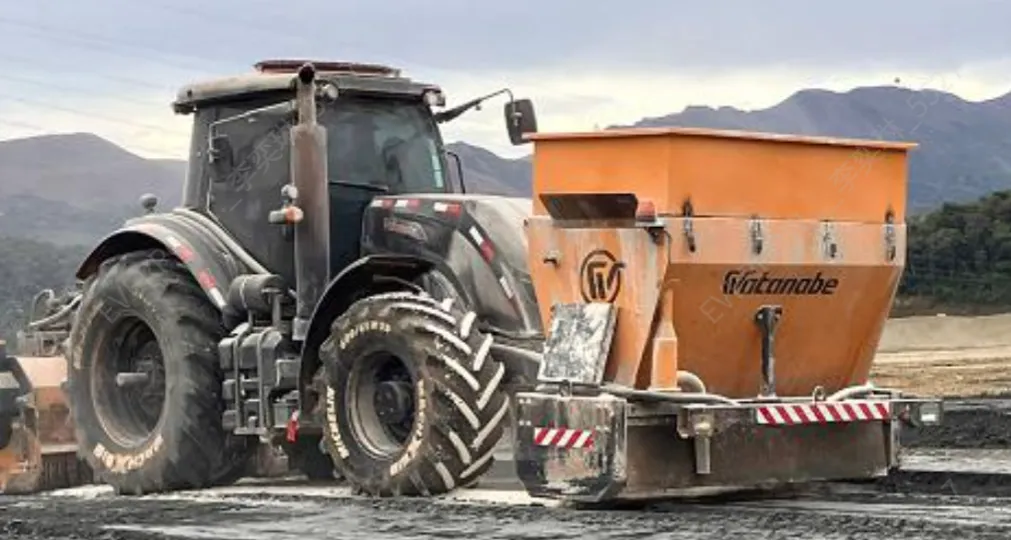
DCW 2.2 binder spreader — accurate cement application at ±2% of design rate
Quick Selection Guide
| Soil Condition | Recommended Cement | Key Reason |
|---|---|---|
| General subgrade, SO₃ < 0.5%, temp < 35°C | OPC 43 or 53 grade | Best early strength, lowest cost, widest availability |
| Hot weather construction, temp > 35°C | PPC | Extended working window — lower heat of hydration |
| Sulphate soil, SO₃ 0.5–1.5% | PSC | Reduced ettringite formation — lower C₃A content |
| High sulphate, SO₃ > 1.5% | SRC | Maximum sulphate resistance — C₃A below 3.5% |
| Black Cotton Soil, PI > 25 | Lime pre-treatment, then OPC or PPC | Cement alone cannot overcome expansive clay |
| Coastal construction, sea spray | PSC or SRC | Sulphate ions from saline water and sea spray |
Cement Type and the DCW 2.2 Binder Spreader
The DCW 2.2 binder spreader applies any cement type — OPC, PPC, PSC, or SRC — at ±2% application accuracy. The spreader is calibrated for the bulk density and flow characteristics of the specific cement grade being used. When switching cement types on a project (for example, from OPC to PPC for hot weather construction), the spreader must be recalibrated for the new material’s bulk density before restarting work.
Application Rate Verification
Binder application rate is verified in the field using tray collection — spreading a known area of cement over a 1 m² metal tray and weighing the collected material. This verification should be performed at the start of each working day and whenever the binder lot changes. Application rate tolerance to IRC:SP:89: ±5% of design rate for any single tray reading; ±2% on a running average of 5 trays.
Cement Stabilization and Pavement Design — The IRC:37 Connection
Correctly designed cement-stabilized subgrade (soaked UCS ≥ 1.5 MPa) is treated as a bound layer in IRC:37 flexible pavement design. This means the stabilized layer contributes its own structural coefficient to the pavement — reducing the thickness of granular base and dense bituminous macadam required above it. The cost saving from reduced asphalt and aggregate thickness often exceeds the cost of the cement stabilization itself on projects with thick conventional pavement designs.
| Design Scenario | Without Stabilization | With IRC:SP:89 Stabilization | Saving |
|---|---|---|---|
| NH rural road, BCS subgrade, MSA 30 | GSB 250mm + WMM 250mm + DBM 100mm + BC 40mm | GSB 150mm + WMM 150mm + DBM 75mm + BC 40mm | 225mm less bound layers |
| PMGSY rural road, BCS, MSA 5 | GSB 200mm + WMM 200mm + Premix Carpet 20mm | GSB 100mm + WMM 125mm + Premix Carpet 20mm | 175mm less aggregate |
Cement Storage and Handling on Site
Cement quality can be compromised by incorrect site storage. All cement for soil stabilization must be stored in weatherproof conditions — rain-wetted cement undergoes pre-hydration that reduces its reactive content and therefore its contribution to stabilized soil strength. Key storage requirements:
- Store in dry, covered conditions — cement bags must not contact bare ground (raise on pallets)
- Use within 90 days of manufacture date for OPC; within 60 days for PPC and PSC
- Do not mix different cement types or different production batches in the same binder spreader hopper
- Check bags for clumps before loading — clumped cement has partially hydrated and will not achieve full strength contribution
Environmental Considerations — pH and Groundwater
Cement and lime stabilization significantly increases soil pH — lime raises local pH to 12.4 and cement to 11.5–12.0. This high-pH environment is hostile to most soil organisms and can affect nearby vegetation if runoff contacts root zones. For projects near watercourses, wetlands, or drinking water sources, environmental impact assessment may require: pH runoff monitoring, leachate collection trenches, or phased construction to limit the area of fresh stabilization at any one time.
In India, road construction projects under the National Environment Policy and state EIA frameworks typically require a water quality monitoring plan for river and reservoir crossings within 500 m of stabilization works. The THOR ST’s enclosed rotor chamber minimises cement dust generation — reducing airborne pH impact compared to manual spreading methods.
The reduction in granular and bituminous layers directly reduces project cost on BCS terrain where aggregate must be imported from quarries 50–100 km away — the most expensive input in rural road construction in India’s interior.
OPC — Ordinary Portland Cement (IS:269)
OPC is the most widely used cement for soil stabilization and the default choice on non-sulphate soils at normal construction temperatures. Its key advantage is high early strength — OPC typically reaches 70–80% of its 28-day strength at 7 days, which aligns directly with IRC:SP:89’s 7-day UCS acceptance criteria. When compressive strength at 7 days is the controlling criterion, OPC delivers faster pass/fail clarity than slower-setting alternatives.
OPC is available in 43 grade and 53 grade in India. For soil stabilization, 43 grade OPC is generally used — the difference in final strength between grades is small in soil-cement applications, and 43 grade is more widely available and lower in cost at the quantities required for road projects.
- Best conditions: Soil SO₃ < 0.5%, construction temperature < 35°C, target UCS 1.5–3.0 MPa, general subgrade and granular base treatment
- Not suitable for: Sulphate-bearing soils (SO₃ > 0.5%), Black Cotton Soil with PI > 25 without lime pre-treatment, hot weather above 35°C where working window is critical
PPC — Portland Pozzolana Cement (IS:1489)
PPC replaces 15–35% of OPC clinker with fly ash or volcanic ash pozzolan. The reduced clinker content lowers the heat of hydration — the exothermic heat released when cement reacts with water. Lower heat of hydration means slower initial setting, which extends the time available for compaction after mixing. This is the critical advantage of PPC over OPC in hot weather construction.
In Rajasthan, Gujarat, and Maharashtra during peak summer (April–June), ambient temperatures regularly exceed 40°C and soil temperatures at 150 mm depth can reach 35–38°C. OPC’s working window (mixing to compaction) can drop to 60–90 minutes in these conditions — difficult to maintain on large-scale stabilizer operations where the distance between the mixing machine and the compaction roller can span hundreds of metres. PPC extends this window to 2.5–3 hours, which is the practical minimum for controlled compaction on full road-width stabilization passes.
Hot Weather Rule
In construction above 35°C, always specify PPC over OPC. The extended working window reduces compaction failures and their associated remediation costs — often more than offsetting any price premium for PPC. Early morning starts (before 7am) and avoiding midday work also extend effective working time.
PSC — Portland Slag Cement (IS:455)
PSC replaces 25–70% of OPC clinker with GGBS (ground granulated blast furnace slag). The key technical advantage of PSC for soil stabilization is its lower C₃A (tricalcium aluminate) content compared to OPC. C₃A is the cement phase most responsible for ettringite formation when cement contacts sulphate ions — reducing C₃A content significantly reduces the ettringite risk.
PSC is specified for soil stabilization projects where the soil SO₃ content is between 0.5% and 1.5%, for coastal construction where sea spray introduces sulphate ions to the soil environment, and for industrial sites where ground contamination may include sulphate compounds. PSC achieves lower early strength than OPC but higher long-term strength — the 28-day and 90-day UCS of PSC-stabilized soil often exceeds OPC equivalents due to the continued pozzolanic reaction of the GGBS component.
SRC — Sulphate-Resistant Cement (IS:6909)
SRC has very low C₃A content — below 3.5% by mass — making it the most sulphate-resistant Portland cement available. It is specified when soil SO₃ content exceeds 1.5% or where previous ettringite heave has been observed in the project area. SRC is more expensive than OPC and less widely available — it must be sourced specifically for sulphate-bearing projects rather than purchased from general building supply channels.
Critical Warning
Never use OPC on sulphate-bearing soils without testing first. Ettringite heave caused by OPC on SO₃ > 0.5% soil causes 3–5% volume expansion — equivalent to lifting a freshly stabilized road surface by 30–80 mm within weeks to months of construction. Test SO₃ content using IS:2720 Part 27 before specifying any cement type. If in doubt, use PSC — the performance penalty is small and the risk reduction is substantial.
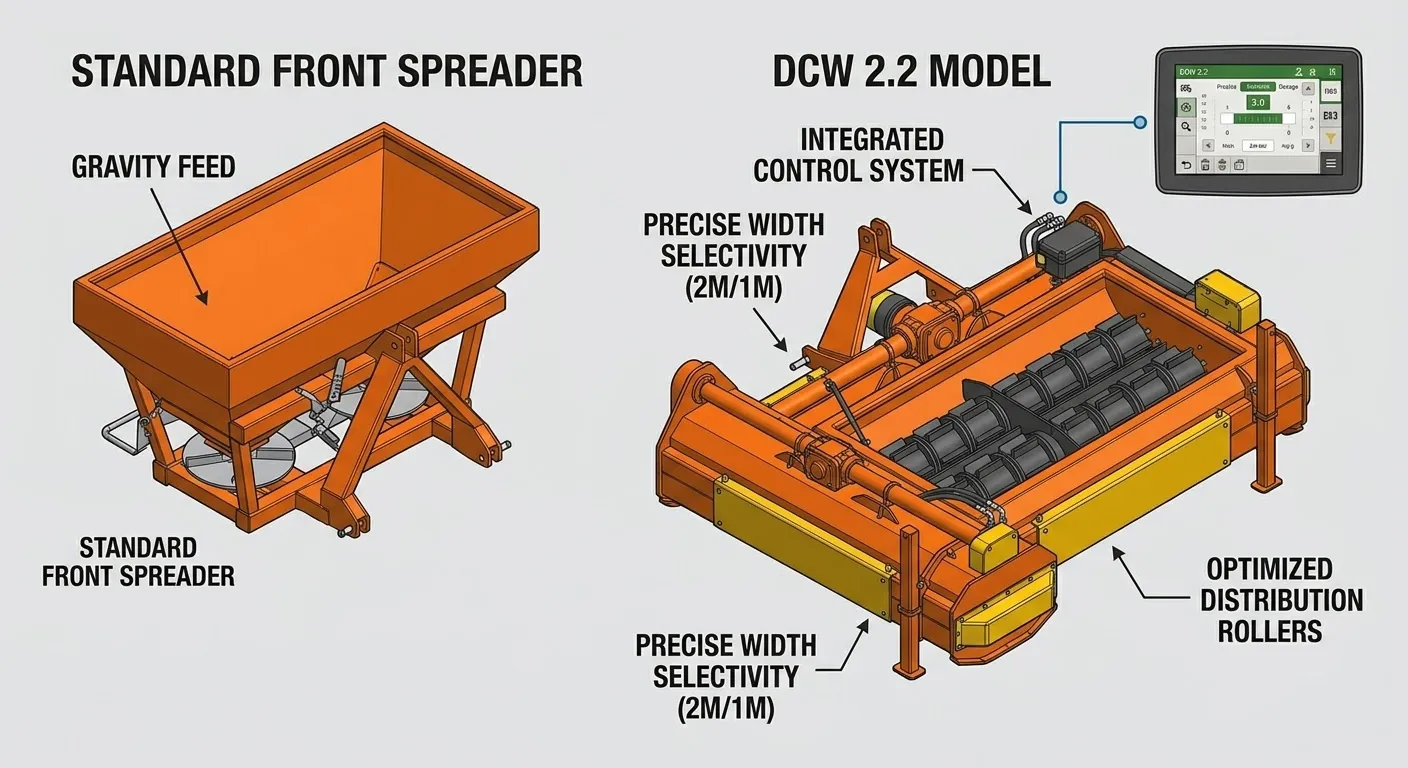
THOR ST specifications matched to IRC:SP:89 cement stabilization requirements
Cement Content — How Much to Use?
IRC:SP:89 does not specify a universal cement content — the correct percentage is determined by laboratory mix design using your specific soil. Published tables of ‘typical’ cement contents are a starting point for mix design trials, not a substitute for actual testing. The following ranges are commonly achieved in Indian practice:
| Soil Type | Typical Cement Content | Expected 7-Day Soaked UCS |
|---|---|---|
| Low-PI silt and sandy soils (PI < 10) | 3–6% OPC | 1.5–3.0 MPa |
| Medium clay (PI 10–25) | 5–8% OPC or PPC | 1.5–3.5 MPa |
| Black Cotton Soil (after lime pre-treatment, PI reduced to < 20) | 4–7% OPC second-stage | 1.5–3.0 MPa |
| Granular base / full depth reclamation | 3–5% OPC | 1.5–2.5 MPa |
| High-strength applications (industrial platforms) | 8–12% OPC | 3.0–6.0 MPa |
Always confirm binder content by laboratory UCS testing at the design cement content before committing to the field specification. The cost of a laboratory mix design programme is typically less than 0.5% of the total stabilization contract value — and the cost of a field failure from incorrect binder specification is many times the contract value.
Cement vs Lime — When to Use Each
A common question is whether to use cement or lime. The answer depends on the soil’s plasticity index (PI):
| Soil PI | Recommended Approach | Reason |
|---|---|---|
| PI < 10 (granular / low plasticity) | Cement only | Good mixing, rapid strength gain |
| PI 10–25 (medium clay) | Cement only, or lime + cement | May need lime to improve workability |
| PI 25–40 (high plasticity clay / Black Cotton Soil) | Lime first, then cement | Cement cannot penetrate high-PI clay without PI reduction |
| PI > 40 (very high plasticity) | Lime pre-treatment mandatory | Soil must be modified before any cement is effective |
Field Quality Control for Cement Application
Accurate cement application in the field requires a calibrated binder spreader — the DCW 2.2 spreader achieves ±2% accuracy, which is the tolerance specified by IRC:SP:89 for pavement subgrade stabilization. Field quality control for cement application includes:
- Tray collection test: Place a 1 m² collection tray on the surface before the spreader pass. Weigh the collected material and compare to the design application rate. Acceptable tolerance: ±5% of design rate
- Surface coverage inspection: After spreading, the surface should be uniformly white with no bare patches or heavy concentrations. Bare patches indicate spreader blockage; heavy white zones indicate hopper bridging
- Moisture check immediately before mixing: If soil moisture is already at or above OMC, reduce or eliminate water addition during mixing. If significantly below OMC, add water before the stabilizer pass
Quality Control Cost vs Remediation Cost
A complete field quality control programme for cement stabilization costs approximately ₹3–8 per m² amortised across the project. A failed stabilization requiring remediation costs ₹300–600 per m². Quality control has a 50–100x return on investment — it is never optional.
Featured Equipment
DCW 2.2 Binder Spreader
OPC · PPC · PSC · SRC · ±2% application accuracy · 2.2 m spread width
Key Takeaways
- OPC is the default for general subgrade stabilization when SO₃ < 0.5% and temperature < 35°C — best early strength, widest availability
- PPC extends the working window in hot weather — specify for construction above 35°C in Rajasthan, Gujarat, and Maharashtra
- PSC and SRC are essential for sulphate-bearing soils — test SO₃ before specifying any cement type to avoid ettringite heave
- Black Cotton Soil with PI > 25 requires lime pre-treatment first — cement alone cannot overcome montmorillonite clay expansion
- Cement content must be determined by laboratory mix design — generic tables are a starting point only, not a specification
- The DCW 2.2 binder spreader applies any cement type at ±2% accuracy — preventing the under and over-dosing that shortens service life