Soil Stabilization Guide
How Long Does Soil Stabilization Last?
Correctly designed and executed soil stabilization lasts 20–50 years. The chemistry of cement and lime stabilization is permanent — calcium silicate hydrate (CSH) and calcium aluminate hydrate (CAH) crystals formed during curing are thermodynamically stable and moisture-independent under all road service conditions. What limits service life in practice is not the stabilized layer itself, but the conditions imposed on it after construction.
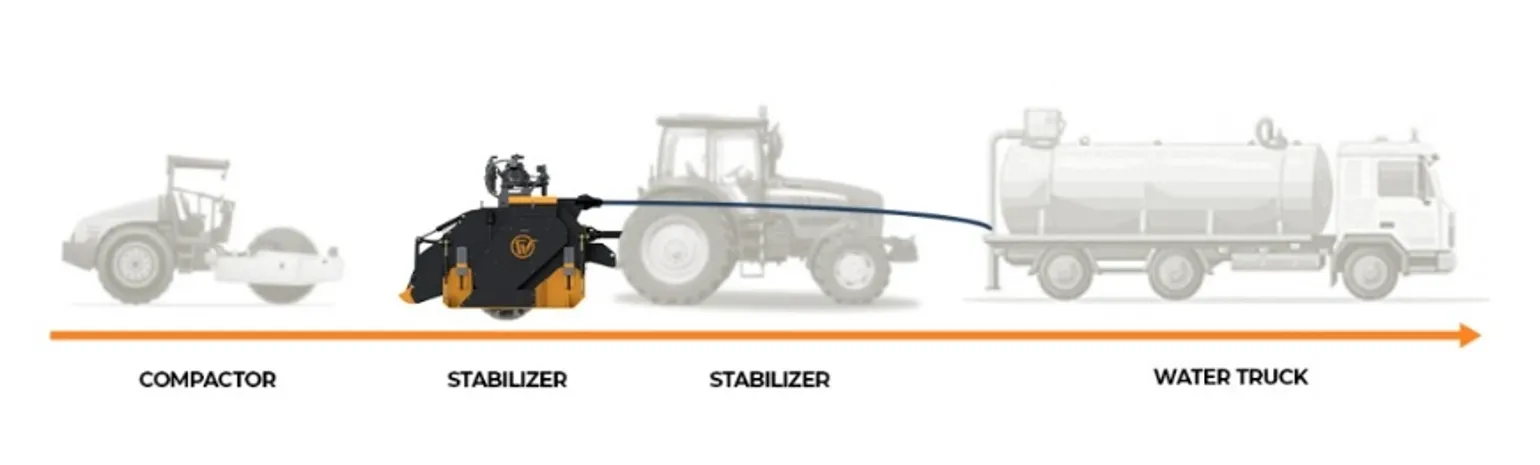
Correctly executed soil stabilization achieves 20–50 year design life — THOR ST on road subgrade
Service Life by Stabilization Method
Different stabilization methods achieve different design service lives, reflecting differences in the strength and permanence of the chemical bonds they produce. The table below summarises typical design service lives for the most common methods used in Indian road construction.
| Stabilization Type | Design Service Life | Notas |
|---|---|---|
| Cement stabilization (road subbase) | 20–50 years | Full structural service life when correctly designed |
| Lime + Cement (Black Cotton Soil) | 25–50 years | Two-stage treatment — permanent PI reduction |
| Lime only (clay modification) | 20–40 years | Modification effect is permanent; structural strength lower |
| Fly ash + Lime | 15–35 years | Slower strength gain; long-term pozzolanic gain continues |
| Foamed bitumen | 15–25 years | Flexible stabilization — different fatigue degradation mechanism |
| Compaction only (no binder) | 5–15 years | No chemical bonding — loses strength when saturated |
IRC:SP:89 Quality Assurance — The Foundation of Long Service Life
IRC:SP:89 sets out the complete quality assurance framework for soil stabilization in India. Following this framework from pre-construction laboratory testing through to post-construction acceptance testing is the single most important factor in achieving the 20–50 year design service life that correctly designed stabilization delivers.
Pre-Construction Testing
Pre-construction testing establishes the soil’s baseline properties and determines the binder type and content needed to achieve target UCS. Required tests include: liquid limit and plastic limit (PI determination per IS:2720 Part 5), sulphate content (IS:2720 Part 27), organic content (IS:2720 Part 22), particle size distribution, and Modified Proctor compaction (IS:2720 Part 8). Mix design UCS trials are conducted at 3–4 binder contents straddling the expected design content, at 7 and 28 days soaked UCS.
During-Construction Quality Control
Field quality control during stabilization operations monitors: soil moisture content before binder application (target: within ±2% of OMC), binder application rate (tray collection at minimum 1 per 500 m²), mixing depth (probe measurement immediately after rotor pass), and compaction achieved (nuclear density gauge at minimum 1 per 500 m², target ≥ 97% Modified Proctor MDD).
Post-Construction Acceptance
Post-construction acceptance requires cored samples at minimum 1 per 500 m² treatment area, tested for 7-day soaked UCS (acceptance criterion: ≥ 1.5 MPa mean, no individual result below 1.0 MPa) and swell (acceptance criterion: ≤ 1.5% after 4-day soaking). Failed zones must be identified, excavated, and re-treated before the wearing course can be laid.
Real-World Service Life — Indian Case References
Chemical soil stabilization of Black Cotton Soil subgrades on Indian national highways has demonstrated service lives consistently exceeding 15–20 years on early NHAI projects from the 1990s. PMGSY rural roads treated with lime + cement stabilization have shown 8–12 year performance without requiring subgrade rehabilitation — significantly exceeding the performance of conventionally constructed roads in the same terrain.
Long-Term Performance
IRC:SP:89 stabilization on National Highway projects in Maharashtra and Telangana completed in 2008–2012 has been monitored showing less than 5% of the treated length requiring subgrade attention after 12 years — compared to 40–60% rehabilitation rates on conventionally constructed parallel rural roads in the same BCS terrain over the same period.
Why the Chemistry Is Permanent
The question of how long soil stabilization lasts is fundamentally a chemistry question. Understanding why cement and lime bonds are permanent explains both the long service life of correctly executed stabilization and the failure modes that can cut that service life short.
Cement — CSH and CAH Crystal Bonding
When cement reacts with water and soil, it forms CSH (calcium silicate hydrate) and CAH (calcium aluminate hydrate) crystals. These crystals grow through the pore spaces between soil particles, binding them together into a rigid, interlocking matrix. Once formed, CSH and CAH crystals do not dissolve in water, do not soften when wet, and do not reverse when the soil dries. They are the same minerals that give concrete its strength, and like concrete, they are permanent under all service conditions encountered in road construction. The only exception is sulphate attack — if the stabilized layer is exposed to sulphate ions after curing, ettringite formation can disrupt the crystal structure. This is why sulphate testing before stabilization is critical.
Key Chemistry Fact
CSH and CAH crystal formation is thermodynamically irreversible under normal road service conditions. The chemistry does not wear out — what limits service life is the structural and environmental loads imposed on the stabilized layer, not the chemistry itself.
Lime — Permanent PI Reduction
Lime stabilization on high-plasticity clay (Black Cotton Soil) achieves permanence through cation exchange. Calcium ions from the quicklime permanently replace sodium and hydrogen ions on the clay mineral surface — an ion exchange that cannot be reversed by wetting, drying, or traffic loading. The clay’s expansive mineralogy is permanently modified. Over weeks and months, the pozzolanic reaction between lime and the clay’s silica and alumina produces additional CSH crystals, adding structural strength on top of the PI reduction.
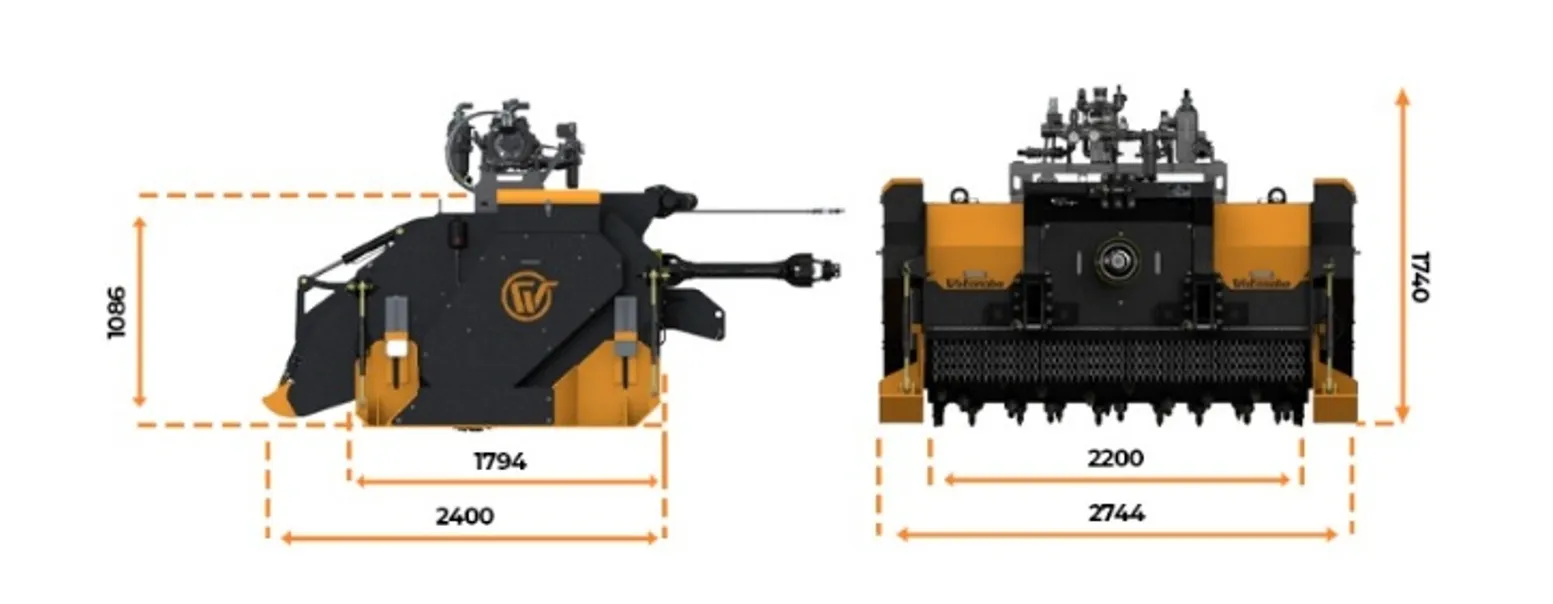
THOR ST soil stabilizer — 350 mm treatment depth ensures full subgrade stabilization
What Actually Limits Service Life
If the chemistry is permanent, why does soil stabilization sometimes fail prematurely? The answer is almost always one of five construction or maintenance failures — none of which are limitations of the stabilization chemistry itself.
1. Traffic Overloading Beyond Design Assumptions
A stabilized layer is designed for a specific cumulative traffic loading, expressed as equivalent standard axle loads (ESALs). When actual traffic loads exceed the design envelope — which is common on Indian rural roads where agricultural vehicle weights have increased significantly since original designs were prepared — fatigue cracking develops in the stabilized layer over time. The cracking is not caused by the chemistry failing; it is caused by the structural capacity of the layer being exceeded. The remedy is correct traffic assessment at design stage, not higher binder content.
2. Deferred Surface Maintenance
The stabilized layer itself does not need maintenance — the chemistry is permanent. But the wearing course above it does. When surface cracking is left unrepaired, water penetrates through cracks, reaches the top surface of the stabilized layer, and begins erosion at the interface. Annual crack sealing is the single most cost-effective intervention for extending the life of a stabilized road, protecting a 20–50 year investment in the stabilized layer below for a minimal annual outlay.
3. Sulphate Attack — Ettringite Formation
Critical Warning
In soils containing sulphates at SO₃ concentrations above 0.5%, ordinary Portland cement (OPC) reacts with the sulphates to form ettringite — a crystal that expands to 2–3 times the volume of the reactants. This causes progressive heaving, cracking, and ultimately complete disintegration of the stabilized layer. Ettringite heave can cause 3–5% volume expansion within months. Always test for SO₃ content (IS:2720 Part 27) before specifying cement. Use PSC or SRC on sulphate-bearing soils.
4. Inadequate Curing
Cement hydration occurs over 7–28 days after mixing. During this period, the layer must retain moisture (to keep the hydration reaction proceeding) and must not be trafficked (as early loading disrupts the forming crystal matrix). If the layer is trafficked before 7-day UCS is confirmed, or if the bituminous curing membrane is damaged or not applied promptly, the surface of the layer desiccates — stopping the hydration reaction before full strength is achieved. A weakly cured surface layer may achieve only 60–70% of its design UCS, with a proportionally shorter service life.
5. Incorrect Binder Content — Under and Over-Dosing
Under-dosing produces insufficient binder to form the continuous crystal matrix needed for the target UCS. The result is a layer that passes visual inspection but fails 7-day UCS testing and has reduced durability. Over-dosing with cement produces shrinkage cracking — the stabilized layer cracks into blocks as the excess cement paste shrinks during curing. Both failures reduce service life. The correct binder content is determined by laboratory mix design using your specific soil — generic tables are a starting point for mix design, not a substitute for it.
How to Ensure Your Stabilized Layer Achieves Its Design Life
The path to 20–50 year service life is straightforward — it requires following IRC:SP:89 procedures from laboratory mix design through to post-construction quality verification. Here is the complete sequence:
- Laboratory mix design: Test your actual soil — PI, SO₃, organic content, Proctor compaction — and determine binder type and content from UCS testing at 7 and 28 days. Do not rely on generic binder percentages.
- Test for sulphates: Confirm SO₃ content is below 0.5% before specifying OPC. If above 0.5%, switch to PSC or SRC.
- Use a calibrated binder spreader: The DCW 2.2 achieves ±2% application accuracy — preventing both under-dosing (UCS failure) and over-dosing (shrinkage cracking).
- Complete compaction within the working window: OPC provides approximately 2 hours at temperatures below 35°C. Above 35°C, switch to PPC for extended working time.
- Apply bituminous curing membrane immediately: Within 30 minutes of final rolling to prevent surface desiccation.
- Confirm 7-day soaked UCS before trafficking: Core samples tested per IS:4332 / IRC:SP:89 criteria (≥ 1.5 MPa soaked UCS).
- Maintain the wearing surface annually: Crack sealing prevents water ingress to the stabilized layer below and is the most cost-effective life extension measure available.
Annual crack sealing of the surface wearing course protects a 20–50 year investment in the stabilized subgrade below. The cost of annual crack sealing over 20 years is typically less than 10% of the cost of a single full rehabilitation — and delays that rehabilitation by decades.
Case Evidence — Stabilized Roads That Have Lasted
The service life claims for soil stabilization are not theoretical — they are backed by documented road performance across India and internationally. The NHAI and state PWD records show numerous sections of stabilized subgrade on NH networks that have reached or exceeded 20-year design lives without subgrade rehabilitation, while adjacent unstabilized sections required full reconstruction every 5–8 years.
In Maharashtra’s Vidarbha region — which has some of India’s most difficult Black Cotton Soil — experimental sections of lime + cement stabilized rural roads constructed in the early 2000s under PMGSY Phase 1 are still performing within acceptable deflection limits in the 2020s. These sections received only routine surface maintenance (bituminous crack sealing and thin wearing course overlays) — no subgrade intervention.
Cost of Delayed Maintenance vs Cost of Stabilization
| Scenario | Year 1–5 Cost (₹/m²) | Year 5–20 Cost (₹/m²) | Total 20-Year Cost |
|---|---|---|---|
| Lime + cement stabilization + annual crack sealing | ₹220–260 | ₹30–50 | ₹250–310 |
| No stabilization — annual gravel blinding | ₹30–50/yr | ₹30–50/yr | ₹600–1,000 |
| No stabilization — full reconstruction at year 8 | ₹30–50/yr | ₹350–500 (rebuild) | ₹700–900 |
The data consistently shows that the additional upfront investment in chemical stabilization is recovered within 5–7 years through avoided maintenance expenditure — and delivers a residual structural asset that continues performing for decades beyond the conventional alternative’s design life.
Monitoring Service Life — What to Check
A stabilized road that is performing within its design life will show the following characteristics on routine inspection:
- Deflection within design limits: Benkelman beam deflection below the design threshold — typically 0.5–1.5 mm depending on traffic loading and pavement design
- No transverse cracking at regular intervals: Isolated shrinkage cracks are acceptable; regular cracking at 1–2 m intervals indicates fatigue damage
- No longitudinal cracking: Longitudinal cracks indicate differential settlement or shear failure in the stabilized layer
- No heaving or upheaval: Upward displacement of the road surface indicates ettringite formation in sulphate soil — requires immediate investigation
- Rut depth below 20 mm: Excessive rutting on a stabilized road indicates either subgrade failure below the treatment zone or surface layer failure, not stabilization failure
Featured Equipment
THOR ST + DCW 2.2 Stabilization System
IRC:SP:89 compliant · ±2% binder accuracy · 350 mm treatment depth · India Watanabe
Key Takeaways
- Correctly designed soil stabilization lasts 20–50 years — CSH and CAH chemistry is thermodynamically permanent
- Lime + cement two-stage treatment on Black Cotton Soil achieves 25–50 year design life with permanent PI reduction
- Service life is limited by traffic overloading, deferred surface maintenance, sulphate attack, inadequate curing, and incorrect binder content — not by the chemistry
- Test for sulphates (SO₃) before specifying OPC — ettringite heave destroys stabilized layers on sulphate soils within months
- Annual crack sealing of the surface wearing course is the most cost-effective life extension measure
- Laboratory mix design, calibrated equipment, and IRC:SP:89 procedures are non-negotiable for achieving design life