● Natural Materials
What Natural Materials Can Be Used for Soil Stabilization?
Not all effective soil stabilization materials come from a cement plant or a chemical factory. A wide range of naturally occurring and agricultural by-product materials can stabilize soil — some as primary binders, others as supplements that reduce the quantity of more expensive manufactured binders needed. In India, where agricultural residues, volcanic deposits, and mineral resources are abundant, natural stabilization materials offer a cost-effective and sustainable path to reliable ground improvement. This article covers every major natural material used for soil stabilization: its origin, how it works chemically, its performance envelope, and where it is most applicable in India.
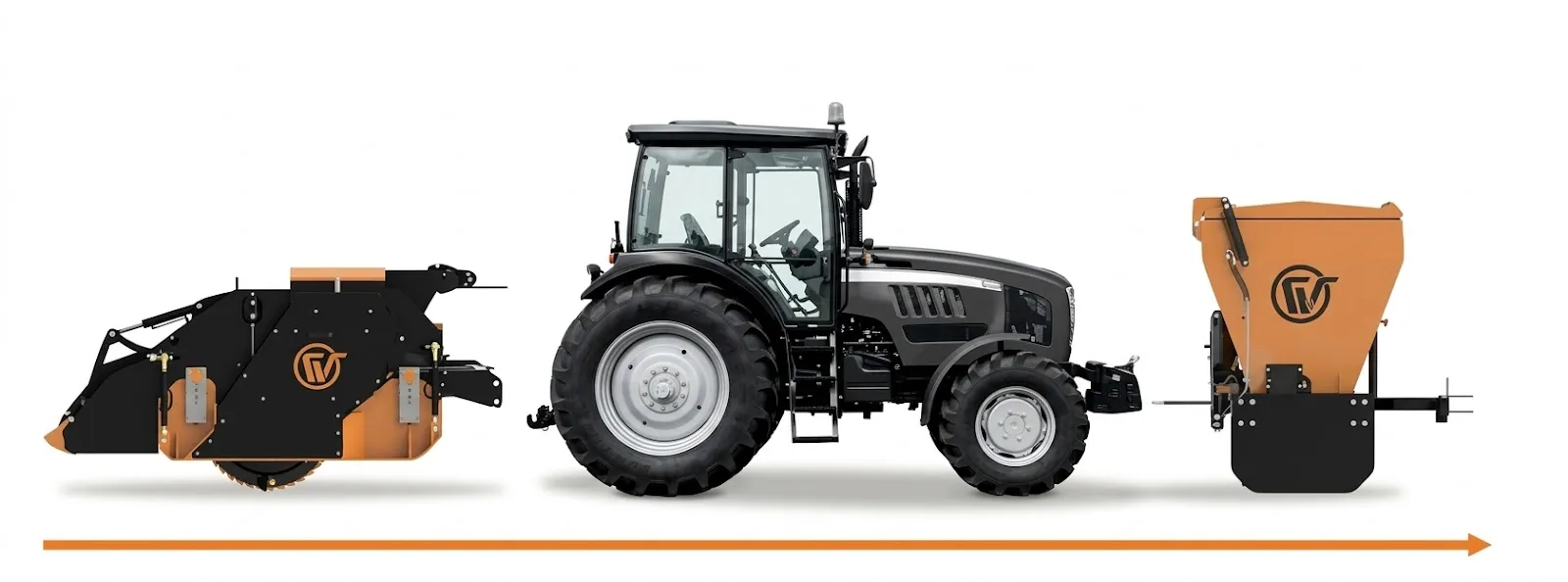
Why Use Natural Materials for Soil Stabilization?
Natural stabilization materials offer four compelling advantages over purely manufactured binders:
- Lower cost — Agricultural by-products such as rice husk ash, bagasse ash, and groundnut shell ash are often available near project sites in India at a fraction of the cost of Portland cement. Lime, when produced locally from limestone, costs 30–50% less than OPC per tonne of reactive material.
- Lower carbon footprint — Portland cement production emits approximately 0.8 kg CO₂ per kg. Agricultural ashes, natural pozzolans, and lime-based materials typically emit 30–70% less CO₂ per unit of stabilizing effect achieved. Waste materials such as fly ash and rice husk ash have an effectively zero additional carbon cost, as they would otherwise be disposed of.
- Local availability — Many natural materials are produced near areas where stabilization is most needed. Rice-growing regions of India produce rice husk ash; sugarcane-growing regions produce bagasse ash; coastal areas have access to seashell lime; volcanic regions have natural pozzolans. Reducing material transport distance cuts cost and emissions simultaneously.
- Waste valorisation — Using agricultural and industrial residues for stabilization converts a disposal problem into a construction resource. India generates millions of tonnes of rice husk, bagasse, and other agricultural residues annually that are burned in the field — a major source of air pollution. Diverting these into construction materials addresses both the waste problem and the material need.
India’s Natural Material Potential
India produces approximately 22 million tonnes of rice husk annually, 8 million tonnes of bagasse, and 200+ million tonnes of fly ash from thermal power plants. Converting even a fraction of these into natural stabilization materials could significantly reduce dependence on Portland cement in rural road construction.
1. Lime: The Original Natural Stabilizer
Lime is produced by calcining (heating) limestone (calcium carbonate, CaCO₃) at 900–1,000°C, which drives off carbon dioxide to produce quicklime (calcium oxide, CaO). Limestone is a naturally occurring sedimentary rock found in large deposits across India — Rajasthan, Madhya Pradesh, Andhra Pradesh, Tamil Nadu, and Himachal Pradesh are among the major producing states. In this sense, lime is a natural material: it requires only heat treatment of a geological material, with no chemical synthesis.
How lime stabilizes soil: Quicklime reacts immediately with soil moisture in an exothermic slaking reaction, releasing heat and driving off water — the key immediate benefit for wet, plastic clays. The resulting calcium hydroxide then reacts with clay minerals through two pathways: immediate ion exchange (calcium ions permanently alter clay particle surface chemistry, reducing plasticity) and long-term pozzolanic reaction (calcium hydroxide reacts with reactive silica and alumina in the clay to form calcium silicate hydrate, progressively increasing strength over months).
Best suited to: High-plasticity clays, Black Cotton Soil (PI > 25). Lime is the most effective natural stabilizer for reducing the swelling behaviour and improving the bearing capacity of expansive clays that cover vast areas of Deccan Plateau, Maharashtra, Gujarat, and Madhya Pradesh.
Not suitable for: Sulphate-bearing soils (SO₃ > 0.5%), organic soils, or granular soils with insufficient reactive clay minerals for pozzolanic reaction. Lime also produces a highly alkaline environment (pH 12+) that must be managed in environmentally sensitive areas.
2. Fly Ash: India’s Most Abundant Industrial Pozzolan
Fly ash is the fine, glassy powder collected from the flue gas of coal-fired thermal power stations. While it is a by-product of industrial combustion rather than a geological deposit, it is classified as a pozzolanic material — a naturally occurring substance (in the broad sense of not requiring chemical synthesis) that reacts with calcium hydroxide to form cementing compounds.
Pozzolanic reaction: Fly ash contains reactive silica (SiO₂) and alumina (Al₂O₃) in an amorphous (glassy) form. These react with calcium hydroxide — from lime addition or from cement hydration — in the presence of water to form calcium silicate hydrate (CSH) and calcium aluminate hydrate (CAH), the same compounds responsible for cement strength. The reaction is slower than cement hydration — significant strength gain at 28 days, with continued development to 90 days and beyond.
Class C vs Class F in India: Indian fly ash is predominantly Class F (low calcium, from bituminous coal), requiring a calcium activator — lime or cement — to react. A typical Indian mix for Black Cotton Soil: 3–4% quicklime + 15–20% Class F fly ash achieves UCS of 0.8–1.5 MPa at 28 days, at a material cost 25–40% lower than an equivalent cement-only treatment.
Additional benefits: Fly ash spherical particles improve workability and reduce mixing energy; it lowers the permeability of the cured material; it reduces heat of hydration (extending the working time window in hot Indian conditions); and its use diverts a major waste stream from ponds and landfills.
3. Rice Husk Ash (RHA): India’s Agricultural Pozzolan
Rice husk is the outer shell of the rice grain, removed during milling. India produces approximately 22 million tonnes of rice husk annually — most of it burned in the field or used as boiler fuel in rice mills. When burned at controlled temperatures (500–700°C) and ground to a fine powder, rice husk ash contains 85–95% silicon dioxide (SiO₂) in a highly reactive amorphous form, making it one of the most pozzolanic agricultural by-products available.
Performance as a Stabilization Material
RHA does not react independently — it requires a calcium source (lime or cement) to trigger the pozzolanic reaction. The optimum combination for Black Cotton Soil stabilization, based on research from IITs and state highway departments:
- Lime + RHA (3% + 10%): Reduces PI from 35–45 to below 20; achieves UCS of 0.6–1.0 MPa at 28 days. Suitable for low-volume road subgrade where CBR improvement is the primary objective.
- Lime + RHA (4% + 15%): Achieves UCS of 1.0–1.5 MPa at 28 days. Meets IRC:SP:89 minimum for subgrade stabilization. Best cost-performance combination for rural road construction in rice-growing regions.
- Cement + RHA (5% + 10%): Achieves UCS of 1.5–2.0 MPa at 28 days with significantly lower cement content than cement-only treatment. Suitable for higher-volume rural roads.
Critical Processing Requirement
RHA reactivity is highly sensitive to burning temperature. Ash burned above 700°C develops crystalline silica (cristobalite and quartz) that is far less reactive than amorphous silica. Ash burned in open field fires — the most common disposal method — is typically over-temperature and poorly reactive. Controlled combustion in a furnace or kiln at 500–700°C, followed by grinding to below 45 μm particle size, is required to produce reactive RHA. This processing requirement limits RHA’s applicability to projects near rice mills with controlled combustion capacity.
4. Sugarcane Bagasse Ash (SCBA): The Sugarcane Belt Resource
Sugarcane bagasse is the fibrous residue remaining after juice extraction from sugarcane. Indian sugar mills burn bagasse as boiler fuel to generate process steam and electricity, producing approximately 8 million tonnes of bagasse ash annually. SCBA contains 60–75% SiO₂, 5–10% Al₂O₃, and 5–10% CaO, giving it moderate pozzolanic reactivity that varies significantly with combustion temperature and conditions.
Performance in stabilization: Research from Uttar Pradesh, Maharashtra, and Karnataka — India’s major sugarcane-producing states — has demonstrated that SCBA at 10–20% combined with 3–5% lime achieves UCS of 0.5–1.0 MPa on Black Cotton Soil and low-plasticity clay at 28 days, while reducing PI by 30–50%. SCBA is particularly effective at improving workability and reducing the stickiness of wet clay, as its angular particles improve internal friction in the mix.
Availability advantage: Unlike RHA, which requires controlled combustion, SCBA from sugar mills is produced under relatively consistent boiler conditions and requires only grinding to achieve adequate fineness. It is available year-round near sugar mills and costs little more than the cost of grinding and transport.
5. Natural Pozzolans: Volcanic and Geological Materials
Natural pozzolans are volcanic or geological materials that contain reactive silica and alumina in amorphous form, capable of reacting with lime to form cementitious compounds. They are the original pozzolans — the Romans used volcanic ash from the town of Pozzuoli (near Vesuvius) to build harbour structures that have survived for 2,000 years. Natural pozzolans available in or near India include:
Surkhi (Calcined Clay)
Surkhi is finely ground calcined clay or brick dust — one of the oldest pozzolanic materials used in Indian construction. It has been used in lime mortars and plasters for centuries. When brick is fired at 600–900°C, the clay minerals partially dehydrate and become amorphous, developing pozzolanic reactivity. Ground brick dust (surkhi) at 20–30% combined with lime at 4–6% can achieve UCS of 0.4–0.8 MPa on cohesive soils — sufficient for low-volume rural road subgrade stabilization. It is most relevant in regions with brick manufacturing infrastructure, particularly the Indo-Gangetic plain.
Diatomaceous Earth
Diatomaceous earth (diatomite) is a sedimentary rock composed of the siliceous skeletons of microscopic algae (diatoms). It contains 80–90% amorphous silica in a highly porous, high surface area form. Deposits occur in Rajasthan (Bikaner district) and parts of Haryana. As a pozzolan, diatomite reacts readily with lime to form CSH. Research has demonstrated that diatomite at 5–15% combined with lime at 3–5% improves the UCS of weak soils and reduces plasticity effectively. Its very high surface area makes it reactive even at low dosages, but also means it absorbs significant water, which must be accounted for in mix design.
Volcanic Ash and Tuff
Volcanic ash and tuff are silica-rich pyroclastic materials deposited by volcanic eruption. Active volcanic sources near India include Indonesia, the Philippines, and the Andaman Islands. The Deccan Traps of central and western India, while not volcanically active, contain weathered basaltic rocks with some pozzolanic character. True volcanic ash pozzolans are more commonly used in East Africa, Central America, and Europe where active volcanic deposits are closer to construction markets.
6. Groundnut Shell Ash (GSA): The Peanut Belt Solution
India is the world’s second-largest producer of groundnuts (peanuts), with major production in Gujarat, Andhra Pradesh, Tamil Nadu, Rajasthan, and Karnataka. Groundnut shells, which make up 25–30% of the total pod weight, are burned as fuel in oil mills and food processing factories. The resulting ash contains 40–60% SiO₂, 5–15% CaO, and 10–20% K₂O (potassium oxide), giving it both pozzolanic and self-cementitious properties.
Stabilization performance: Research from Andhra Pradesh and Tamil Nadu has shown that GSA at 10–20% combined with lime at 3–5% can reduce the PI of Black Cotton Soil from 35–40 to 15–20 and improve soaked CBR from 2–3% to 8–15% — meeting IRC:37 design requirements for rural road subgrades. UCS values of 0.4–0.9 MPa at 28 days have been demonstrated, with the best results from samples cured for 28 days at 40°C (simulating Indian field conditions). GSA is a practical alternative to fly ash in groundnut-producing regions distant from thermal power plants.
7. Natural Fibres: Jute, Coir, Sisal, and Bamboo
Natural fibres do not create cementitious bonds — they improve soil stabilization through physical reinforcement: adding tensile strength, bridging developing cracks, and reducing shrinkage in stabilized layers. They are used as additives to cement or lime stabilization mixes, not as standalone stabilizers. India is one of the world’s largest producers of natural fibre crops, making these materials widely available at low cost.
Jute Fibre
Short-cut jute fibres (20–50 mm length) mixed into cement-stabilized soil at 0.25–0.5% by dry soil mass reduce shrinkage cracking by 40–60% compared to untreated cement stabilization. Research from IIT Kharagpur has demonstrated that jute fibre addition at 0.3% increases the splitting tensile strength of cement-stabilized Black Cotton Soil by 25–35%, reducing brittle failure mode and improving post-crack behaviour. Jute biodegrades over 6–24 months — making it appropriate for temporary stabilization applications but less suitable for long-term structural layers where permanent fibre reinforcement is needed.
Coir (Coconut Husk Fibre)
Coir fibres are longer and more durable than jute (biodegradation period: 2–5 years), with higher tensile strength (100–160 MPa). Used at 0.25–0.5% in stabilized soil mixes, coir improves both UCS and California Bearing Ratio (CBR) of treated soils. Coir geotextile mats — woven from coir fibres — are extensively used across India’s monsoon-affected embankment slopes for surface erosion protection, providing temporary stabilization until vegetation establishes. India is the world’s largest coir producer (Kerala, Tamil Nadu, Karnataka), making it highly accessible in southern India.
Sisal Fibre
Sisal (Agave sisalana) produces strong, durable fibres (tensile strength: 400–700 MPa) that are significantly more resistant to biodegradation than jute. Sisal fibre at 0.25% mixed into lime-stabilized expansive clay reduces shrinkage cracking by 50–70% and increases UCS by 15–30% compared to lime-only treatment. While sisal production in India is less extensive than jute or coir, it is grown in Andhra Pradesh and Tamil Nadu and represents a viable reinforcement option in those regions.
8. Gypsum: A Natural Mineral Stabilizer
Gypsum (calcium sulphate dihydrate, CaSO₄·2H₂O) is a naturally occurring mineral mined in India from deposits in Rajasthan, Jammu & Kashmir, and Gujarat. In soil stabilization, gypsum has a specific and important role: it supplies calcium ions for the flocculation of clay particles, similar to the first stage of lime stabilization, but without the high alkalinity and the exothermic slaking reaction.
Applications in stabilization: Gypsum at 2–6% reduces the plasticity of moderately plastic clays and improves workability without the handling hazards of quicklime. It is particularly effective on sodic soils (alkali soils with high sodium content) where the calcium in gypsum displaces sodium from clay particle surfaces, improving structure and drainage — a well-established reclamation technique for waterlogged sodic soils in Punjab, Haryana, and Uttar Pradesh.
Important limitation: In the presence of lime or cement, gypsum can react to form ettringite — the same swelling mineral that causes sulphate heave in cement-stabilized soils. Gypsum must not be used in combination with lime or cement unless ettringite formation is confirmed to be non-expansive under the site-specific conditions by laboratory testing.
Natural Materials: Performance and Availability Comparison
| Material | Origin | Typical Rate | Achievable UCS | Best Indian Regions |
|---|---|---|---|---|
| Lime (Quicklime) | Limestone calcination | 3–6% | 0.3–1.5 MPa | All India (Rajasthan, MP, AP limestone) |
| Fly Ash + Lime | Coal combustion by-product | 15–20% FA + 3–4% lime | 0.8–1.5 MPa | Near thermal power plants (all major states) |
| Rice Husk Ash + Lime | Agricultural combustion | 10–15% RHA + 3–4% lime | 0.6–1.5 MPa | Punjab, UP, Bihar, West Bengal, Andhra |
| Bagasse Ash + Lime | Sugar mill combustion | 10–20% SCBA + 3–5% lime | 0.5–1.0 MPa | UP, Maharashtra, Karnataka, Tamil Nadu |
| Groundnut Shell Ash + Lime | Agricultural combustion | 10–20% GSA + 3–5% lime | 0.4–0.9 MPa | Gujarat, Andhra Pradesh, Tamil Nadu |
| Surkhi (Calcined Clay) | Fired brick / clay | 20–30% + 4–6% lime | 0.4–0.8 MPa | Indo-Gangetic plain, brick-producing regions |
| Natural Fibres (Jute/Coir) | Agricultural crop | 0.25–0.5% (additive only) | Improves crack resistance; no strength alone | West Bengal (jute); Kerala/Tamil Nadu (coir) |
| Gypsum | Mineral deposit | 2–6% (sodic soils) | PI reduction; no structural strength | Rajasthan, J&K; sodic soils of Punjab, UP |

Frequently Asked Questions
QCan natural materials fully replace Portland cement in road stabilization?
For low-volume rural roads with modest traffic loading, lime-RHA or lime-fly ash combinations can achieve the IRC:SP:89 minimum UCS of 1.5 MPa at 28 days and reduce PI below the required threshold — meeting design requirements without Portland cement. For higher-volume roads with heavier traffic, cement is still typically needed to achieve UCS above 2.0 MPa reliably. The most cost-effective approach is often a hybrid: cement at a reduced rate (3–5% instead of 7–10%) supplemented with fly ash or RHA at 10–20%, achieving the target UCS at lower material cost.
QWhy does rice husk ash reactivity vary so much between sources?
RHA reactivity depends critically on combustion temperature. Silica in RHA exists as amorphous (reactive) glass at temperatures below 700°C. Above 700°C, amorphous silica crystallises into cristobalite and tridymite, which are much less reactive. Open field burning of rice husk typically reaches 800–1,000°C — producing largely crystalline, poorly reactive ash. Controlled combustion in a rice husk furnace at 550–650°C produces highly reactive ash with >90% amorphous silica. Always specify RHA from controlled combustion and verify reactivity with a lime-RHA pozzolanicity test (EN 196-5) before committing to a design.
QIs gypsum safe to use on Black Cotton Soil?
Gypsum alone (without lime or cement) is generally safe on Black Cotton Soil and can usefully reduce PI and improve workability. However, it must never be combined with lime or cement without first conducting an ettringite expansion test in the laboratory. The sulphate in gypsum reacts with the calcium aluminate compounds in cement hydration products to form ettringite — a highly expansive mineral that can cause severe heave and cracking in a stabilized layer over time.
QDo natural fibre additions reduce the strength of stabilized soil?
At the rates used in stabilization (0.25–0.5% by mass), natural fibres cause a slight reduction in UCS — typically 5–15% — compared to the same mix without fibres. This is because fibres interrupt the continuity of the cementitious matrix. However, they significantly improve post-crack behaviour, splitting tensile strength, and resistance to shrinkage cracking. For applications where cracking control is important (heavily trafficked road bases, expansive clay sites), the net benefit of fibre addition outweighs the small UCS reduction. The mix design should target a UCS that achieves the design value even with the fibre reduction factored in.
QWhere can I find reliable data on natural material performance for Indian soils?
The most reliable sources for India-specific research are: IRC:SP:89-2010 (covers fly ash and lime combinations), the Journal of Materials in Civil Engineering (ASCE), the Indian Geotechnical Journal, and research publications from IIT Kharagpur, IIT Bombay, IIT Roorkee, and NIT Trichy. State highway department technical reports from Maharashtra, Karnataka, and Andhra Pradesh also contain field performance data on lime-RHA and lime-bagasse ash stabilization that is directly applicable to similar soil conditions.
Key Takeaways
- Lime is the primary natural stabilizer for high-PI clays — produced from India’s abundant limestone deposits in Rajasthan, MP, and Andhra Pradesh
- Fly ash (200+ mt/year), rice husk ash (22 mt/year), and bagasse ash (8 mt/year) are India’s three most abundant natural pozzolans — all proven in stabilization combinations with lime
- RHA from controlled combustion (550–650°C) achieves UCS of 0.6–1.5 MPa on Black Cotton Soil in lime-RHA combinations — meeting IRC:SP:89 rural road requirements
- Natural fibres (jute, coir, sisal) at 0.25–0.5% reduce shrinkage cracking by 40–70% in cement or lime-stabilized layers — particularly valuable on expansive clay sites
- The optimal strategy: cement at reduced rate (3–5%) supplemented with locally available natural pozzolan (10–20%) — achieving target UCS at 25–40% lower material cost than cement-only treatment
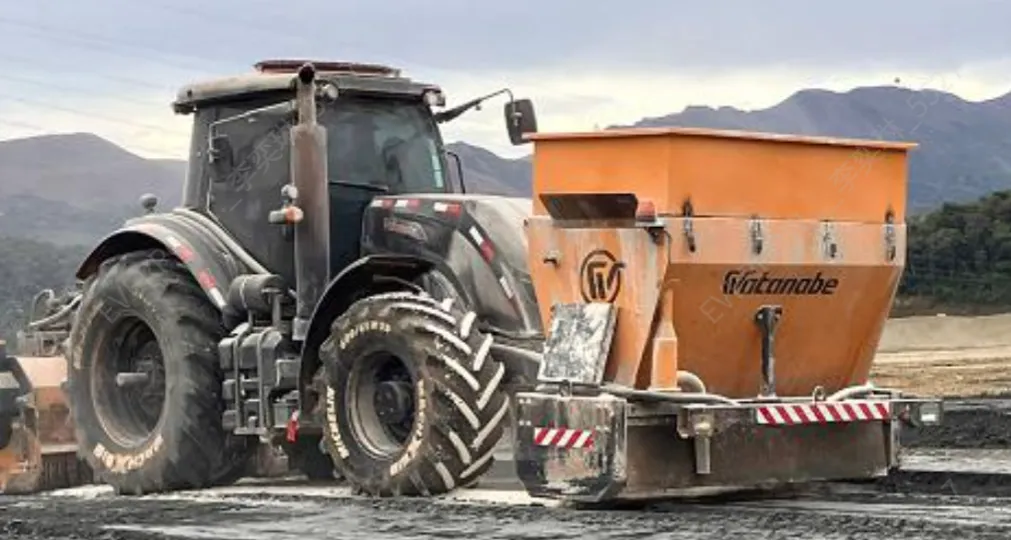
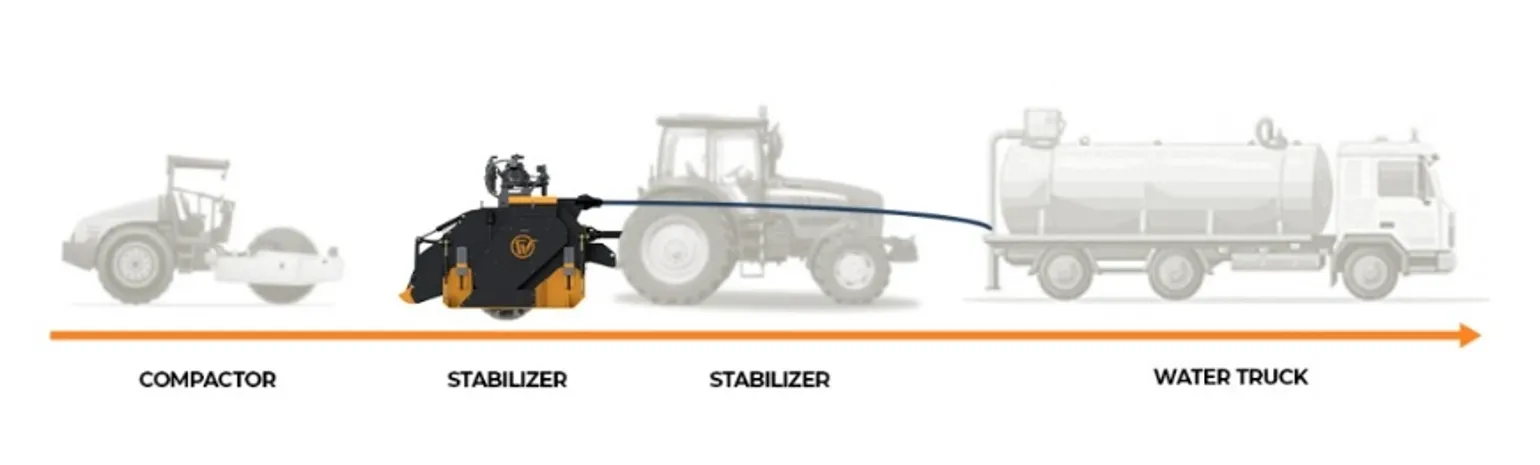
India’s abundance of natural pozzolans, agricultural by-products, and mineral deposits makes it uniquely well-positioned to develop cost-effective, low-carbon stabilization programmes for rural road construction and land improvement. The THOR ST Soil Stabilizer from India Watanabe Soil Stabilizer Co.,Ltd is compatible with all natural binder materials — lime, fly ash, rice husk ash, bagasse ash, surkhi, and fibre additives — providing the uniform mixing quality needed to achieve the target UCS regardless of which natural material your project specifies. Contact our team to discuss your natural material stabilization project.