● Products & Equipment
What Are Commonly Used Soil Stabilizers?
The word “soil stabilizer” carries two distinct meanings in construction: the chemical stabilizing agent mixed into the soil, and the آلة that does the mixing. Both matter enormously for project success. This article covers both — the most widely specified stabilizing agents used across India and internationally, the procurement categories they fall into, and the machine types used to apply them — giving procurement engineers, project managers, and site supervisors a practical reference for specifying and sourcing what their project actually needs.
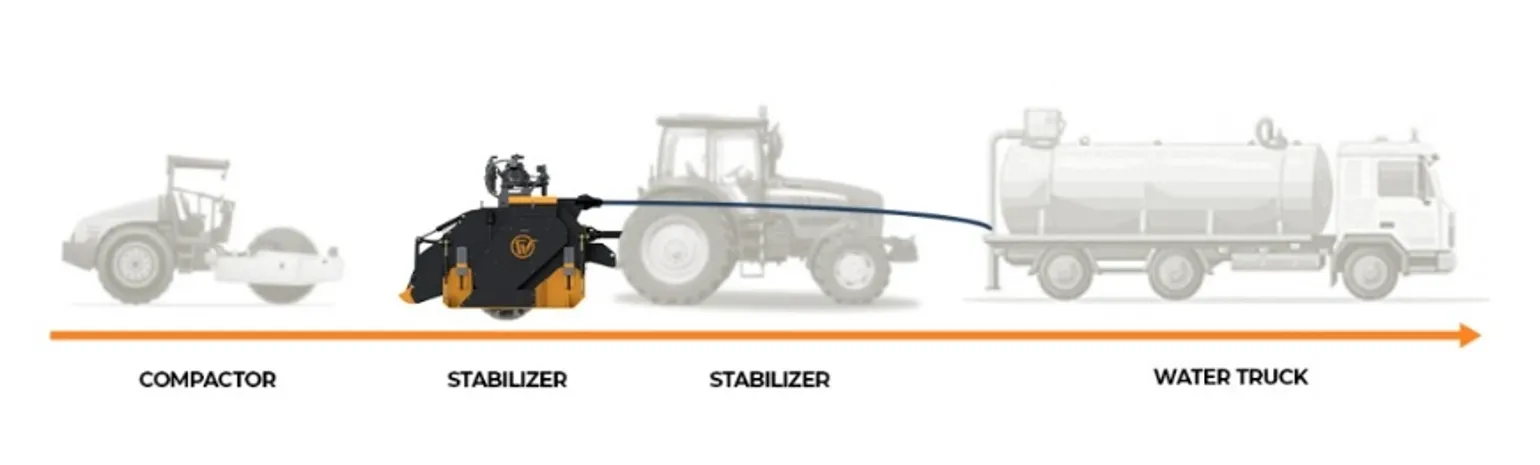
Two Meanings of “Soil Stabilizer”
Before discussing which stabilizers are commonly used, it is important to clarify this terminology distinction, because confusing them leads to procurement errors:
Stabilizing Agent (the material)
The chemical or mineral material mixed into the soil to improve its engineering properties. Examples: Portland cement, quicklime, fly ash, foamed bitumen, calcium chloride, polymer stabilizers. Specified in the project design by material type, grade, and application rate (% by dry soil mass). Procured from cement manufacturers, chemical suppliers, and bitumen refiners.
Stabilizer Machine (the equipment)
The mixing machine used to blend the stabilizing agent uniformly through the soil to the treatment depth. Examples: tractor-mounted rotary stabilizer, self-propelled stabilizer/reclaimer, road recycler. Specified by working width, treatment depth capability, and power output. Procured by purchase or hire from equipment manufacturers and dealers.
This article covers both categories in detail.
Part 1: Commonly Used Stabilizing Agents
Portland Cement — The Universal Stabilizing Agent
Portland cement is the most widely used stabilizing agent in the world. Its dominance comes from three factors: predictable performance across a wide range of soil types, reliable supply through a mature manufacturing and distribution network, and well-established design standards (IRC:SP:89 in India, ASTM D558 internationally) that allow engineers to specify with confidence.
Common grades used for stabilization in India:
- OPC 43 and OPC 53 Grade — Standard grades for most stabilization applications. OPC 53 produces higher early strength and is preferred where the working time window must be managed tightly. Both are widely available from ACC, UltraTech, Shree Cement, Ambuja, and other major Indian manufacturers.
- PPC (Portland Pozzolana Cement) — Contains 15–35% fly ash. Lower heat of hydration extends working time in hot weather. Better long-term durability in wet-dry cycling environments. Recommended for Deccan Plateau and high-rainfall zones. Costs marginally less than OPC.
- PSC (Portland Slag Cement) — Contains 25–65% GGBS. Better sulphate resistance than OPC. Specified for stabilization of soils with SO₃ > 0.25%, coastal soils with marine clay exposure, and industrial land with sulphate contamination.
Procurement note: Cement for stabilization is supplied in bulk tankers (for large projects > 500 tonnes) or 50 kg bags. Bulk supply significantly reduces handling cost and ensures consistent application rate via calibrated spreader equipment. Shelf life in bags: 3 months from manufacture date.
Quicklime and Hydrated Lime — The Clay Specialist
Lime is the primary stabilizing agent for high-plasticity clay soils including Black Cotton Soil. It is the only material that can effectively reduce the plasticity index (PI) of expansive clays to acceptable levels — a prerequisite for any subsequent cement treatment on high-PI soils. In India, lime stabilization is specified under IRC:SP:89 for Black Cotton Soil subgrade treatment across the Deccan Plateau.
Quicklime (CaO) is the most reactive form. It dries wet soil rapidly through the exothermic slaking reaction and is the preferred form for wet, unworkable clay. Requires full PPE for handling (caustic burns risk). Available from lime kiln operators in limestone-producing states.
Hydrated lime (Ca(OH)₂) is safer to handle, reacts more slowly, and is appropriate for moderately plastic clays at acceptable moisture content. Available from lime processors in 25 kg and 50 kg bags or bulk.
IRC:SP:89 Specification
IRC:SP:89-2010 specifies the following for lime stabilization of Black Cotton Soil: lime application rate determined by laboratory Eades-Grim test to find the minimum rate that raises pH to 12.4; minimum soaked UCS of 0.175 MPa at 7 days for modification; and minimum 1.5 MPa at 7 days for structural stabilization of subbase. Compaction must achieve 98% of Modified Proctor MDD.
Fly Ash — The Cost-Reduction Supplement
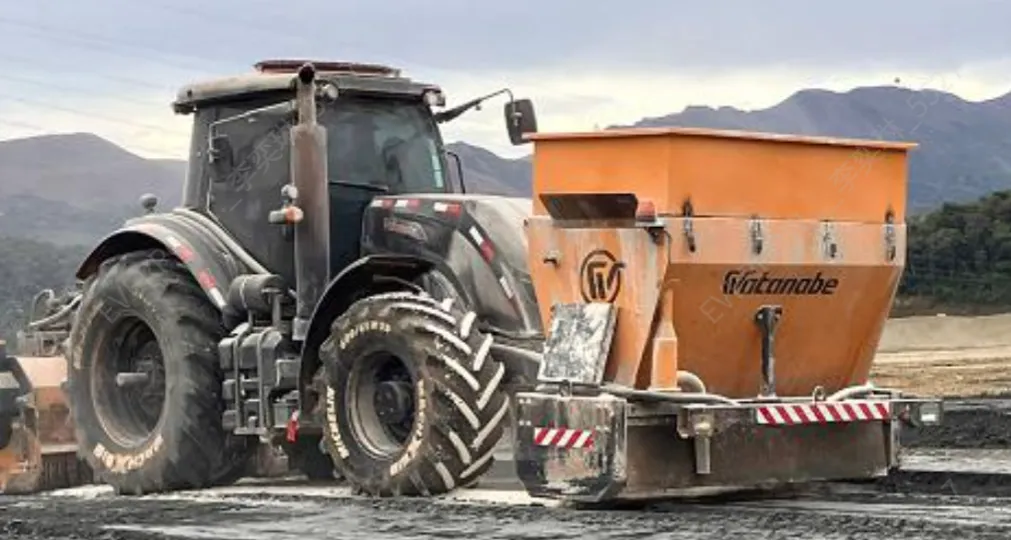
Fly ash is the most commonly used supplementary stabilizing agent in India — not as a standalone material, but as a lime or cement extender that reduces binder cost by 20–40% while maintaining or improving workability. India’s 200+ million tonnes of annual fly ash production from thermal power plants makes it widely available near most major construction corridors. Class F fly ash (the predominant Indian type) requires a calcium activator — lime or cement — to react. Class C fly ash (less common in India) is self-cementing.
Procurement: Available in bulk at low cost from NTPC, THDC, and state electricity board power plant stockpiles. Quality varies between sources — specify IS 3812 Part 1 (Class F) compliance and verify loss on ignition (< 12%) and fineness before use.
Foamed Bitumen — The Flexible Pavement Stabilizer
Foamed bitumen is the primary stabilizing agent for full depth reclamation of failed flexible pavements and for granular base stabilization where a flexible (rather than rigid) treated layer is required. Hot bitumen (160–180°C) is expanded into foam by water and air injection, then mixed directly into the soil or pavement material by the stabilizer machine’s foam injection system. Application rate: 2–4% by mass.
Key commercial advantage: No curing window constraint — foamed bitumen-stabilized material can be trafficked and surfaced quickly, unlike cement stabilization which requires 7 days of curing. Critical on busy roads where lane closure time is limited. Not suitable for clay soils with high fines content (> 25% passing 75 μm).
Calcium Chloride — The Dust Control Stabilizer
Calcium chloride (CaCl₂) is a hygroscopic salt widely used as a stabilizing agent for unpaved road surfaces and dust control. It absorbs atmospheric moisture to maintain surface dampness, preventing fine particle detachment by wind. Applied at 0.5–2% by mass of treated material as a liquid solution or flake, it is the standard dust stabilizer for mine haul roads, airport unpaved areas, and rural access tracks. It does not create cementitious bonds — it is a temporary stabilizer requiring periodic reapplication (typically annually). Available from chemical distributors across India.
Polymer and Ionic Stabilizers — The Proprietary Chemical Segment
A significant commercial segment of the stabilization market consists of proprietary liquid chemical stabilizers — polymer solutions, ionic exchange liquids, and enzyme-based products marketed under brand names. Common product categories in the Indian market include:
- Polyacrylamide (PAM) solutions — Used at very low concentrations (0.001–0.01%) for agricultural erosion control and at higher concentrations (0.1–1%) for construction dust and surface stabilization. Widely available; performance well-documented. Not a structural stabilizer.
- Acrylic polymer emulsions — Film-forming polymers that coat soil particles and bind surface layers. Used for temporary erosion control on construction sites and for surfacing unpaved roads. Performance varies by soil type. Require laboratory trials before specification.
- Enzyme-based stabilizers — Marketed as catalysts that modify clay particle surface chemistry through organic enzyme action. Performance claims are highly variable; independent test data is limited. Appropriate only for low-plasticity silty clays; not substitutes for lime or cement on expansive clay soils.
- Sulfonated oil and lignosulfonate products — By-products of the paper pulp industry that bind dust and improve compaction on granular surfaces. Widely used on unpaved mine roads and logging tracks. Low cost; temporary performance.
Procurement caution: Always request independently verified test data (UCS, CBR, soaked performance) from a recognised laboratory before specifying any proprietary chemical stabilizer. Some products have limited peer-reviewed performance data despite aggressive marketing claims. For structural road stabilization applications, IRC:SP:89-compliant cement or lime treatment remains the safest specification basis.
Commonly Used Stabilizing Agents: Quick Reference
| Agent | Best Soil | Typical Rate | Structural? | Indian Standard |
|---|---|---|---|---|
| OPC / PPC Cement | Granular, silt, low-PI clay | 3–14% | نعم | IRC:SP:89, IS 269 |
| Quicklime / Hydrated Lime | High-PI clay, BCS | 3–8% | Yes (with pozzolan) | IRC:SP:89, IS 712 |
| Fly Ash (Class F + activator) | All types (supplement) | 10–25% | Yes (combined) | IS 3812 Part 1 |
| Foamed Bitumen | Granular, recycled pavement | 2–4% | Yes (flexible) | IRC:37, ARRA guidelines |
| Calcium Chloride | Granular, unpaved roads | 0.5–2% | No (dust only) | — |
| Polyacrylamide (PAM) | Fine-grained (erosion / dust) | 0.001–1% | لا | — |
| Proprietary ionic / enzyme | Low-PI silt (site-specific) | Proprietary | Claimed (verify) | None (self-certified) |
Part 2: Commonly Used Soil Stabilizer Machines
The stabilizer machine does the critical work of mixing — a stabilizing agent applied to the surface but inadequately mixed through the treatment depth is nearly as ineffective as no treatment at all. The following machine types cover the spectrum from small agricultural to large highway projects:
Tractor-Mounted Rotary Stabilizer — The Most Common Indian Machine
The tractor-mounted rotary stabilizer is the dominant machine type for soil stabilization in India for road and agricultural projects. It consists of a powered rotor with carbide-tipped cutting teeth, driven by the tractor’s PTO (power take-off) shaft and mounted on a three-point linkage. The rotor mills soil to the set depth while the tractor moves forward at a controlled speed, producing uniform treatment across the working width.
Why it dominates the Indian market: Low capital cost relative to self-propelled machines; compatible with tractors already in the contractor’s fleet; easily transported between sites on a flatbed trailer; suitable for the working widths (1.5–2.5 m) and depths (150–350 mm) required for most IRC:SP:89 road subgrade projects; can also be used for agricultural hardpan breaking and land levelling.
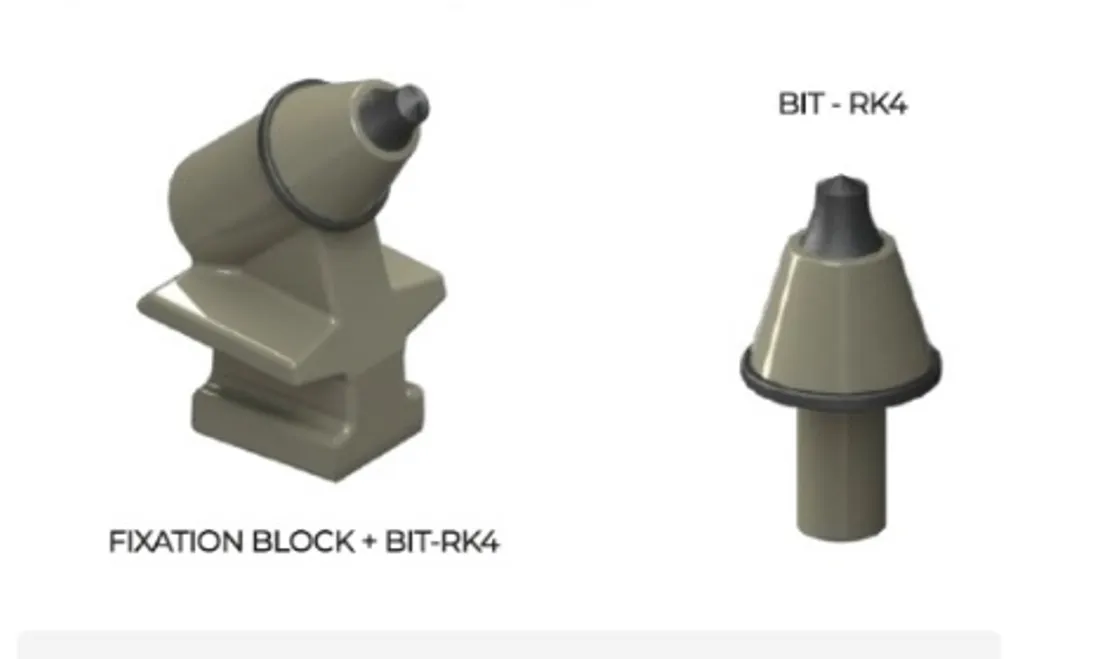
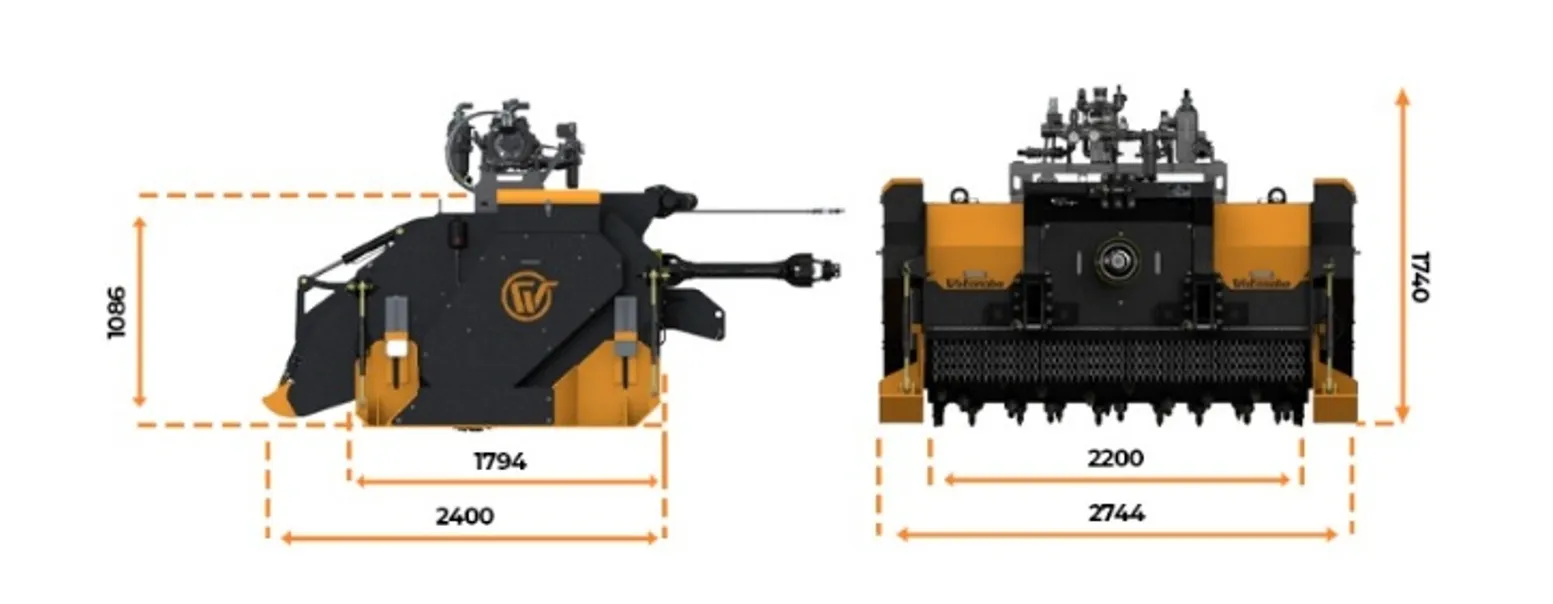
The THOR ST Soil Stabilizer from India Watanabe Soil Stabilizer Co.,Ltd is a tractor-mounted machine designed specifically for Indian road and agricultural stabilization projects. Key features include an adjustable milling depth (up to 350 mm), heavy-duty RK4 rotor with replaceable carbide-tipped teeth, integrated water spray system for moisture addition during mixing, and working widths of 1.8–2.4 m.
Self-Propelled Stabilizer / Reclaimer — The Highway Machine
Self-propelled stabilizers are large, purpose-built machines that integrate the rotor drive, water injection system, and sometimes foamed bitumen injection system into a single, self-powered unit. Working widths of 2.0–2.5 m and treatment depths of up to 500 mm. Power output: 300–600 kW. Production rate: 1,500–3,000 m²/hour. Major manufacturers include Wirtgen (WR series), Caterpillar (RM series), and Bomag (MPH series).
When self-propelled is preferred: National highway rehabilitation and full depth reclamation projects where production rate is critical; projects requiring foamed bitumen treatment (integrated injection system); treatment depths exceeding 350 mm; long project lengths where mobilisation cost of the larger machine can be amortised over high output.
Agricultural Rotavator / Power Tiller — The Budget Option
For low-volume rural road stabilization and agricultural land improvement, a heavy-duty agricultural rotavator can function as a light stabilizer. Treatment depth is limited to 150–200 mm and mixing uniformity is lower than a dedicated stabilizer machine, but the capital cost is a fraction and the machine is available across rural India. A rotavator-based approach requires multiple passes and careful moisture management to approach the mixing quality of a purpose-built stabilizer. Not suitable for heavy clay or stony soils.
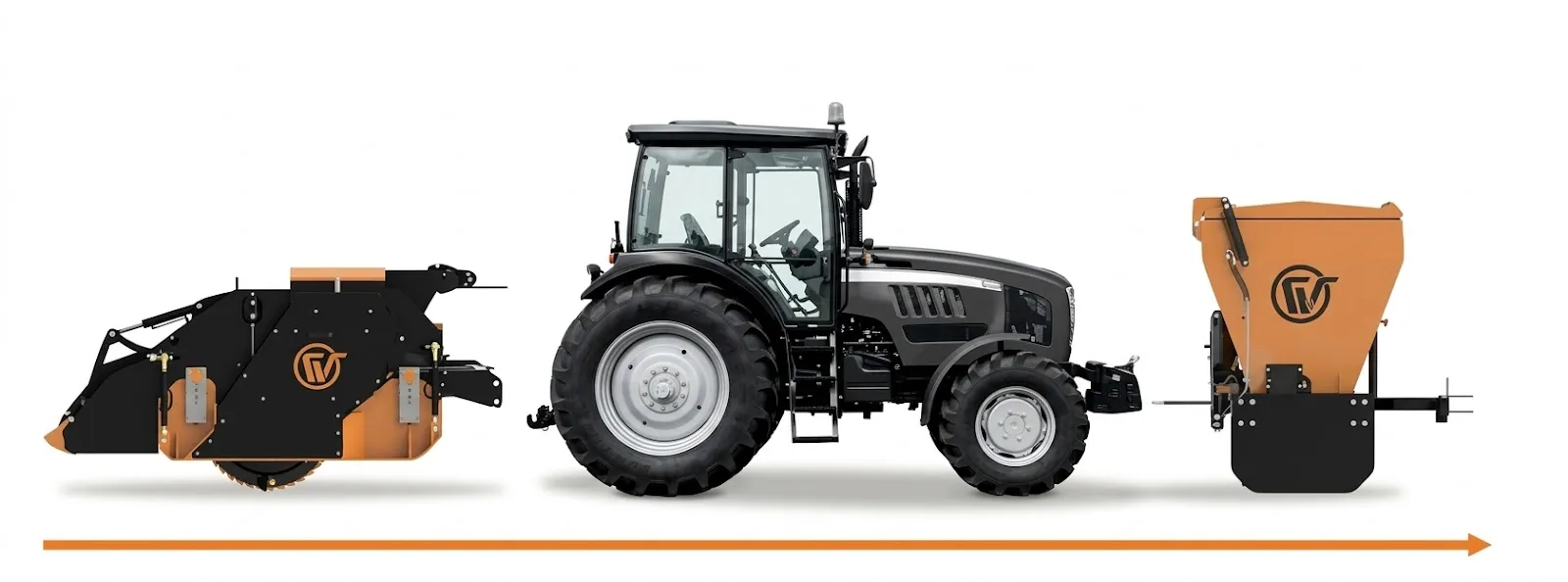
Binder Spreader — The Essential Companion Machine
The binder spreader is not the stabilizer itself — it is the machine that pre-applies the dry powder stabilizing agent (cement or lime) at a calibrated rate before the stabilizer machine mixes it in. Accurate binder application is as critical as accurate mixing: over-application wastes material and increases shrinkage cracking risk; under-application results in under-dosing and failure to achieve target UCS. The DCW-2.2 Binder Spreader from India Watanabe is a tractor-mounted unit with a 2.2 m spreading width and adjustable application rate, designed to work in tandem with the THOR ST stabilizer machine.
“
The most common procurement mistake in Indian stabilization projects: specifying the right chemical agent at the right rate, then applying it with a machine that cannot achieve uniform mixing through the treatment depth.
How to Choose the Right Stabilizer (Agent + Machine) for Your Project
The combination of stabilizing agent and machine must be selected together. The following decision framework covers the most common Indian project types:
- Rural road on Black Cotton Soil (PMGSY / state government): Agent — quicklime at 4–6% + cement at 3–5% (two-stage); Machine — tractor-mounted stabilizer (THOR ST or equivalent) + binder spreader. Budget range: mid.
- Rural road on sandy / granular soil: Agent — OPC at 4–7% or PPC at 5–8%; Machine — tractor-mounted stabilizer + binder spreader. Budget range: low-mid.
- National highway rehabilitation (FDR): Agent — foamed bitumen at 2–3% + 1–2% cement; Machine — self-propelled stabilizer/reclaimer with integrated foam injection. Budget range: high, but lower than conventional rebuild.
- Agricultural land improvement / hardpan breaking: Agent — lime at 1–3% for pH correction and aggregate stability (optional for stabilization benefit only); Machine — tractor-mounted stabilizer or heavy rotavator. Budget range: low.
- Unpaved mine haul road / dust control: Agent — calcium chloride at 1–2% (annual reapplication); Machine — water tanker with spray bar. Budget range: very low.
Frequently Asked Questions
QWhat is the most commonly used soil stabilizer in India?
Portland cement (OPC or PPC) is the most commonly used stabilizing agent for road subgrade and subbase projects in India. Quicklime is the most commonly used agent specifically for Black Cotton Soil treatment across the Deccan Plateau. For equipment, the tractor-mounted rotary stabilizer is the most widely deployed machine type in India due to its lower cost and compatibility with existing tractor fleets.
QWhat tractor size is needed to operate a THOR ST stabilizer?
The THOR ST requires a tractor with minimum 90–120 HP (67–89 kW) PTO output, depending on the working width and soil conditions. In hard, dry soils or stony ground, a higher-powered tractor (120–150 HP) is recommended to maintain working speed and mixing quality. The tractor must have a Category II or III three-point linkage and a rear PTO shaft rated for the rotor’s power requirement. Contact India Watanabe for specific tractor compatibility guidance for your soil conditions.
QCan I use a rotavator instead of a dedicated stabilizer machine?
A heavy-duty agricultural rotavator can achieve adequate mixing for low-volume rural road stabilization at shallow depths (up to 150 mm) in sandy or light clay soils. For depths greater than 150 mm, heavy clay (PI > 20), stony soils, or any project governed by IRC:SP:89 QC requirements, a dedicated stabilizer machine is necessary. Rotavator mixing quality cannot consistently achieve the uniformity required for structural stabilization under Indian road standards.
QAre proprietary liquid stabilizers as effective as cement or lime?
For structural road stabilization (UCS > 1.5 MPa, soaked performance), no proprietary liquid stabilizer has demonstrated consistent, verifiable performance equivalent to cement or lime at comparable application rates in Indian conditions. Proprietary products can be effective for dust control, surface stabilization, and low-PI soil workability improvement, but should not be specified as structural stabilizers without independently verified test data on the specific soil type at the proposed application rate.
QHow do I specify a stabilizer machine in a project tender?
A stabilizer machine specification in an Indian road project tender should include: minimum working width (m), minimum treatment depth (mm), minimum PTO or engine power (kW), rotor type (tined or paddled), minimum number of passes required for mixing uniformity (typically one), and requirement for a calibrated binder spreader as companion equipment. Specify that the machine must demonstrate uniform mixing to the design depth and width in a trial section before full production commences, verified by UCS cores at 7 days.
Key Takeaways
- “Soil stabilizer” means two things: the chemical agent mixed into the soil, and the machine that does the mixing — both must be correctly specified
- Portland cement (OPC/PPC) and quicklime are the most commonly used structural stabilizing agents in India; fly ash is the most common supplement
- The tractor-mounted rotary stabilizer is the most widely used machine type in India — low cost, compatible with existing tractor fleets, adequate for most IRC:SP:89 road subgrade projects
- Proprietary ionic and enzyme stabilizers are not substitutes for cement or lime in structural applications — always require independently verified test data
- The THOR ST + DCW-2.2 package (stabilizer machine + binder spreader) is the most commonly specified tractor-mounted stabilization equipment combination for Indian road projects
Whether your project needs a chemical stabilizing agent specification, a machine that can deliver it uniformly to 350 mm depth, or both, the answer for most Indian road and agricultural stabilization projects starts with the same combination: cement or lime as the agent, and the THOR ST Soil Stabilizer with DCW-2.2 binder spreader as the machine. Contact India Watanabe to discuss agent selection, machine specification, and project planning for your specific soil conditions and location.